Fuel Injector Cleaners That Actually Restore Mileage
Chevron Techron Concentrate Plus suits routine maintenance for most gasoline engines. Red Line SI-1 carries the highest polyether amine concentration for neglected injectors, and Liqui Moly Jectron fits European engines with turbocharged direct injection. Sea Foam remains the flexible choice for older or mixed-fuel equipment.
Chevron Techron Concentrate Plus is the bottle most drivers should keep for periodic maintenance, while Red Line SI-1 steps in when injectors are already fouled. Liqui Moly Jectron suits European engines built around turbocharged direct injection, and Sea Foam covers older or multi-fuel equipment.
Nearly every label promises the same result, yet the actual detergent package varies enormously in strength and type. We compared the active chemistry each manufacturer publishes, the concentration implied by treat rate, direct injection suitability, and what long-term owners report about drivability.
Our top picks
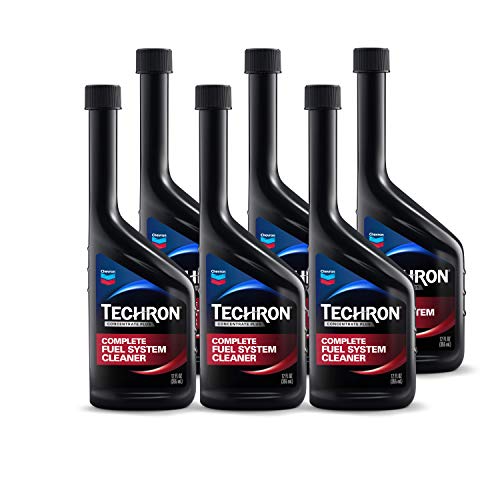
Chevron Techron Concentrate Plus Fuel System Cleaner
Polyether amine forms the core of this formula, a detergent family known for removing carbon deposits rather than just suspending them. Port and direct injected gasoline engines can use it safely on a regular basis, and the cost per treatment stays low. Smoother idle and restored throttle response are the results owners mention most.
Pros
- Polyether amine chemistry removes deposits
- Safe for catalytic converters and sensors
- Low cost per treatment
Cons
- Not formulated for diesel engines
- Weaker than the strongest concentrates here

Red Line SI-1 Complete Fuel System Cleaner
One of the highest over-the-counter polyether amine concentrations sits in this bottle, which explains why it gets recommended after long gaps between treatments. Upper cylinder lubricant rides along to protect valve seats. Strength like this works best as an occasional treatment rather than a routine dose.
Pros
- Highest detergent concentration in this group
- One bottle treats up to 100 gallons
- Adds upper cylinder lubrication
Cons
- Costs more per bottle than rivals
- Unnecessary for routine top-ups

Liqui Moly Jectron Fuel Injection Cleaner
German workshops reach for Jectron because Liqui Moly states it works across all gasoline injection systems, including turbocharged direct injection. Restoring spray pattern is the formula’s goal, rather than masking symptoms. Drivers who prefer a product aligned with European service schedules find this the natural fit.
Pros
- Formulated for European injection systems
- Safe alongside catalytic converters
- Clear, specific treat rate instructions
Cons
- Priced above domestic equivalents
- Bottle size is smaller than most rivals

BG 44K Power Enhancer Fuel System Cleaner
Workshops sell most of this product directly, and it has a reputation for clearing deposits lighter cleaners leave behind. A single canister treats a full tank and works best as an occasional deep clean. High-mileage engines see the clearest idle improvement, according to owner reports.
Pros
- Clears deposits other cleaners miss
- One can treats a full tank
- Trusted in professional service settings
Cons
- Among the priciest treatments here
- Not meant for every-tank use

Gumout Regane High Mileage Fuel System Cleaner
This formula targets engines past seventy-five thousand miles, pairing seal conditioners with injector detergent. Older fuel systems benefit from that combination as much as from deposit removal alone. Its low cost makes it reasonable to use at every oil change.
Pros
- Affordable enough for frequent use
- Seal conditioners suit aging fuel systems
- Easy to find at most auto parts stores
Cons
- Lighter detergent load than concentrates
- Less effective on direct injection valve deposits

Sea Foam SF-16 Motor Treatment
Fuel tanks, crankcases, and stored engines can all take this petroleum-based treatment, making it worth keeping on hand for small engines and seasonal equipment. Solvent chemistry does the work here rather than a modern polyether amine detergent. Modern direct injection engines will see limited benefit from it.
Pros
- Works in fuel, oil, or storage
- Useful for small engines and boats
- Widely stocked and easy to find
Cons
- Solvent-based rather than modern detergent
- Limited effect on GDI intake valve deposits

Royal Purple Max-Clean Fuel System Cleaner
Royal Purple aims this cleaner at the whole fuel system rather than injectors alone, and states it is safe for gasoline, diesel, and ethanol blends. Households running mixed vehicles get one bottle that covers all of them. Detergent strength lands in the middle of this group rather than at the top.
Pros
- Works across gasoline and diesel engines
- Safe with ethanol-blended fuel
- Often sold in multipacks for value
Cons
- Not the strongest option on baked-on deposits
- Results vary with existing engine condition
Before you buy
Which detergent chemistry actually removes deposits Polyether amine, shortened to PEA, stays active at combustion chamber temperatures long enough to break down carbon deposits. Polyisobutylene amine, or PIBA, costs less and keeps a clean system clean but struggles against existing buildup. Solvent-based treatments serve storage and small engines rather than deposit removal. Checking the label for chemistry, not marketing language, separates an effective bottle from a weak one.
Why direct injection engines need a different approach Fuel washes across the intake valve every cycle in a port-injected engine, so a tank additive reaches those deposits directly. Gasoline direct injection sprays fuel straight into the cylinder instead, bypassing the intake valve entirely, which is exactly where carbon accumulates. A bottle in the tank still cleans injector tips and the combustion chamber, but heavy intake valve carbon on a GDI engine needs walnut blasting or an intake-side service instead.
How often to treat a fuel system Most manufacturers suggest a maintenance dose every few thousand miles, roughly matching oil change intervals. Realistic outcomes include a smoother idle, cleaner throttle response, and occasionally a small fuel economy recovery. Horsepower gains on an otherwise healthy engine belong in marketing copy, not real-world results. Misfires and rough-running codes point to mechanical faults that no fuel additive fixes.
Using a fuel injector cleaner safely Pour the treatment into a nearly empty tank before filling up, so the additive reaches its intended concentration rather than sitting on top. Doubling the stated treat rate offers no extra benefit and can dilute the fuel unnecessarily. Confirm the label states catalytic converter and oxygen sensor safety, true of all seven products here. Diesel owners need a diesel-specific formula rather than a gasoline product labeled for both.
Side by side
| # | Model | Active chemistry | Best for | Score | Price |
|---|---|---|---|---|---|
| 1 | Chevron Techron Concentrate Plus Fuel System Cleaner | Polyether amine detergent | Best overall | 9.4 | Check price |
| 2 | Red Line SI-1 Complete Fuel System Cleaner | High concentration polyether amine | Best for heavy deposits | 9.2 | Check price |
| 3 | Liqui Moly Jectron Fuel Injection Cleaner | Detergent additive package | Best for European engines | 9.0 | Check price |
| 4 | BG 44K Power Enhancer Fuel System Cleaner | Concentrated detergent blend | Best professional grade | 8.8 | Check price |
| 5 | Gumout Regane High Mileage Fuel System Cleaner | Detergent with seal conditioner | Best for high mileage engines | 8.6 | Check price |
| 6 | Sea Foam SF-16 Motor Treatment | Petroleum based solvent blend | Best multi purpose | 8.3 | Check price |
| 7 | Royal Purple Max-Clean Fuel System Cleaner | Synthetic detergent blend | Best value pack | 8.0 | Check price |
Frequently asked questions
Do fuel injector cleaners actually work?
Polyether amine formulas measurably remove injector and combustion chamber deposits within a tank or two. Mechanical faults like a failed injector or vacuum leak need repair, not a bottle.
How often should I use fuel injector cleaner?
Every few thousand miles works for most drivers, which lines up naturally with oil change intervals. Neglected engines often need one stronger treatment first.
Will a fuel injector cleaner help a direct injection engine?
It cleans injector tips and the combustion chamber, which helps performance. Intake valve carbon on a direct injection engine needs a separate service, since fuel never reaches that surface.
Should fuel injector cleaner go into a full or empty tank?
Add it to a nearly empty tank just before filling up. That mixes the additive at the intended concentration instead of leaving it poorly distributed on top of a full tank.
Can I use gasoline injector cleaner in a diesel engine?
No, buy a diesel-specific product instead. Sea Foam is one of the few listed here rated for both gasoline and diesel.
Is fuel injector cleaner safe for the catalytic converter?
All seven products state catalytic converter and oxygen sensor safety at the recommended dose. Exceeding that dose is where problems start.
Will fuel injector cleaner improve gas mileage?
Recovering lost economy is possible if deposits had degraded the spray pattern. A clean, healthy engine should not expect a measurable gain.
What is the difference between fuel injector cleaner and fuel system cleaner?
The labels overlap heavily in practice. Fuel system cleaners usually add extras like moisture control or seal conditioners alongside the same injector detergents.
Which fuel injector cleaner is best for high mileage engines?
Gumout Regane targets engines past seventy-five thousand miles with seal conditioners alongside injector detergent, addressing aging fuel systems directly.
Our take
Chevron Techron Concentrate Plus earns a spot in the garage for routine use, thanks to proven chemistry and a low cost per treatment. Neglected engines respond better to a single stronger dose of Red Line SI-1 or BG 44K before returning to maintenance mode. Direct injection owners should treat any bottle as upkeep rather than a substitute for an intake-side service.
Tony Russo
Tony trained as an automotive technician and spent years in service and parts retail before moving into writing. He focuses on garage tools, car care products and accessories from a hands-on maintenance perspective.