Fishing Lures: Which Types Actually Trigger Strikes
Gary Yamamoto Senko produces fish on the simplest retrieve of any soft plastic here. Rapala Original Floater covers shallow water and finicky fish, while Strike King KVD 1.5 Square Bill works best around cover as a crankbait that deflects instead of snagging.
Stocking a box from scratch gets easier with three lures: Gary Yamamoto Senko, Rapala Original Floater and Strike King KVD 1.5 Square Bill. Together they cover more situations than any other three lures on tackle shop shelves. Each targets a different depth and retrieve style, so gaps stay minimal.
New anglers spend the most money and get the least return on lure selection, since a wall of options hides how few proven designs catch most fish. Matching a lure to depth, cover and how fish are feeding matters more than brand. Design type, published specifications and how anglers report each lure fishing across conditions shaped this ranking of seven.
The top picks, ranked

Gary Yamamoto Senko 5-Inch
Almost nothing happens when this lure is worked, beyond a subtle shimmy as it sinks, and that simplicity is exactly why it works when nothing else does. Rigged wacky style or weightless Texas style, it catches bass in clear water, stained water and heavy fishing pressure alike. Salt-impregnated soft plastic gives it great action but rarely survives more than a few fish.
Pros
- Catches on the simplest possible retrieve
- Works across clear and stained water
- Multiple rigging options from one bag
Cons
- Soft plastic tears after a few fish
- Sinks slowly, so deep water takes patience

Rapala Original Floater
Rapala’s balsa minnow has fooled trout, bass, pike and panfish since long before modern tackle marketing existed. Because it floats at rest, anglers can work it slowly over shallow weed beds without fouling. Light balsa construction means casting into wind takes some extra care.
Pros
- Proven across many species and waters
- Floats at rest for pausing over cover
- Works on a simple steady retrieve
Cons
- Light balsa body casts poorly in wind
- Treble hooks tangle easily in a box
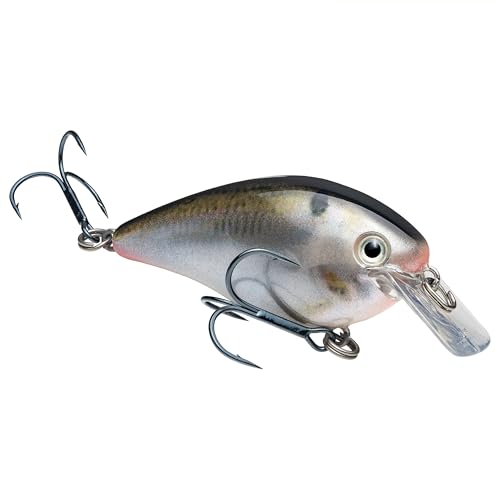
Strike King KVD 1.5 Square Bill Crankbait
Rocks, stumps and laydowns deflect this crankbait’s square lip rather than hanging it up, and that deflection triggers reaction strikes. Shallow running depth suits banks, riprap and flats where fish sit tight to structure. Stock hooks hold up reasonably well, which is not always true at this price point.
Pros
- Deflects off cover instead of snagging
- Triggers reaction strikes from inactive fish
- Easy steady retrieve, beginner friendly
Cons
- Limited to shallow water
- Treble hooks catch weeds readily

Zoom Bait Trick Worm
Few lures cost less per fish than a bag of Trick Worms, fished well weightless, on a shaky head or Texas rigged. A straight-tail body glides subtly, which works in clear water where bulkier plastics get refused. Bags come packed with plenty of worms, useful since soft plastics are consumables.
Pros
- Very low cost per fish
- Versatile across several rigs
- Subtle action suits pressured clear water
Cons
- Needs a rod-tip retrieve, not just cranking
- Tears like all soft plastics

Heddon Zara Spook
Walking the dog with a Zara Spook produces some of the most exciting strikes in freshwater fishing, as fish blow up on a bait sliding side to side across the surface. Low light over flats and around schooling fish is where it shines brightest. Rhythmic slack-line twitches take practice before the walk looks natural.
Pros
- Draws explosive surface strikes
- Covers water quickly over flats
- Long casts thanks to the heavy body
Cons
- Retrieve takes practice to master
- Hook-up ratio runs lower than subsurface lures
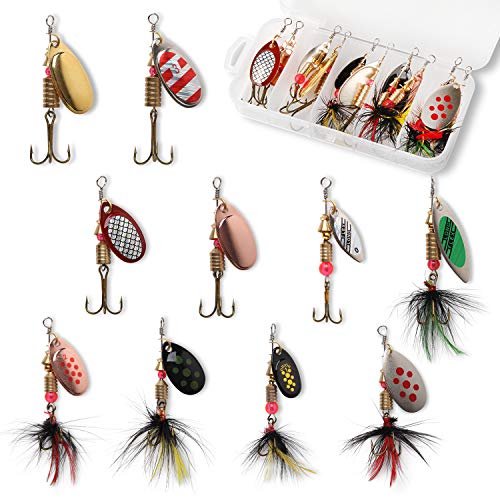
Mepps Aglia Spinner
Reference-standard among inline spinners, the Aglia’s blade starts turning at very low speed, letting anglers fish it slowly in cold streams. Trout, perch, pike and almost anything else that eats small fish fall for it. Inline spinners twist line badly without a swivel, so that piece of gear is not optional.
Pros
- Blade spins at very slow retrieve speeds
- Catches a wide range of species
- Simple steady retrieve for beginners
Cons
- Twists line without a swivel
- Treble hook is hard on fish meant for release
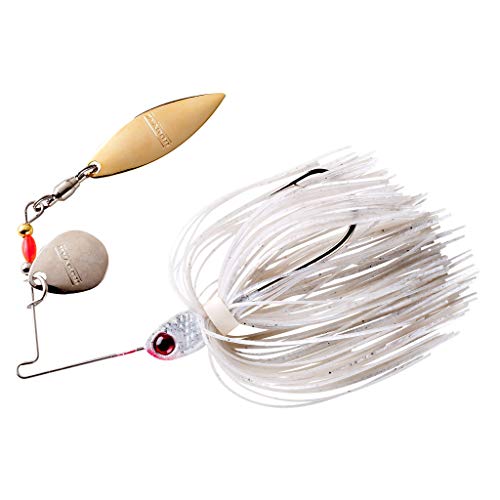
Booyah Pond Magic Spinnerbait
Ponds and small creeks call for a downsized spinnerbait, since a full-size version looks out of scale to the forage. An upright-riding hook, kept in place by the wire arm, comes through grass and brush far better than treble-hook lures. Teaching someone to fish moving baits often starts with a lure exactly like this one.
Pros
- Comes through grass and brush cleanly
- Scaled correctly for small water forage
- Single upward-riding hook resists snags
Cons
- Small size limits it on big water
- Wire arm bends and needs straightening
How they stack up
| # | Model | Type | Best for | Score | Price |
|---|---|---|---|---|---|
| 1 | Gary Yamamoto Senko 5-Inch | Soft plastic stick bait | Best overall | 9.4 | Check price |
| 2 | Rapala Original Floater | Floating balsa minnow | Best value | 9.2 | Check price |
| 3 | Strike King KVD 1.5 Square Bill Crankbait | Square bill crankbait | Best for cover | 9.0 | Check price |
| 4 | Zoom Bait Trick Worm | Soft plastic straight tail worm | Best budget | 8.8 | Check price |
| 5 | Heddon Zara Spook | Topwater walking bait | Best topwater | 8.6 | Check price |
| 6 | Mepps Aglia Spinner | Inline spinner | Best for trout and panfish | 8.3 | Check price |
| 7 | Booyah Pond Magic Spinnerbait | Compact spinnerbait | Best for small water | 8.0 | Check price |
What matters most
How to match a lure to the depth fish are holding Depth matters more than color or brand before anything else, since the real question is where fish are sitting. Topwater and shallow crankbaits cover the top few feet, spinnerbaits and soft plastics work the middle, and weighted rigs reach the bottom. Fishing a shallow-running lure over fish holding at fifteen feet produces nothing, regardless of how good that lure is, which trips up most beginners.
Hard baits vs soft plastics: how they differ Built-in action lets hard baits like crankbaits and minnows work on a steady retrieve, covering water fast. Soft plastics rely on the angler to impart movement, which takes more skill but reads as more natural to pressured fish. Many anglers use hard baits first to find active fish quickly, then slow down with plastics to work an area properly.
Does lure color matter as much as people think? Water clarity offers a more useful guide than color choice alone. Natural colors that imitate local baitfish work well in clear water, while high-contrast, darker profiles stand out better in stained or muddy water. Vibration from a blade or a wide wobble often matters more than color at all. Three colors in a proven shape beat ten colors of an unproven one.
Hooks, snags and gear that support the lure Stock hooks on many lures work fine out of the package, though upgrading trebles on hard baits cheaply improves hook-up ratio and cuts lost fish. A swivel with inline spinners stops line twist, and a hook remover belongs in every bag. Heavy cover calls for single-hook designs such as spinnerbaits and weedless-rigged plastics instead of fighting snags all day.
Frequently asked questions
What lures should a beginner start with?
A pack of soft plastic stick baits, a shallow square bill crankbait and an inline spinner cover most freshwater situations. Learning those three well beats adding specialized lures too early.
Does lure color really matter?
Less than presentation and depth. Natural colors work well in clear water, higher contrast helps in stained water, and getting the lure to the right depth at the right speed matters most.
How do I stop losing lures to snags?
Weedless-rigged soft plastics and single-hook lures cut losses in heavy cover. Keeping the rod tip up while working over structure helps too, and a lure retriever pays for itself in snaggy spots fished often.
Should I replace the hooks that come on lures?
Usually worth it on budget hard baits, since sharper hooks convert more strikes. Established brands generally ship with hooks that perform fine straight out of the packet.
When is topwater fishing best?
Low light at dawn and dusk, warm water, and calm to lightly rippled surfaces all favor topwater. Bright midday sun and cold water push fish deeper and away from surface baits.
Why do soft plastic lures tear so quickly?
Soft plastic stays deliberately soft for action, which makes it a consumable by design. Buying larger bags and using a bait keeper hook or a small piece of tubing at the rigging point extends each one’s life.
Do I need a swivel with spinners?
Yes with inline spinners, since the rotating blade twists line badly over a session. Spinnerbaits with a wire arm avoid that problem entirely.
How many lures do I actually need?
A small box covering shallow, mid-depth and bottom presentations handles most freshwater fishing. Depth coverage matters far more than variety within one depth range.
Crankbait vs spinnerbait: which works better around cover?
A square bill crankbait deflects off rock and wood to trigger reaction strikes, while a spinnerbait’s wire arm shields the hook through grass and brush. Cover type decides the better choice more than personal preference.
Final word
Gary Yamamoto Senko belongs in a box before anything else, since it catches fish on the simplest retrieve and works even in heavily pressured water. Rapala Original Floater adds coverage for shallow, clear water, and Strike King KVD 1.5 Square Bill handles fishing around cover. Together the three cover most freshwater situations an angler will face.
Sierra Daniels
Sierra's background is in landscape design and nursery retail. She focuses on lawn and garden equipment, outdoor furniture and gear durability, weighing published specs against how materials actually hold up outside.


