Which Fire Pit Style Suits Your Backyard Space?
Solo Stove Bonfire ranks first for its low-smoke stainless design and steady heat output. Breeo X Series follows for cooking durability, built from heavy-gauge steel with a sear-ring edge. Outland Living 401 rounds out the top three, delivering instant, adjustable propane flame without ash or smoke for deck use.
Solo Stove Bonfire suits most patios, since its double-wall stainless body reburns smoke before it drifts toward you. Breeo X Series and Outland Living 401 trail close behind, one built for open-flame cooking and the other for smoke-free propane convenience.
Fire pit shopping gets confusing fast, because thin steel bowls warp after a handful of hot burns and cheap airflow designs never stop the smoke. We compared wall construction, fuel type, airflow engineering, and heat output across smokeless, wood-burning, and propane models, then checked those specs against patterns in owner feedback.
Our top picks

Solo Stove Bonfire
Solo Stove Bonfire relies on a double-wall stainless body that pulls air through base vents and reburns smoke near the rim. Owners describe faster lighting and steady heat once the fire catches. Wood is the only fuel option, but 304 stainless steel resists warping through repeated hot burns.
Pros
- Double-wall airflow cuts visible smoke sharply
- 304 stainless steel resists warping and rust
- Reaches full heat within minutes of lighting
Cons
- Runs on wood only, no propane option
- Radiant heat stays concentrated near the bowl

Breeo X Series Smokeless Fire Pit
Breeo X Series pairs heavy-gauge steel with a sear-ring edge built for open-flame cooking. Weight and thickness earn praise from owners who use it for years, not seasons. Steel develops a weathered patina by design rather than staying bright, and its bulk limits portability.
Pros
- Heavy-gauge steel handles years of daily use
- Sear-ring edge turns the rim into a cooktop
- Smokeless airflow performs well with dry wood
Cons
- Weight makes it difficult to relocate
- Exterior patinas instead of staying polished

Outland Living 401 Propane Fire Pit
Outland Living 401 ignites instantly on propane, with a dial that adjusts flame height for any gathering. No ash means less cleanup after use. A separate propane tank is required, and radiant heat runs lower than a wood fire produces at full burn.
Pros
- Push-button ignition lights the flame instantly
- Dial control adjusts flame height on demand
- CSA approval covers use on wood decks
Cons
- Needs a separate propane tank to operate
- Produces less radiant heat than wood fires
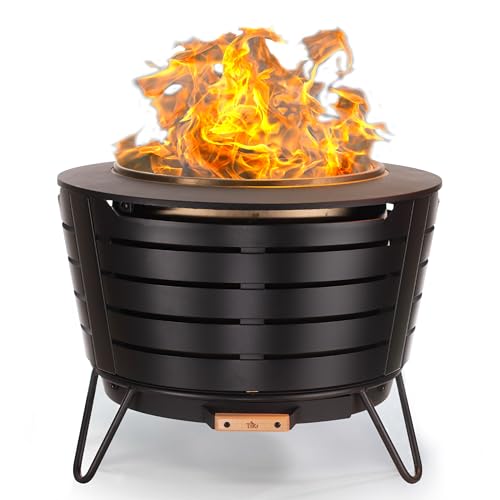
Tiki Brand Smokeless Fire Pit
Tiki Brand fire pit combines a smokeless double-wall body with a removable ash pan for fast cleanup. A carry bag ships with the unit, making trips to a campsite simple. Aluminum components trim weight but feel less rugged than heavier steel builds.
Pros
- Removable ash pan speeds up cleanup
- Carry bag adds real grab-and-go portability
- Double-wall design reduces smoke output well
Cons
- Lighter build feels less rugged than steel rivals
- Airflow performs best with the brand wood packs

Landmann Big Sky Wood Fire Pit
Landmann Big Sky keeps a traditional open-bowl shape, complete with decorative cutouts and an included spark screen. Ambiance and value draw praise from owners who want a classic campfire look. Standard-gauge steel skips smokeless airflow, so a cover helps slow rust between uses.
Pros
- Decorative cutouts give a classic campfire look
- Spark screen and poker ship in the box
- Wide bowl accommodates larger logs easily
Cons
- Open-bowl design produces visible smoke
- Standard steel rusts faster without a cover

BALI OUTDOORS Propane Gas Fire Pit Table
BALI OUTDOORS gas fire pit table wraps the flame in a ledge sized for drinks and lava rocks. Function doubles as patio furniture, not just a heat source. Composite top construction adds weight, making relocation harder than an all-metal design allows.
Pros
- Tabletop ledge doubles as patio furniture
- Propane flame stays clean with no ash
- Lava rocks and a cover ship included
Cons
- Composite top adds weight and needs care
- Relocating the table takes more effort
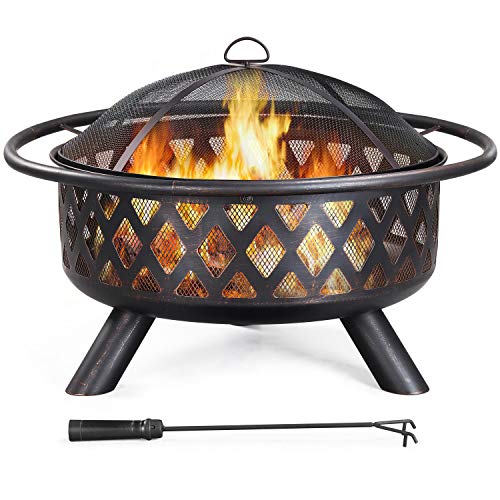
Yaheetech Outdoor Wood Fire Pit
Yaheetech wood fire pit covers backyard basics with a metal bowl and mesh spark screen. Price makes it an accessible entry point for occasional use. Thinner steel offers no smoke reduction and rusts quickly without a protective cover.
Pros
- Price point suits occasional backyard use
- Large bowl pairs with an included screen
- Setup takes only a few minutes
Cons
- Thin steel rusts fast without a cover
- No smokeless airflow design is included
What matters most
Wood vs Propane: Which Fuel Type Fits Your Patio? Wood-burning pits deliver crackle, aroma, and strong radiant heat, but ash and smoke come with that experience. Propane models ignite instantly and adjust with a turn of a dial, leaving no ash behind. Decks and quick weeknight gatherings favor propane, while weekend campfire ambiance still belongs to wood. Weigh convenience against atmosphere before settling on a fuel.
How Do Smokeless Fire Pits Actually Work? Double-wall construction pulls cool air through vents at the base, warms it inside the wall cavity, and releases it near the rim. That secondary combustion burns off smoke before it reaches eye level. Dry, seasoned wood and open airflow make the biggest difference in how well the design performs. Wet or green wood produces smoke no double-wall pit can fully counter.
Which Materials Hold Up Best Over Time? 304 stainless steel resists rust and holds its shine through repeated hot burns. Heavy-gauge carbon steel costs less and takes a beating, though it develops a weathered patina over time. Thin steel bowls found on budget pits warp and rust fastest without care. A fitted cover adds years to any of these materials regardless of price point.
What Size Fire Pit Do You Actually Need? Bowl diameter should scale with your typical group size, running from roughly 19 inches for a couple of people to 30 inches or more for a crowd. Larger bowls throw more heat but add weight and reduce portability. Carry bags and lighter stainless bodies suit campsite trips, while heavy cooking pits stay fixed in one spot. Non-flammable surfaces, clearance from structures, and a spark screen where required keep any setup safe.
Side by side
| # | Model | Fuel type | Best for | Score | Price |
|---|---|---|---|---|---|
| 1 | Solo Stove Bonfire | Wood burning | Best overall | 9.4 | Check price |
| 2 | Breeo X Series Smokeless Fire Pit | Wood burning | Best for cooking | 9.2 | Check price |
| 3 | Outland Living 401 Propane Fire Pit | Propane | Best propane | 9.0 | Check price |
| 4 | Tiki Brand Smokeless Fire Pit | Wood burning | Best portable smokeless | 8.8 | Check price |
| 5 | Landmann Big Sky Wood Fire Pit | Wood burning | Best decorative wood pit | 8.6 | Check price |
| 6 | BALI OUTDOORS Propane Gas Fire Pit Table | Propane | Best fire pit table | 8.3 | Check price |
| 7 | Yaheetech Outdoor Wood Fire Pit | Wood burning | Best budget | 8.1 | Check price |
Frequently asked questions
Are smokeless fire pits actually smoke free?
Smokeless pits cut smoke sharply rather than eliminating it completely. Double-wall airflow reburns most smoke before it rises past the rim. Dry, seasoned wood keeps performance at its best, while wet wood still produces a visible haze.
Is a propane fire pit better than a wood fire pit?
Propane wins on convenience, since it ignites instantly and skips ash cleanup entirely. Wood wins on atmosphere, delivering stronger radiant heat, crackle, and scent. Deck owners and frequent hosts often lean propane, while weekend campers favor wood.
What is the best fire pit for a wooden deck?
Propane models and fire pit tables suit wooden decks best, since they produce no sparks or floating embers. Outland Living 401 carries CSA approval for deck use specifically. A heat-resistant mat under any pit adds extra protection regardless of fuel type.
How many BTUs does a fire pit need?
Most propane fire pits fall between 50,000 and 58,000 BTU, enough to warm a small patio gathering. Higher BTU ratings raise fuel consumption without dramatically increasing comfort at typical seating distances. Wood pits skip BTU ratings entirely since output depends on the fire itself.
Do fire pits rust over time?
Thin steel bowls rust fastest, especially when rain collects and sits uncovered. Stainless steel and heavy-gauge steel resist corrosion far longer under the same conditions. A fitted cover plus dry ash storage slows rust across every material type.
Can you cook food over a fire pit?
Many wood-burning pits handle cooking, and Breeo X Series adds a sear-ring edge built specifically for it. Seasoned hardwood works best for food, since treated or painted wood releases chemicals into the flame. Propane pits generally lack the surface needed for direct cooking.
What size fire pit fits a small patio?
A diameter near 19 to 20 inches suits two to four people on a compact patio. Wider bowls past 29 inches need more clearance and work better for larger groups. Portability also matters on tight patios, where lighter stainless bodies move easily.
Are fire pits safe on grass or wood decking?
Grass tolerates wood-burning pits when placed on a fire-resistant pad or elevated stand. Wood decking calls for propane or a heat-resistant mat to block scorching. Either surface benefits from clearance away from railings, fences, and low branches.
How do you clean a fire pit?
Wood pits need cooled ash removed after each use, and a removable ash pan like the one on Tiki Brand speeds that up. Propane pits only need occasional wiping and a lava-rock refresh. Neither type demands frequent deep cleaning under normal use.
Do fire pits need a cover?
A cover keeps rain and debris out, which slows rust and extends the life of steel components. Stainless and propane models benefit too, even though they resist corrosion better on their own. Covering a pit between uses costs little and prevents costly damage.
The bottom line
Solo Stove Bonfire remains the strongest all-around pick, combining genuinely low smoke output with a stainless body built for repeated hot burns. Frequent cooks and heavy users get more mileage from the rugged Breeo X Series, while deck owners without tolerance for smoke should look toward the propane Outland Living 401 for instant, adjustable flame.
Sierra Daniels
Sierra's background is in landscape design and nursery retail. She focuses on lawn and garden equipment, outdoor furniture and gear durability, weighing published specs against how materials actually hold up outside.