Ethernet Cables Compared for Speed and Reliability
Cable Matters Cat 6 Snagless Ethernet Cable handles gigabit and short multi gigabit runs without issues, making it right for most homes. Amazon Basics Cat 6 costs less when buying several at once. Monoprice SlimRun Cat6A fits behind furniture where standard cables won’t sit flat.
Category numbers distort most ethernet buying decisions. Cable Matters Cat 6 Snagless Ethernet Cable fits nearly every home setup, Amazon Basics Cat 6 wins when buying several at once, and Monoprice SlimRun Cat6A squeezes behind furniture where a standard cable won’t sit flat. Outdoor and buried runs call for the shielded DbillionDa Cat 8 instead.
A Cat 8 cable cannot make a gigabit router faster, yet most homes never approach even Cat 6’s limits. We compared category ratings against realistic speeds, shielding, conductor material, jacket ratings, connector construction and length options, then matched each of these seven cables to the job it’s actually built for.
What we recommend
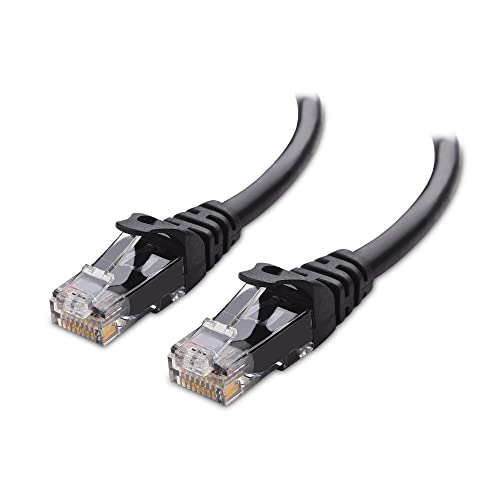
Cable Matters Cat 6 Snagless Ethernet Cable
Gigabit speeds pass through easily, and multi gigabit holds up over the shorter runs a house actually needs. A snagless boot protects the clip, the part that breaks first on cheap cables and leaves a connector loose in the port. Owners report the jacket stays flexible enough to route neatly around corners.
Pros
- Covers gigabit and short multi gigabit runs
- Protected clip resists snapping
- Flexible jacket routes easily
Cons
- Unshielded, so route it away from power cables
- Not rated for outdoor or buried use

Amazon Basics RJ45 Cat 6 Ethernet Patch Cable
Buying four cables for a switch, console, printer and desktop gets simple with this option. Copper conductors meet Cat 6 specification across a wide range of available lengths. Build quality stays basic but consistent, which matters most for patch cables that sit undisturbed behind a desk.
Pros
- Cheapest way to buy several at once
- Meets Cat 6 specification properly
- Available in many lengths
Cons
- Basic connector boots
- Jacket runs stiffer than premium cables

Monoprice SlimRun Cat6A Ethernet Cable
A much thinner gauge than standard patch cables lets this slip behind skirting boards, through desk grommets and under doors. Cat 6a certification still delivers 10 gigabit over longer distances despite the slim profile. Shorter runs suit the thinner conductor best, based on specifications.
Pros
- Fits where standard cables will not
- Full Cat 6a rating despite the slim profile
- Very easy to hide behind furniture
Cons
- Thin conductors are less robust
- Performs best kept to shorter lengths

DbillionDa Cat 8 Outdoor Ethernet Cable
A garden office or garage run needs a jacket built for sunlight, water and temperature swings that indoor cable lacks. Shielding and a direct burial rating cover both concerns here. Weatherproofing, not the Cat 8 speed rating, is the real reason to choose this cable.
Pros
- Built for sun, rain and burial
- Full shielding against interference
- Long lengths available
Cons
- Thick and stiff to route indoors
- Cat 8 bandwidth goes unused on home hardware
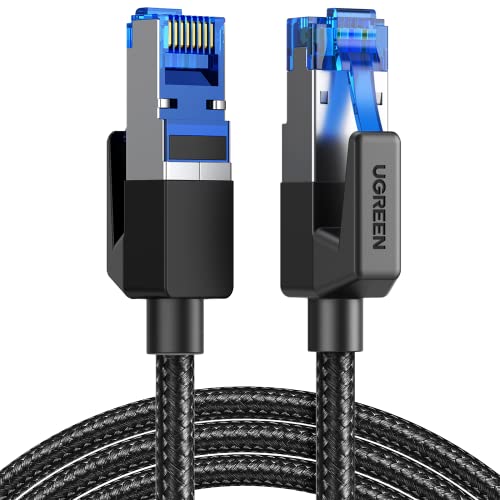
UGREEN Cat 8 Ethernet Cable
Heavy shielding earns its keep in cluttered setups where ethernet runs alongside power leads, speakers or a rack of equipment. Metal connector shells and a braided jacket add durability where cables get moved often. Thickness and stiffness increase compared with Cat 6 patch cables, according to owner reports.
Pros
- Full shielding for noisy environments
- Durable braided jacket
- Solid metal connector shells
Cons
- Stiff and awkward in tight bends
- Shielding only helps with grounded hardware

Jadaol Cat 6 Flat Ethernet Cable
A flat ribbon profile lies invisibly under a rug or along a skirting board using adhesive clips, avoiding the need to drill walls. Gigabit speeds pass through fine over normal household lengths. Clips usually ship in the set, saving a separate purchase.
Pros
- Disappears under rugs and along walls
- Clips usually included
- Easy to run without tools
Cons
- Less durable when flexed repeatedly
- Unshielded, so route away from mains cable

Mediabridge Cat6a Ethernet Cable
10 gigabit speeds hold over longer distances than Cat 6 manages, useful for a run from a router at one end of a house to an office at the other. Copper conductors and a moulded strain relief boot back that up. This sits as a sensible middle ground between basic Cat 6 and unnecessary Cat 8.
Pros
- Holds 10 gigabit over long house runs
- Uses copper conductors rather than clad aluminium
- Reasonably priced for the specification
Cons
- Thicker than standard Cat 6 patch cable
- Overkill for a plain gigabit router
How to pick the right one
What do ethernet cable category numbers actually mean? Cat 5e handles gigabit and still suits most internet connections. Cat 6 adds headroom and supports 10 gigabit over shorter runs, covering essentially every home. Cat 6a holds 10 gigabit across a full length run, while Cat 7 and Cat 8 target data centre gear most homes don’t own. A gigabit connection won’t get faster from a Cat 8 upgrade, since the cable was never the bottleneck.
Do you need shielded or unshielded ethernet cable? Unshielded twisted pair works fine indoors and bends more freely for easier routing. Shielded cable adds a foil or braid layer that blocks electromagnetic interference, worth having when ethernet runs parallel to mains wiring, near motors, or through a crowded rack. Grounded hardware at both ends is required for shielding to work properly, so unshielded Cat 6 remains the practical choice in most homes.
Copper vs copper clad aluminium: which conductor matters? This spec separates a good cheap cable from a bad one. Genuine copper conductors carry signal and Power over Ethernet properly, while copper clad aluminium runs cheaper, more brittle and weaker over distance. Listings that avoid naming the conductor material are usually hiding something, so look for pure copper wording before buying anything meant for a permanent run.
How much length and what connector type do you need? Buy close to the length required plus a small allowance, since coiled excess looks untidy and very long coils can pick up interference. A single run tops out at 100 metres before a switch becomes necessary. Snagless boots protect the retaining clip, the most common failure point, and outdoor runs depend more on jacket rating than category, since UV and water destroy indoor cable within a season or two.
Side by side
| # | Model | Category | Best for | Score | Price |
|---|---|---|---|---|---|
| 1 | Cable Matters Cat 6 Snagless Ethernet Cable | Cat 6 | Best overall | 9.4 | Check price |
| 2 | Amazon Basics RJ45 Cat 6 Ethernet Patch Cable | Cat 6 | Best value | 9.2 | Check price |
| 3 | Monoprice SlimRun Cat6A Ethernet Cable | Cat 6a | Best for tight spaces | 9.0 | Check price |
| 4 | DbillionDa Cat 8 Outdoor Ethernet Cable | Cat 8, shielded | Best for outdoor runs | 8.8 | Check price |
| 5 | UGREEN Cat 8 Ethernet Cable | Cat 8, S/FTP shielded | Best shielded cable | 8.6 | Check price |
| 6 | Jadaol Cat 6 Flat Ethernet Cable | Cat 6 | Best for running under carpet | 8.3 | Check price |
| 7 | Mediabridge Cat6a Ethernet Cable | Cat 6a | Best budget shielded option | 8.0 | Check price |
Frequently asked questions
Does a better ethernet cable make my internet faster?
Only if the current cable is the bottleneck, which is rare. A working Cat 5e or Cat 6 cable paired with a gigabit connection won’t improve from an upgrade. Speed is limited by the slowest device in the chain.
Is Cat 8 ethernet cable worth buying for home use?
Generally no. Cat 8 targets data centre hardware and short high speed links. Home routers, switches and computers rarely exceed what Cat 6 handles, so the extra cost buys unusable headroom.
What is the maximum ethernet cable length for one run?
One hundred metres before a switch or repeater becomes necessary. Signal degrades past that point. Practical home runs stay far shorter, so this rarely becomes a real constraint.
Do I need a shielded ethernet cable at home?
Only if the run passes near interference sources like mains wiring, motors or a dense equipment rack. Shielding also needs grounded hardware at both ends to work as intended, so unshielded suits most homes fine.
Can ethernet cable run outdoors safely?
Only with a cable rated for it. Outdoor cable carries a UV resistant, water resistant jacket and often a direct burial rating. Indoor cable exposed to weather degrades quickly and can fail within a season.
What’s the difference between flat and round ethernet cable?
Flat cables hide better under rugs and along skirting boards. Round cables carry thicker insulation and hold up better long term when flexed. Either works for a fixed run, and flat wins when a route needs to disappear.
Will a longer ethernet cable slow down my connection?
Not within the 100 metre limit for a properly specified cable. Very long coiled runs of poor quality copper clad aluminium can still degrade signal, another reason to check the conductor material.
Does cable quality matter for Power over Ethernet?
Yes. Pure copper conductors carry power reliably, while copper clad aluminium heats up and underperforms. Cameras, access points or anything drawing power over the cable benefit from insisting on copper.
Final word
Cable Matters Cat 6 Snagless Ethernet Cable serves most people best, covering gigabit and short multi gigabit runs with connectors that survive repeated unplugging. Buy Amazon Basics Cat 6 when several cables are needed at once, and reach for Monoprice SlimRun Cat6A where a cable has to disappear into a tight route. Shielded outdoor rated cable only earns its keep once the run genuinely leaves the house.
Marcus Chen
Marcus covered consumer electronics for enthusiast tech publications for six years before joining ChoiceCrest. He specializes in translating manufacturer spec sheets into plain-language buying advice, with a focus on audio, computing accessories and smart-home gear.


