Phone Cases Compared: Drop Protection vs Slim Fit
Based on specifications, the Spigen Ultra Hybrid is the best overall phone case, pairing a slim profile with reinforced corners and a clear back. The OtterBox Defender Series leads on heavy duty protection for job sites, while the Caseology Parallax delivers the strongest grip and value among the seven we compared.
A case earns its spot here only if it survives real drops without turning your phone into a brick. Among seven models, the Spigen Ultra Hybrid holds the best balance of slim design and corner protection, the OtterBox Defender Series suits construction sites and rough outdoor work, and the Caseology Parallax wins on grip and value.
Comparing cases is harder than it looks because drop ratings come from different test standards and one model name often covers dozens of phone specific versions. We compared published protection claims, bumper and corner construction, magnet arrays and port cutouts, then weighed what owners report over months about yellowing, lint buildup and buttons losing their click.
The best picks, ranked

Spigen Ultra Hybrid
A flexible TPU bumper wraps a rigid, transparent polycarbonate back, keeping bulk low while giving the corners room to absorb impact. Air cushion technology reinforces those corners, and raised lips around the screen and camera guard the two spots that crack first. Owners report the clear back resists yellowing better than budget alternatives, though no clear case stays spotless indefinitely.
Pros
- Slim profile with meaningful corner protection
- Raised lips protect screen and camera lenses
- Magnetic version available for accessory users
Cons
- Clear back eventually shows some discolouration
- Smooth finish offers less grip than textured cases

OtterBox Defender Series
Inside every Defender sits a hard polycarbonate shell wrapped in a soft synthetic rubber cover with sealed port covers, which explains why it remains a reference point for construction sites and outdoor trades. Bulk and weight increase noticeably, and that trade off is the entire point of the design. Owners consistently report phones surviving falls that would crack a slimmer case.
Pros
- Highest level of impact protection in this group
- Port covers keep dust out of charging ports
- Holster option is genuinely useful for trades
Cons
- Very bulky in a pocket
- Rubber layer collects lint and dust over time

Caseology Parallax
A geometric hexagonal texture covers the back, delivering real grip without feeling rough against skin. Underneath, dual layer construction with reinforced corners pushes protection closer to mid tier armored cases than the slim look suggests. Owners note the textured back hides fingerprints well and does not slide off a car dashboard.
Pros
- Excellent grip without a rough hand feel
- Strong corner reinforcement for the price
- Textured finish hides fingerprints
Cons
- Pattern collects dust in the grooves
- Fewer colour choices than rivals

ESR Classic Kickstand Case
ESR molds a metal kickstand into the back that holds both portrait and landscape angles, useful for calls and watching video without propping the phone against something else. HaloLock magnets on the relevant versions keep a firm hold on magnetic mounts and chargers. Folded flat, the stand adds only a little extra thickness.
Pros
- Kickstand works in both orientations
- Strong magnet array on the HaloLock version
- Stand folds nearly flush against the back
Cons
- Stand hinge is the most likely wear point
- Slightly thicker than plain clear cases

Ringke Fusion-X
Fusion-X pairs a clear back with a rugged, patterned bumper that adds grip exactly where fingers naturally rest. Protection exceeds a basic clear case while staying far less bulky than a Defender style design. Owners report the raised bumper design keeps the camera housing off flat surfaces unusually well.
Pros
- Rugged bumper without heavy bulk
- Good camera housing clearance
- Patterned rails improve one handed grip
Cons
- Clear back yellows with sustained sun exposure
- Buttons need a firmer press than bare phone
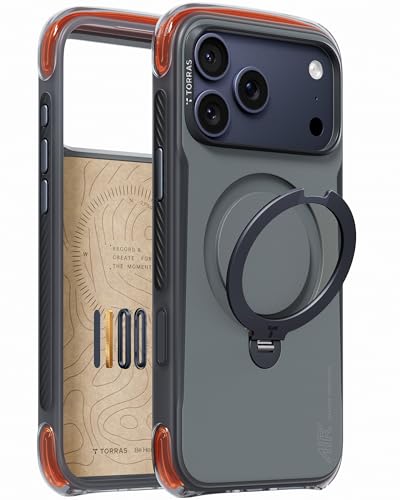
TORRAS Ostand R Case
A rotating ring stand doubles as a finger loop on the Ostand R, suited to anyone who films or watches video often on their phone. Rated for many thousands of rotations, the ring holds a wide range of viewing angles. Extra weight comes with that convenience, and the ring will not sit flat in every pocket.
Pros
- Ring stand adjusts to almost any viewing angle
- Doubles as a secure finger grip
- Magnetic versions still work with mounts
Cons
- Adds noticeable weight and thickness
- Ring catches on tight pockets

Peak Design Everyday Case
Peak Design builds its SlimLink interface into the Everyday Case, locking mechanically as well as magnetically onto its bike, car and tripod mounts. For cyclists and photographers, that mechanical lock matters far more than a magnet alone. Skip the mount ecosystem, and the higher outlay becomes harder to justify.
Pros
- Mechanical lock is far more secure than magnets alone
- Fabric back grips well and resists fingerprints
- Full access to the Peak Design mount range
Cons
- Only worthwhile if you buy into the mounts
- Higher outlay than mainstream cases
How to pick the right one
How Much Phone Case Protection Do You Actually Need? Not every phone needs armor. A slim case with reinforced corners protects against the most common accident, a face down drop onto a hard floor, without adding pocket bulk. Heavy duty cases matter more on job sites, boats or anywhere a phone gets dropped from a ladder or ends up in gravel. Match the case to where the phone actually spends its day, not to a worst case scenario that rarely happens.
Understanding Drop Ratings and Why the Numbers Vary Manufacturers test against military standard MIL-STD-810G or similar drop protocols, but the height, surface and number of drops in each test differ by brand. A rating of six feet from one company is not directly comparable to a rating of ten feet from another. Corner design and raised lips around the screen and camera matter as much as the headline number, since most cracks start at those two points.
Do Phone Cases Interfere With Wireless or Magnetic Charging? Most modern cases, including every model compared here, support wireless charging as long as the back stays under about three millimeters thick. Magnetic charging is more sensitive: cases without a built in magnet array can shift off center on a MagSafe style charger and slow the charging speed. Metal kickstands and rings, like the ones on the ESR and TORRAS cases, sit away from the charging coil so they do not block a wireless pad.
Grip, Yellowing and How a Case Feels Day to Day Clear polycarbonate backs are prone to yellowing from UV exposure and skin oils over several months, a cosmetic issue rather than a structural one. Textured or hexagonal grips, like the pattern on the Caseology Parallax, reduce accidental drops on smooth surfaces such as glass tables or car dashboards. Buttons under a thick case need a slightly firmer press, and rubberized covers can trap lint in the corners over time.
Compared at a glance
| # | Model | Construction | Best for | Score | Price |
|---|---|---|---|---|---|
| 1 | Spigen Ultra Hybrid | TPU bumper with rigid polycarbonate back | Best overall | 9.4 | Check price |
| 2 | OtterBox Defender Series | Polycarbonate shell with synthetic rubber cover | Best heavy duty protection | 9.2 | Check price |
| 3 | Caseology Parallax | Dual layer TPU and polycarbonate | Best value | 9.0 | Check price |
| 4 | ESR Classic Kickstand Case | TPU frame with clear back | Best for video calls and streaming | 8.8 | Check price |
| 5 | Ringke Fusion-X | TPU bumper with polycarbonate back | Best rugged slim case | 8.6 | Check price |
| 6 | TORRAS Ostand R Case | 360 degree rotating ring | Best rotating stand | 8.3 | Check price |
| 7 | Peak Design Everyday Case | SlimLink magnetic and mechanical lock | Best for mounting systems | 8.0 | Check price |
Good to know
Do phone cases actually prevent damage?
A well designed case absorbs and redirects impact energy away from the screen and corners, which are the two most common breakage points. It cannot guarantee zero damage on every drop, but published tests and owner reports consistently show cased phones surviving falls that crack an uncased one.
Why do clear phone cases turn yellow?
UV light and oils from skin gradually oxidize the clear polycarbonate or TPU used in these backs. Cheaper materials yellow within weeks, while better clear cases, such as the Spigen Ultra Hybrid, resist discoloration for longer but are not immune to it over many months.
Do phone cases interfere with wireless charging?
Cases under roughly three millimeters thick generally do not block wireless charging speed. Thicker rugged cases like the OtterBox Defender can slow charging slightly, and misaligned cases without magnets may fail to charge at all until repositioned.
Is a magnetic case better than a plain one?
Magnetic versions, like the MagFit option on the Spigen or the HaloLock array on the ESR, snap into place on compatible chargers and mounts automatically. A plain case still charges wirelessly but requires more careful placement on the charging pad each time.
Do I still need a screen protector with a case?
Yes. A case protects the edges, back and corners, but raised lips only prevent the screen from touching a flat surface directly. A separate tempered glass or film layer covers scratches and direct screen impacts that a case lip alone does not stop.
Can a rugged phone case cause overheating?
Thick rugged cases trap slightly more heat during fast charging or heavy gaming, since airflow around the phone’s back is reduced. Removing the case during extended charging sessions or gaming avoids most of this, though normal daily use rarely raises temperatures enough to matter.
How long does a phone case usually last?
Most TPU and polycarbonate cases hold up for twelve to eighteen months of daily use before the corners compress, the grip texture wears smooth or a clear back yellows noticeably. Heavier duty cases like the OtterBox Defender often last longer because the outer rubber layer takes the brunt of the wear.
Is a kickstand case worth buying?
A built in kickstand, like the metal stand on the ESR Classic or the rotating ring on the TORRAS Ostand R, is worth it for anyone who regularly watches video or takes calls hands free. It adds some thickness and a moving part that can eventually wear, so it suits convenience over minimal bulk.
What is the difference between a slim case and an armored case?
Slim cases like the Spigen Ultra Hybrid or Caseology Parallax add a few millimeters of protection while keeping the phone easy to pocket. Armored cases such as the OtterBox Defender use multiple layers and port covers for maximum protection, at the cost of noticeably more bulk and weight.
The verdict
For most people, the Spigen Ultra Hybrid delivers the best mix of protection and everyday comfort without adding bulk. Anyone working outdoors or on job sites gets more value from the OtterBox Defender Series, while the Caseology Parallax remains the strongest budget conscious pick for grip and reinforced corners. The remaining four cases each solve a narrower need, from built in stands to mount ecosystem compatibility.
Marcus Chen
Marcus covered consumer electronics for enthusiast tech publications for six years before joining ChoiceCrest. He specializes in translating manufacturer spec sheets into plain-language buying advice, with a focus on audio, computing accessories and smart-home gear.
You might also need

Noise Cancelling Headphones Compared for Travel and Work

Which Wallet Phone Case Actually Fits Your Cards?
