What Volleyball Gear a Youth Player Actually Needs
Tachikara SV-5WSC Volley-Lite is the ball to start on, holding official size 5 dimensions at reduced weight. Park & Sun Sports Spectrum 2000 Portable Volleyball Net System drops to youth height and rises again for adults. Mizuno LR6 Volleyball Knee Pads guard the kneecap without bulk that discourages diving.
Tachikara SV-5WSC Volley-Lite is the single most useful purchase for a young player, because official size at lower weight lets forearms learn passing without bruising. Serves clear the net from the back line, which keeps rallies going long enough to teach anything. Club players around 13 and 14 outgrow it and need full weight.
Youth volleyball gear covers three needs: a ball matched to age, somewhere to play, and joint protection. We compared ball weight and cover material, net height range and pole construction, and knee pad thickness across current Amazon listings. Coach and parent reports on seam splitting, net sag and pad slippage shaped the picks.
Our top picks

Tachikara SV-5WSC Volley-Lite Volleyball
Tachikara holds this ball at official size 5 while cutting weight, so young arms pass and serve properly instead of flinching. Its composite leather cover feels soft on forearms yet firm enough to keep shape through a season. Coaches use it as the bridge between a padded trainer and a regulation match ball.
Pros
- Full size feel without full match weight
- Softer cover cuts forearm bruising
- Serves reach the net from the back line
Cons
- Too light for competitive 14U play
- Indoor cover scuffs quickly on concrete

Mikasa V360W Indoor/Outdoor Volleyball
Mikasa built the V360W for school and recreation use, so gym floors and driveways both suit it. Official size and weight make it the natural step up once a player handles Volley-Lite comfortably. Its dimpled synthetic cover keeps grip in damp air and light drizzle.
Pros
- Copes with gym floors and rough ground alike
- Regulation size and weight suit match practice
- Dimpled cover resists scuffing outdoors
Cons
- Full weight stings beginner forearms
- Firmer feel than a dedicated training ball

Molten Light Touch Volleyball
Molten pads this ball for players whose passing platform has not formed yet. Contact feels cushioned, which stops the flinch that ruins early technique before it sets in. Beginners under about 10 progress faster here, then move to a Volley-Lite.
Pros
- Cushioned contact builds passing confidence
- Bright panel pattern aids ball tracking
- Holds inflation well between sessions
Cons
- Padding wears through with outdoor use
- Flight path differs from a regulation ball

Park & Sun Sports Spectrum 2000 Portable Volleyball Net System
Telescoping steel poles drop this system to youth net heights and raise it again for adult games. Park & Sun supplies guy ropes, ground stakes and a carry bag, so one kit moves from garden to beach. Expect two people and about 15 minutes for a first setup on grass.
Pros
- Adjusts upward as players grow into full height
- Guy line system holds tension through rallies
- Whole system packs into one carry bag
Cons
- Stakes need soft ground, so paving rules it out
- First setup takes patience and two people
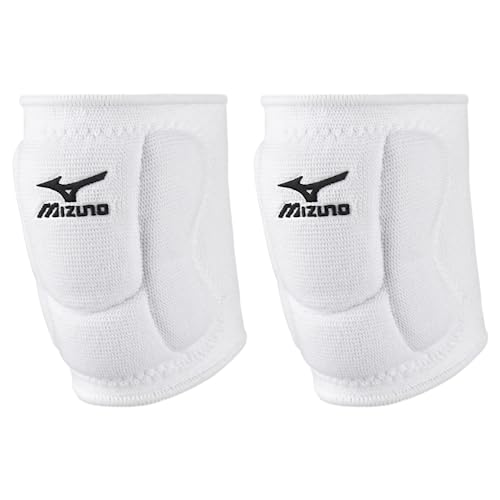
Mizuno LR6 Volleyball Knee Pads
Mizuno keeps the LR6 short and thin, so it shields the patella without turning a dive into a wrestle. Padding sits over the kneecap only, which is exactly where floor contact lands in a pancake dig. Youth sizing fits players from around 10 upward.
Pros
- Thin enough that players still go to the floor
- Sleeve stays put without constant pulling up
- Breathes better than thick foam pads
Cons
- Less coverage than full length pads
- Sizing runs small for taller players

Tachikara TB18 Setter Training Volleyball
Printed hand positions show a setter precisely where fingers belong on contact. Tachikara aims the TB18 at players fixing a lifted or double contact set. Keep it to drills, since the markings serve no purpose once a match starts.
Pros
- Makes hand shape errors visible immediately
- Speeds correction without a coach watching
- Matches match ball size for a clean transfer
Cons
- Single purpose tool with no match use
- Printed guides fade under heavy use
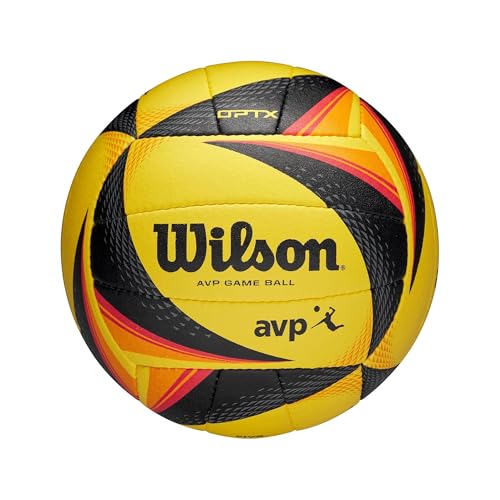
Wilson AVP Official Beach Volleyball
Wilson builds the AVP ball for outdoor conditions, with a composite leather cover that shrugs off sand and damp grass. Softer inflation than an indoor ball suits barefoot rallies on a beach court. Youth players pick it up for summer sessions once basic passing holds together.
Pros
- Cover resists sand abrasion season after season
- Softer inflation suits barefoot beach games
- Keeps shape in humid conditions
Cons
- Beach size and feel differ from indoor play
- Full weight for younger beginners
What to look for
Where to start with youth volleyball gear One ball, one net and one pair of knee pads covers a first season. Buy the ball first, because technique forms around how contact feels on the forearms. A net only earns its place once a player wants serving practice over real height. Knee pads come third, and they matter far more on gym floors than on grass. Everything else, from ball carts to specialist shoes, can wait until a club place is confirmed.
Ball size and weight by age Official size 5 balls measure roughly 65 to 67 centimetres around and weigh about 260 to 280 grams. Lightweight versions such as the Tachikara Volley-Lite hold that circumference while shedding weight, which suits ages 8 to 12. Padded balls including the Molten Light Touch go softer again for absolute first timers. Once a player passes cleanly and serves overhand, move up to a regulation ball like the Mikasa V360W. Skip weighted balls entirely at this age, since they teach arm swing habits that coaches later undo.
Setting up a volleyball net at home USA Volleyball puts the net near 7 feet for 12 and under, rising to about 7 feet 4 inches for 14U girls. Adjustable systems matter for that reason, because a fixed adult net teaches a 10 year old almost nothing. Grass, sand and dirt hold the stakes on a system like the Spectrum 2000, while a paved driveway does not. Leave roughly 10 feet of clear ground behind each side for approach and serving room. Retension the guy lines after the first hour, since new rope stretches under load.
Knee pads, training balls and what to skip Thin low profile pads win with young players, because bulky foam makes them reluctant to hit the floor at all. Fit outranks padding depth: a sleeve that slides down gets shoved aside mid rally and protects nothing. Setter training balls fix one specific problem, so buy one only when a player is genuinely setting. Beach balls like the Wilson AVP belong to summer, not to indoor practice, since flight and feel differ. Leave ball carts, ankle braces and court shoes until a coach names them.
The lineup, side by side
| # | Model | Size | Best for | Score | Price |
|---|---|---|---|---|---|
| 1 | Tachikara SV-5WSC Volley-Lite Volleyball | Official size 5 | Best overall | 9.4 | Check price |
| 2 | Mikasa V360W Indoor/Outdoor Volleyball | Official size 5 | Best value | 9.2 | Check price |
| 3 | Molten Light Touch Volleyball | Official size 5 | Best for first timers | 9.0 | Check price |
| 4 | Park & Sun Sports Spectrum 2000 Portable Volleyball Net System | Telescoping powder coated steel | Best net for the garden | 8.8 | Check price |
| 5 | Mizuno LR6 Volleyball Knee Pads | Low, short length | Best knee pads | 8.6 | Check price |
| 6 | Tachikara TB18 Setter Training Volleyball | Setter hand placement training | Best training aid | 8.3 | Check price |
| 7 | Wilson AVP Official Beach Volleyball | Composite leather, outdoor rated | Best for sand and grass | 8.0 | Check price |
Frequently asked questions
What size volleyball should a 10 year old use?
Official size 5 in a lightweight version. It teaches correct hand and arm positions without the weight that causes flinching on contact.
Are lightweight volleyballs better for beginners?
Yes, for the first year or two. Lighter balls carry further on a weak serve and hurt less on a mistimed pass, so players keep practising.
How high should a youth volleyball net be?
Around 7 feet for 12 and under, and roughly 7 feet 4 inches for 14U girls. One adjustable system covers several age groups as players grow.
Do kids need volleyball knee pads?
On gym floors, yes, because diving and sliding get taught early. On grass and sand they matter far less.
Can you use an indoor volleyball outside?
Briefly. Concrete and sand chew through an indoor cover fast, so an outdoor rated ball such as the Wilson AVP lasts far longer.
What is a setter training ball for?
Printed hand guides on the cover show a player when the fingers are wrong. Use it in drills, then switch back to a match ball.
Which volleyball is best for a school PE class?
Mikasa V360W handles mixed skill levels and both surfaces. Regulation size also matches what students meet in competition.
Molten vs Mikasa: which brand suits youth players?
Molten’s Light Touch is the softer option for absolute beginners. Mikasa fits the next step, once players want match specification balls.
How much space do you need for a backyard volleyball net?
Allow about 10 feet behind each side of the net plus room for the guy lines. Soft ground is essential, since stakes will not hold in paving.
When should a young player switch to a regulation weight ball?
Once serves clear the net consistently and passing no longer causes flinching, usually around 12 or 13. Club tryouts use full weight balls regardless.
The verdict
Start a young player on the Tachikara SV-5WSC Volley-Lite, since official size at reduced weight is what lets passing technique develop. Children under 10 who still flinch on contact should spend a season with the padded Molten Light Touch first. Add the Park & Sun Sports Spectrum 2000 only when home serving practice becomes regular, because its height adjustment is what keeps it useful for years.
Derek Holt
Derek has a background coaching recreational and amateur athletes and has worked the sales floor at specialty fitness retailers. He focuses on equipment durability, ergonomics and realistic use cases rather than marketing claims.


