Beginner ski and snowboard gear to buy first
OutdoorMaster PRO Ski Goggles top the list on interchangeable spherical lenses and OTG sizing for eyeglasses. OutdoorMaster Kelvin Ski Helmet covers head protection to ASTM F2040 and CE EN1077. Smartwool Performance ski socks stop the shin soreness beginners usually blame on rental boots.
OutdoorMaster PRO Ski Goggles are the first accessory to buy. A swappable lens covers flat grey light and bright bluebird days from one frame, and OTG sizing clears most eyeglasses. Swapping lenses with cold fingers is fiddly, and the strap can creep on very smooth helmet shells.
First seasons get ruined by numb hands, fogged lenses and bruised shins far more often than by mediocre rental skis. We compared lens interchangeability, helmet certifications, sock cushioning zones, glove insulation and wrist guard construction. Owner accounts of their own first winters, especially on fit and fogging, decided close calls.
The best picks, ranked

OutdoorMaster PRO Ski Goggles
Frameless lenses detach and swap in seconds, so one goggle handles overcast mornings and bright afternoons. Spherical geometry widens peripheral vision, which helps a new skier track traffic on a busy green run. Dual layer construction with an anti fog inner coating holds up through slow chairlift rides.
Pros
- Lens changes need no tools
- Frame clears most prescription glasses
- Wide field of view for spotting other skiers
Cons
- Strap slips on very smooth helmet shells
- Swapping lenses is fiddly with cold hands

OutdoorMaster Kelvin Ski Helmet
An ABS shell over an EPS liner meets ASTM F2040 and CE EN1077 for snow sports. A rear dial tightens circumference with gloves still on, which matters at the top of a windy lift. Fourteen vents close as the temperature drops, and both ear pads and fleece liner pull out for washing.
Pros
- Carries two recognised snow sport certifications
- Dial adjusts without removing gloves
- Liner and ear pads wash separately
Cons
- Heavier than carbon shelled helmets
- Vent control is coarser than on premium models
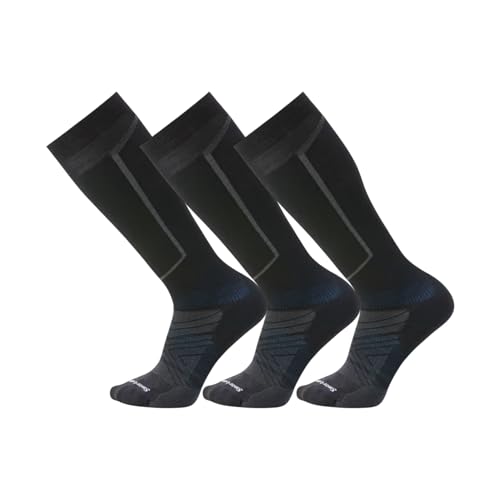
Smartwool Performance Ski Targeted Cushion Over the Calf Socks
Merino blend yarn holds temperature steady and resists odor across several days in the same boot. Cushioning sits only over the shin and around the ankle, precisely where a stiff boot cuff bruises beginners. Over the calf height keeps that cuff off bare skin, and the thin knit avoids the classic error of stuffing bulky socks into a ski boot.
Pros
- Shin padding cuts boot cuff bruising
- Merino controls odor across several days
- Thin knit preserves the boot fit
Cons
- Needs a gentle wash cycle to hold shape
- Light cushioning feels sparse in deep cold

Carhartt Men’s W.P. Waterproof Insulated Glove
A waterproof insert and insulated lining keep hands dry through the repeated falls of a first weekend. Reinforced synthetic leather palms absorb the wear of grabbing lift bars and dragging gear across a parking lot. Touchscreen fingertips mean a phone stays in your pocket instead of the snow.
Pros
- Handles wet snow and frequent falls
- Reinforced palm resists lift bar wear
- Phone use without pulling a glove off
Cons
- Bulkier than dedicated ski gloves
- No wrist leash to stop chairlift drops

Thermajohn Long Johns Thermal Underwear Set
Fleece lined stretch fabric traps warmth without the bulk cotton adds under ski pants. Top and bottom ship together, so there is no mismatched layering to figure out. Flatlock seams cut chafing at the waistband, and synthetic fibers push sweat outward during the walk from the lot to the lift.
Pros
- Warm without adding bulk under a shell
- Complete set covers torso and legs
- Stretch fabric follows leg movement
Cons
- Synthetic holds odor longer than merino
- Runs hot on spring slush days

Demon United Flexmeter Wrist Guard
Wrist injuries top the list for new snowboarders, because falls land on outstretched hands. A splint under the palm limits hyperextension through those landings. Demon builds these to sit beneath a normal glove or mitt, so they add protection without replacing handwear you already own.
Pros
- Targets the most common beginner injury
- Slides under gloves you already own
- Straps adjust over a base layer sleeve
Cons
- Limits wrist movement while strapping in
- Adds bulk inside tight fitting gloves

HotHands Hand Warmers
Air activated packs reach working temperature within minutes and stay warm for hours inside a glove or boot liner. Beginners stand still on green runs far more than experienced skiers, so fingers and toes cool much faster. Sealed packs keep for seasons, which makes a spare pair in a jacket pocket easy to justify.
Pros
- No batteries or charging involved
- Fits inside gloves and boot liners
- Unopened packs keep until next season
Cons
- Single use and disposable
- Takes several minutes to reach full heat
What matters most
What to buy before skis or a board Rent the hardware, own the fit items. Goggles, a helmet and socks sit against your body, and bad fit ruins a day faster than an average rental ski does. Start with a certified helmet, add goggles matched to the light where you ski, then buy thin ski specific socks. Gloves and a base layer follow within the first two outings.
Choosing goggle lenses for flat light and bluebird days Tint is measured as visible light transmission. Low VLT lenses, the darker ones, suit bright high altitude mornings. Rose, amber and yellow pass more light and lift contrast on grey afternoons, showing bumps you would otherwise ski straight into. An interchangeable goggle such as the OutdoorMaster PRO covers both without buying a second pair.
Staying warm without overdressing Cotton is the mistake nearly every first timer makes, since it holds sweat against skin on the walk to the lift. Swap it for a synthetic or merino base layer like the Thermajohn set. Add a mid layer on cold days and treat the shell as a wind and water barrier rather than insulation. HotHands packs cover the gap when you stand around watching a lesson.
Protection for skiers vs snowboarders New skiers tend to fall forward and sideways, so a helmet plus clear vision covers most of the risk. Snowboarders catch edges and land on their hands, which makes Demon Flexmeter wrist guards the highest value protection they can add. Impact shorts help through a first snowboard weekend too, when sitting down hard is constant. Skiers gain far less from wrist guards, because poles change how you land.
How they stack up
| # | Model | Lens | Best for | Score | Price |
|---|---|---|---|---|---|
| 1 | OutdoorMaster PRO Ski Goggles | Interchangeable spherical, dual layer | Best overall | 9.4 | Check price |
| 2 | OutdoorMaster Kelvin Ski Helmet | ASTM F2040 and CE EN1077 | Best helmet for beginners | 9.2 | Check price |
| 3 | Smartwool Performance Ski Targeted Cushion Over the Calf Socks | Merino wool blend | Best socks | 9.0 | Check price |
| 4 | Carhartt Men’s W.P. Waterproof Insulated Glove | Waterproof membrane insert | Best gloves | 8.7 | Check price |
| 5 | Thermajohn Long Johns Thermal Underwear Set | Fleece lined stretch synthetic | Best base layer value | 8.5 | Check price |
| 6 | Demon United Flexmeter Wrist Guard | Palm splint limiting hyperextension | Best for snowboard beginners | 8.2 | Check price |
| 7 | HotHands Hand Warmers | Air activated, single use | Best small add on | 8.0 | Check price |
Frequently asked questions
What winter sports accessories should a beginner buy first?
Start with a certified helmet, goggles matched to your usual light, and thin ski specific socks. Rent skis or a board until you know which discipline sticks. Gloves and a base layer come next.
Do you really need a helmet for a first ski lesson?
Yes, and most resorts rent them by the day. Owning one still pays off, because the fit dial and ear pads matter across a full day. Look for ASTM F2040 or CE EN1077, both of which the OutdoorMaster Kelvin carries.
Which goggle lens is best for cloudy days?
A high VLT tint in rose, amber or yellow lifts contrast through flat afternoon light. Bright days want a darker mirrored lens instead. An interchangeable system covers both conditions from one frame.
Should ski socks be thick or thin?
Thin. Thick socks compress inside a boot, restrict circulation and leave feet colder, not warmer. Use a thin merino blend with shin cushioning, which is exactly what the Smartwool Performance ski sock provides.
Are wrist guards necessary for snowboarding?
They are the most useful protective item a new rider can add, since falls land on outstretched hands. Demon United Flexmeter guards fit under existing gloves. Skiers gain much less from them.
How do you stop ski goggles fogging up?
Keep the vents clear, leave goggles on your face rather than pushed onto your forehead, and never wipe the inner lens. Dual layer anti fog lenses handle the rest. Pull a neck gaiter below your nose, because warm breath funnels straight into the goggle.
Can you wear glasses under ski goggles?
Yes, with an OTG sized frame. OutdoorMaster PRO goggles are cut for that, with foam channels for temple arms. Contact lenses stay simpler if your prescription allows them.
Is it worth buying gloves or mittens for a first season?
Gloves win for handling zips, lift passes and board bindings. Mittens run warmer in deep cold because fingers share heat. A waterproof insert matters more than either choice on a beginner day full of falls.
What is the easiest way to stay warm on the slopes?
Air activated warmers such as HotHands in gloves and boot liners, plus a proper base layer instead of cotton. Neither adds bulk. Together they fix numb hands and damp skin, the two complaints beginners raise most.
How much should a beginner spend before their first trip?
Cover the fit items and rent everything else. Helmet, goggles and socks are the three that stay with you regardless of whether skiing or snowboarding wins out. Skis, boots and boards can wait until season two.
Our pick
Buy the OutdoorMaster PRO Ski Goggles first. Flat light is what makes beginners tentative, and a swappable lens fixes that from one frame. Pair them with the Kelvin helmet and every fit critical item is handled. New snowboarders should slot the Demon Flexmeter wrist guards in ahead of everything except the helmet, since hands take the impact of a caught edge.
Derek Holt
Derek has a background coaching recreational and amateur athletes and has worked the sales floor at specialty fitness retailers. He focuses on equipment durability, ergonomics and realistic use cases rather than marketing claims.