Coin Sorters Compared: Digital Counters vs Manual Tubes
The Royal Sovereign FS-44P clears large mixed batches fastest at 312 coins a minute. The CoinMate CDS-1000 totals value on an LCD screen as it sorts. Coin Tainer tubes cost the least for occasional use. Match the choice to how often you sort, not just price.
Anyone sitting on a jar of mixed change should start with the Royal Sovereign FS-44P, which sorts pennies through quarters into four bags at up to 312 coins a minute and stops itself once a bag fills.
We compared listed speeds, coin compatibility, and hopper capacity against owner feedback to separate machines built for a once-a-year jar dump from ones built for a daily till count.
What we recommend
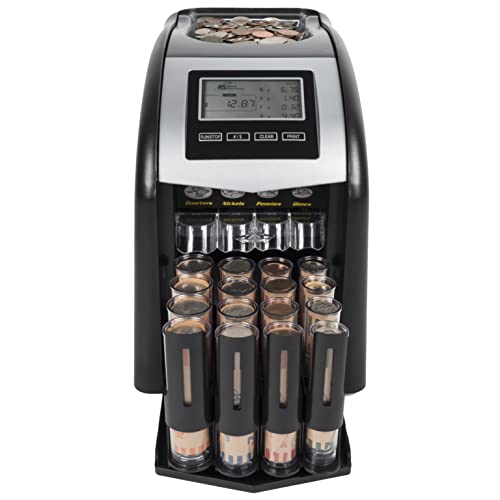
Royal Sovereign FS-44P
A single hopper feeds pennies, nickels, dimes, and quarters into four attached bags at up to 312 coins a minute. An automatic shutoff stops the motor once a bag reaches capacity. A jam-release lever clears stuck coins without tools.
Pros
- Sorts a full jar in minutes
- Automatic bag-full shutoff
- Clears jams without disassembly
Cons
- No half-dollars or dollar coins
- Bags sold separately for replacements
CoinMate CDS-1000
An LCD screen shows a running dollar total as mixed coins pass through, so the exact value is known before a bank visit. Four AA batteries or the included adapter power it, which suits a kitchen counter without a nearby outlet.
Pros
- Shows exact dollar total live
- Works cordless on batteries
- Compact footprint for counters
Cons
- Smaller hopper needs refilling
- Slower than dedicated electric sorters

Coin Tainer Coin Sorting Tubes
Color-coded tubes sized to each coin’s diameter catch coins as they drop through a matching slot during shaking. No batteries or motor are involved, so it still works during a power outage.
Pros
- No power or batteries needed
- Very low cost to buy and replace
- Compact for drawer storage
Cons
- Slow for large mixed jars
- Requires manual shaking motion

Ratikon Digital Coin Sorter Money Counter
A five-tube tray sized for a cash drawer separates and counts coins for registers with steady change volume. Batch-count mode lets a cashier check a till against an expected total at closing.
Pros
- Tray matches standard till drawers
- Batch mode speeds end-of-day counts
- Sturdy build for daily use
Cons
- Bulkier than home-sized units
- No dollar coin support

Silver Point Coin Sorter and Counter
A wide hopper accepts a full mason jar of coins in one pour instead of several small batches. Its motor is rated for extended runs, so several years of saved change can clear in one sitting without overheating.
Pros
- Handles very large coin backlogs
- Motor built for long sessions
- Preset output speeds wrapping
Cons
- Larger footprint on a counter
- Heavier to move or store

Semacon S-140 Coin Sorter
Six coin denominations sort through this machine, including dollar coins and half-dollars that most home models skip. Metal internal components hold up to daily commercial runs better than plastic hobbyist units.
Pros
- Sorts dollar coins and half-dollars too
- Metal parts resist wear
- Suited to daily commercial runs
Cons
- Priced above home-use sorters
- Overbuilt for casual jar sorting
Kexle Coin Sorter Machine
This compact unit tucks into a kitchen drawer when idle yet still tracks a running total on its display. Apartments and dorms with limited counter space still get digital sorting for a jar of change.
Pros
- Small enough to store away
- Digital total avoids manual math
- Simple one-button operation
Cons
- Smaller hopper limits batch size
- Plastic housing feels less durable
What matters most
What to look for in a coin sorter Machines separate coins by physical size or by weight and optical sensing. Size-based sorters cost less but jam more with bent or dirty coins. Weight-based digital models cost more and tolerate worn coins better. Check which denominations a model actually supports, since many skip dollar coins and half-dollars entirely.
Manual tubes vs electric sorters for everyday use No power source is needed for a manual tube sorter, so outages do not stop it, but a full jar takes real time and repeated shaking. Electric sorters clear that same jar in minutes and often total the value on a screen. Occasional sorters do fine manually; anyone with a backlog or a business till benefits from going electric.
Best for a small business till A cash drawer calls for a tray that matches standard coin compartments plus a batch-count mode for closing out a register. Ratikon and Semacon build for that repeated daily cycle rather than a once-a-year jar dump.
Best for large jars and years of saved change A small hopper can stall under years of accumulated coins. Look for a wide single-pour hopper paired with a motor rated for extended continuous runs, the approach Silver Point takes, so the machine will not overheat mid-batch.
Compared at a glance
| # | Model | Coin types | Best for | Score | Price |
|---|---|---|---|---|---|
| 1 | Royal Sovereign FS-44P | Pennies, nickels, dimes, quarters | Best overall | 9.4 | Check price |
| 2 | CoinMate CDS-1000 | Pennies through quarters | Best for accuracy | 9.1 | Check price |
| 3 | Coin Tainer Coin Sorting Tubes | Pennies, nickels, dimes, quarters | Best budget | 8.6 | Check price |
| 4 | Ratikon Digital Coin Sorter Money Counter | Pennies through quarters | Best for small business | 8.9 | Check price |
| 5 | Silver Point Coin Sorter and Counter | Pennies, nickels, dimes, quarters | Best for large jars | 8.7 | Check price |
| 6 | Semacon S-140 Coin Sorter | 6 denominations incl. dollar coins | Best for mixed denominations | 8.4 | Check price |
| 7 | Kexle Coin Sorter Machine | Pennies through quarters | Best compact digital | 8.2 | Check price |
Questions worth asking
How does a coin sorter work?
Most drop coins through slots sized to each denomination’s diameter, or weigh each coin as it passes a digital sensor. Slot sorters are purely mechanical; weight-based sorters use electronics to identify and count coins.
Can a coin sorter count and total the value?
Digital models like the CoinMate CDS-1000 display a running dollar total as coins pass through. Manual tube sorters only separate coins into tubes, leaving the totaling to you after rolling.
Is a coin sorter worth it for a small jar of change?
A manual tube sorter or a bank coin-counting kiosk usually covers a small jar. Electric sorters earn their keep once several pounds of mixed coins are involved.
Which coin sorter works best for a cash register till?
Look for a tray sized to standard drawer compartments plus a batch-count feature. Ratikon and Semacon units let a cashier verify totals at close.
Do coin sorters handle dollar coins and half-dollars?
Most budget and mid-range sorters only handle pennies through quarters. The Semacon S-140 stands out here, rated for six denominations including dollar coins.
What happens if a coin sorter jams?
A release lever or removable panel on most electric sorters clears stuck coins without tools. Bent, foreign, or very dirty coins cause most jams, so pulling out obvious oddballs first helps.
Manual coin sorter vs electric, which is better for occasional use?
Manual tube sorters cost less and need no power, which suits occasional rolling. Electric sorters make more sense for several sorting sessions a year or larger volumes.
Do coin sorters need batteries or a power outlet?
It depends on the model. The CoinMate CDS-1000 runs on AA batteries or an AC adapter, while most higher-capacity electric sorters require a wall outlet.
What is the fastest coin sorter for a full jar of change?
The Royal Sovereign FS-44P processes up to 312 coins a minute, making it the quickest option here for a large mixed batch.
Best coin sorter for someone who only sorts once a year?
Coin Tainer manual tubes cost the least and need no power, which fits infrequent use better than paying for an electric machine that mostly sits idle.
Final word
Most households with a jar of mixed change should reach for the Royal Sovereign FS-44P, which clears it fastest and shuts off automatically once a bag fills. Anyone who wants to see a live dollar total while sorting should pick the CoinMate CDS-1000 instead. Small businesses closing a till daily are better served by the Ratikon or Semacon models than any home-use sorter.
Marcus Chen
Marcus covered consumer electronics for enthusiast tech publications for six years before joining ChoiceCrest. He specializes in translating manufacturer spec sheets into plain-language buying advice, with a focus on audio, computing accessories and smart-home gear.


