Top Premium VR Headsets Compared for 2025
The Meta Quest 3 tops our list for most people, offering the best mix of high-resolution optics, mixed reality passthrough, and a vast content library at a reasonable price. Its main limitation is the need for a Facebook account and the battery life of around two hours.
Premium VR headsets have evolved beyond simple goggles, offering stunning visuals, precise tracking, and immersive audio. Whether you are a gamer, a professional, or an enthusiast, the right headset can transform your digital experiences.
To help you navigate the options, we analyzed current models based on specifications and user feedback. We considered factors like resolution, refresh rate, field of view, comfort, and library of available content.
The shortlist, ranked

Meta Quest 3 128GB
The Meta Quest 3 is a standalone headset that delivers sharp 4K+ visuals and full-color passthrough for mixed reality. It offers excellent hand tracking and a growing library of games and apps, making it the most versatile premium headset.
Pros
- Wireless and standalone with PC VR option via Link
- High-resolution display with pancake lenses
- Vast content library including exclusives
Cons
- Battery life is only about 2 hours per charge
- Requires a Meta account
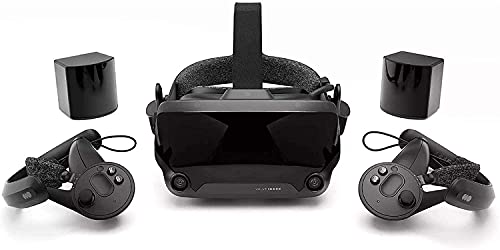
Valve Index VR Kit
The Valve Index remains a top choice for PC VR enthusiasts, offering a 144Hz refresh rate for ultra-smooth motion. Its finger-tracking controllers are unmatched, and the audio quality is superb. It requires base stations but delivers precise tracking.
Pros
- Exceptional refresh rate for competitive gaming
- Knuckle controllers allow natural finger gestures
- Spacious field of view (130 degrees)
Cons
- Requires a powerful PC and base stations
- Older display resolution compared to newer headsets
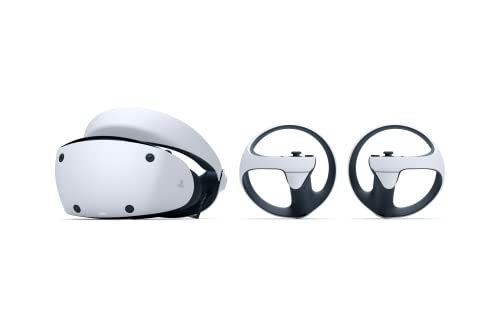
Sony PlayStation VR2
Designed exclusively for PS5, the PSVR 2 features OLED HDR displays with eye tracking and haptic feedback in the headset and controllers. It delivers a premium gaming experience with titles like Horizon Call of the Mountain.
Pros
- Stunning OLED colors and deep blacks
- Built-in haptics and adaptive triggers for immersion
- Easy setup and integration with PS5
Cons
- Requires a PS5 console
- Limited to gaming, no PC support (officially)
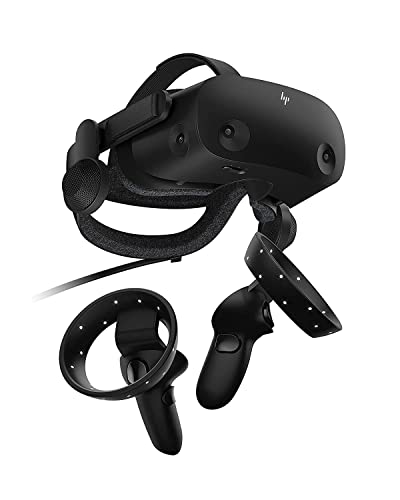
HP Reverb G2
The HP Reverb G2 offers one of the highest consumer resolutions at 2160×2160 per eye, making text and fine details crisp. It uses inside-out tracking with improved cameras over its predecessor, and its audio is developed by Valve.
Pros
- Extremely sharp display ideal for flight sims
- Great comfort with balanced weight
- Good audio from Valve
Cons
- Controller tracking has a smaller sweet spot
- Requires a high-end GPU to run at full resolution

HTC Vive Pro 2
The Vive Pro 2 boasts a 5K resolution (2448×2448 per eye) and a 120Hz refresh rate, delivering sharp and smooth visuals. It works with SteamVR base stations, offering precise tracking, but it is expensive.
Pros
- Highest resolution among base-station headsets
- Comfortable and adjustable
- Works with existing Vive accessories
Cons
- Expensive and requires base stations
- Heavier than some competitors

Pimax Crystal
The Pimax Crystal offers a 35 PPD (pixels per degree) with QLED and mini-LED backlight, and an impressive 120Hz refresh rate. Its modular design includes a local dimming feature and aspherical lenses for a wide field of view.
Pros
- Exceptional clarity with high pixel density
- Local dimming for better contrast
- Flexible tracking options
Cons
- Very expensive
- Setup can be complex

Meta Quest Pro
The Quest Pro is Meta’s high-end headset with advanced sensors for face and eye tracking, plus full-color mixed reality. It is more comfortable than Quest 3 but has a lower resolution and shorter battery life.
Pros
- Advanced face and eye tracking for social VR
- High-quality mixed reality passthrough
- Comfortable halo design
Cons
- Lower resolution than Quest 3
- Battery life is poor (under 2 hours)
What matters most
The lineup, side by side
| # | Model | Display | Best for | Score | Price |
|---|---|---|---|---|---|
| 1 | Meta Quest 3 128GB | Dual LCD, 2064×2208 per eye | Best overall for mixed reality and value | 9.4 | Check price |
| 2 | Valve Index VR Kit | Dual LCD, 1440×1600 per eye | Best for high refresh rate and SteamVR tracking | 9.1 | Check price |
| 3 | Sony PlayStation VR2 | OLED, 2000×2040 per eye | Best for PS5 gamers | 9.0 | Check price |
| 4 | HP Reverb G2 | Dual LCD, 2160×2160 per eye | Best for sharp visuals on PC | 8.8 | Check price |
| 5 | HTC Vive Pro 2 | Dual LCD, 2448×2448 per eye | Best for high-end PC VR with base stations | 8.7 | Check price |
| 6 | Pimax Crystal | QLED with Mini-LED, 2880×2880 per eye | Best for massive field of view and clarity | 8.5 | Check price |
| 7 | Meta Quest Pro | Dual LCD, 1800×1920 per eye | Best for mixed reality and productivity | 8.3 | Check price |
Questions worth asking
Can I use a premium VR headset with a gaming laptop?
Yes, many PC VR headsets work with gaming laptops that have a compatible GPU (e.g., NVIDIA GTX 1070 or better). However, check the connection requirements; some require DisplayPort and USB ports.
What is the difference between OLED and LCD displays in VR?
OLED displays provide better contrast and deeper blacks, which enhances immersion in dark scenes. LCD displays are typically brighter and have longer lifespans but may show more light bleed.
Do I need base stations for inside-out tracking headsets?
No, inside-out tracking headsets like the Quest 3 and HP Reverb G2 do not require base stations. They use cameras on the headset to track your position and controllers.
How important is eye tracking in VR?
Eye tracking is useful for social presence (avatars that mimic your gaze) and foveated rendering, which lowers the rendering load. It is a premium feature found in headsets like the PSVR 2 and Quest Pro.
Can I watch 3D movies on these headsets?
Yes, most premium headsets support 3D movies from apps or your own files. The resolution and comfort make them suitable for virtual cinema experiences.
Is the Meta Quest 3 compatible with PC VR games?
Yes, you can connect the Quest 3 to a PC using a USB cable or wirelessly via Air Link or Virtual Desktop, and play SteamVR titles.
What is the best headset for flight simulators?
The HP Reverb G2 is often recommended for flight sims due to its high resolution, which makes cockpit instruments readable. The Pimax Crystal also offers excellent clarity.
How long does it take to set up a premium VR headset?
Standalone headsets are ready in minutes. PC VR headsets with base stations may take 30 minutes to set up, including mounting the base stations and running room setup.
Are there any monthly fees for using these headsets?
No, there are no subscription fees for the headsets themselves. You may need to purchase games or apps, and some services like Viveport offer optional subscriptions.
Can I use prescription lenses with these headsets?
Yes, many manufacturers offer prescription lens inserts or you can wear glasses if the headset has enough space. Check each model’s specifications for glasses clearance.
Our take
If you want the best overall experience, choose the Meta Quest 3 for its balance of price, performance, and mixed reality. For PC gamers with a high-end rig, the Valve Index remains a top pick for refresh rate, while the HP Reverb G2 offers the sharpest display for simulation. PS5 owners should get the PSVR 2 without hesitation.
Marcus Chen
Marcus covered consumer electronics for enthusiast tech publications for six years before joining ChoiceCrest. He specializes in translating manufacturer spec sheets into plain-language buying advice, with a focus on audio, computing accessories and smart-home gear.