5 Clamshell Heat Presses for Even Fast Transfers
PowerPress Digital Clamshell 15×15 tops the group with even heat across a full size platen. VEVOR’s 15×15 delivers similar capability for less outlay, making it the value pick. Beginners should look at the HTVRONT Auto Heat Press, which times each press and opens itself to prevent scorching.
Craft and t-shirt work is best served by the PowerPress Digital Clamshell 15×15, which holds temperature evenly across a full size platen. VEVOR’s 15×15 model gets close for less outlay, while the HTVRONT Auto Heat Press removes timing mistakes for newcomers.
Photos of clamshell presses all look alike, but platen evenness, knob tension and timer behaviour vary widely between machines. We compared platen dimensions, published temperature ranges, pressure systems and owner reports on transfer quality to sort these seven.
Before you buy
What should you look for in a heat press? Three things decide transfer quality: a platen that heats evenly, a controller that holds its set temperature, and pressure that clamps the same at every corner. Timer range matters next, since HTV, sublimation and printable transfers each want different recipes. Build weight is a genuine trade off rather than a flaw, because heavy frames press more evenly but never leave the bench. Decide where the machine will live before comparing specs.
Clamshell vs swing away: which design is better? Clamshell presses hinge open like a book, so they need less bench depth and cycle faster for batches of flat shirts. Swing away designs rotate the hot platen aside, keeping hands clear and pressing thick blanks like tiles more evenly. Flat garments and standard craft blanks favour the clamshell on speed and footprint. Thick or rigid items are the main reason to accept a swing away’s larger space demand.
What size heat press platen do you need? A 15 by 15 inch platen covers most adult shirt graphics in one press, including the PowerPress, VEVOR, Fancierstudio, CO-Z and Seeutek here. Compact 12 by 10 inch models such as the HTVRONT and Slendor force repositioning on large designs but suit pouches, kids sizes and small logos. Repositioned presses risk visible lines where heat overlaps. Buy for the largest design you realistically plan to press, not the average one.
How do you press safely and get consistent results at home? Platens run at 300 to 500 F, so a stable heat resistant surface with clearance for the handle swing comes first. Let the machine soak at temperature for several minutes before the first press, because the initial reading settles as heat spreads. Auto open timers like the HTVRONT’s protect against scorching when attention drifts. Keep cords, teflon sheets and finished shirts clear of the closed platen between cycles.
The best picks, ranked

PowerPress Digital Clamshell Heat Press 15×15
Heat spreads evenly across the 15 by 15 inch platen, which owners report is why transfers come out consistent edge to edge. Digital controls hold the set temperature with little drift and time presses up to 999 seconds. Full adult shirt graphics fit in a single press, so nothing needs repositioning.
Pros
- Even platen heat produces consistent transfers
- Full size surface presses adult graphics in one go
- Digital time and temperature settings repeat reliably
Cons
- Weight and footprint demand a dedicated bench
- Full pressure requires a firm pull on the handle

VEVOR Heat Press Machine 15×15 Clamshell
Matching the 15 by 15 inch platen of premium machines, the VEVOR pairs it with an LCD controller for time and heat. Owners report clean HTV and sublimation transfers once the pressure knob is dialled to the blank thickness. As a first full size press, it asks little and covers a lot.
Pros
- Full size platen with a clear LCD readout
- Reliable results on HTV and sublimation blanks
- Simple controls suit a first press
Cons
- Pressure knob turns stiffly until broken in
- Included instructions cover little detail

HTVRONT Auto Heat Press Machine
Timing runs itself here: the press counts down and lifts open automatically, so a distracted moment cannot scorch a shirt. Its 12 by 10 inch platen suits pouches, kids sizes and standard chest prints. A 410 F ceiling covers HTV and typical sublimation recipes.
Pros
- Auto open removes the biggest beginner mistake
- Compact body fits small craft tables
- Single button operation keeps the workflow simple
Cons
- Platen too small for large back prints
- Temperature ceiling sits below full size presses
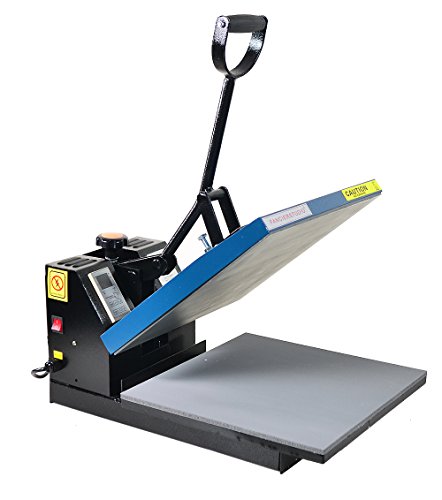
Fancierstudio Power Heat Press 15×15
Years of home crafter use have made this press a known quantity. An aluminum 15 by 15 inch platen reaches 500 F, and the digital panel keeps setup basic. Extras like auto open are absent, yet the fundamentals of shirt and blank pressing are all present.
Pros
- Proven design with a long owner track record
- Reaches 500 F for demanding transfer types
- Aluminum platen comes up to heat quickly
Cons
- No auto open or convenience features
- Displayed temperature can differ slightly from platen heat

CO-Z Heat Press 15×15 Clamshell
Batch pressing is where the CO-Z earns its place. A steel frame keeps the 15 by 15 inch platen rigid under repeated closing, and owners note temperature holds steady across back to back cycles. Long production sessions suit it better than occasional single shirts.
Pros
- Steel frame resists flex during heavy sessions
- Temperature recovers quickly between presses
- Full size platen for adult designs
Cons
- Heavy unit that stays where you put it
- Control panel is plain and dated
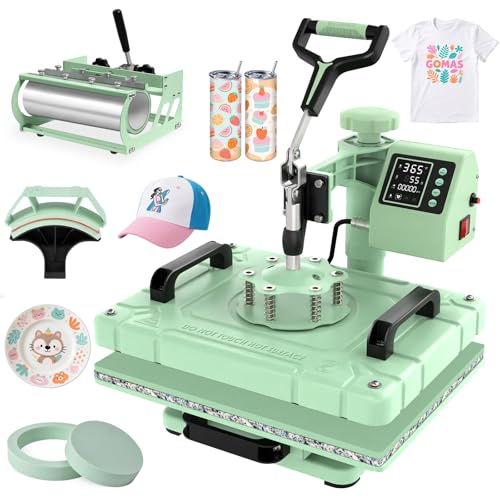
Slendor Heat Press Machine 12×10
Crafters without a permanent workspace get a 12 by 10 inch platen in a body light enough to carry between rooms. Heat reaches 480 F, enough for HTV shirts and small sublimation items. Cupboard storage between sessions is realistic, which no full size press can claim.
Pros
- Light enough to move and store easily
- 480 F ceiling handles most home transfers
- Small footprint fits tight work areas
Cons
- Large back prints exceed the platen
- Spring pressure feels lighter than heavy frames

Seeutek Heat Press Machine 15×15
Dye transfer work drives the design choices here: a 500 F ceiling and a full 15 by 15 inch platen fit polyester shirts and coated blanks. Controls stay uncomplicated with a basic digital panel. Even pressure takes some knob adjustment, so checking corner to corner before a batch pays off.
Pros
- High temperature range suits coated sublimation blanks
- Full size platen handles larger blanks
- Straightforward digital time and heat settings
Cons
- Corner to corner pressure needs careful setup
- No automatic open on the timer
The lineup, side by side
| # | Model | Platen size | Best for | Score | Price |
|---|---|---|---|---|---|
| 1 | PowerPress Digital Clamshell Heat Press 15×15 | 15 x 15 in | Best overall | 9.4 | Check price |
| 2 | VEVOR Heat Press Machine 15×15 Clamshell | 15 x 15 in | Best value | 9.2 | Check price |
| 3 | HTVRONT Auto Heat Press Machine | 12 x 10 in | Best for beginners | 9.0 | Check price |
| 4 | Fancierstudio Power Heat Press 15×15 | 15 x 15 in | Best budget | 8.8 | Check price |
| 5 | CO-Z Heat Press 15×15 Clamshell | 15 x 15 in | Best for high volume | 8.6 | Check price |
| 6 | Slendor Heat Press Machine 12×10 | 12 x 10 in | Best compact | 8.3 | Check price |
| 7 | Seeutek Heat Press Machine 15×15 | 15 x 15 in | Best for sublimation blanks | 8.0 | Check price |
Common questions
Is a clamshell heat press good for t-shirts?
Yes. Clamshells close quickly, need little bench depth and apply firm even heat, which is exactly what flat garments want. Most home shirt businesses run on one for those reasons.
What size heat press do I need for shirts?
A 15 by 15 inch platen presses most adult graphics in one go. Choose 12 by 10 inches only if you focus on small logos, kids sizes or pouches, or if bench space is the binding constraint.
Can a clamshell press do sublimation?
Most full size models here reach 480 to 500 F, comfortably above the 380 to 400 F sublimation typically uses. Even pressure and a heat resistant protective sheet matter as much as the temperature for clean dye transfer.
What temperature and time work for HTV?
Heat transfer vinyl usually presses between 300 and 320 F for 10 to 15 seconds. Brands differ, so follow the time, temperature and peel instructions printed by your specific vinyl maker.
Which is better for beginners, clamshell or swing away?
Clamshells are simpler, faster and smaller, so most beginners start there. Swing away designs keep hands away from the hot platen and press thick items better, at the cost of extra table space.
Why do my transfers peel at the edges?
Edge peeling usually means uneven pressure or too little press time. Check that the pressure knob clamps evenly at all four corners and hold the full recommended duration. Worn or dirty platens can also cause cold spots.
Do I need an auto open heat press?
Need, no. An auto open timer lifts the platen for you, which prevents scorching if you step away mid press. New users and anyone pressing while multitasking benefit most from it.
How much room does a heat press need?
Full size 15 inch clamshells want a sturdy heat safe bench with clearance for the handle arc, and they generally stay put once placed. Compact 12 by 10 inch machines fit smaller tables and store away between sessions.
How can I tell if my press pressure is even?
Place a strip of paper at each corner, close the press cold, and tug each strip. Equal resistance at all four corners means even clamping. Adjust the pressure knob and recheck until no corner pulls free easily.
The bottom line
PowerPress Digital Clamshell 15×15 remains the press to buy for the widest range of shirt and blank projects, on the strength of its even full size platen. VEVOR’s 15×15 captures most of that ability for less outlay. Newcomers worried about ruining blanks should start with the HTVRONT Auto Heat Press and its self opening timer.
Jake Monroe
Jake worked as a residential contractor for over a decade before shifting to full-time writing. He evaluates power tools, hand tools and workshop gear through the lens of someone who has actually used them on job sites, not just read the box.