Top Heavy Duty Fasteners for High Strength Jobs
For most heavy duty applications, the Simpson Strong-Tie Strong-Bolt 2 stands out as the top choice, as it offers reliable performance in concrete and masonry with high load capacity, but it requires a specific bit size and precise hole depth.
Choosing the right heavy duty fastener is critical for safety and durability in construction, woodworking, and DIY projects. The wrong choice can lead to failure, damage, or injury.
We analyzed specifications and owner reports for a range of fasteners, from structural screws to concrete anchors. This guide highlights the strengths and potential drawbacks of each to help you select the best for your specific task.
What matters most
What we recommend

Simpson Strong-Tie Strong-Bolt 2
The Strong-Bolt 2 is a wedge-type anchor that delivers high strength in cracked and uncracked concrete. It features a stainless steel clip for consistent expansion and is ideal for structural applications. Owners report straightforward installation with a hammer drill.
Pros
- High load capacity in concrete
- Works in cracked and uncracked concrete
- Corrosion resistant coating options
Cons
- Requires precise hole depth
- More expensive than some alternatives
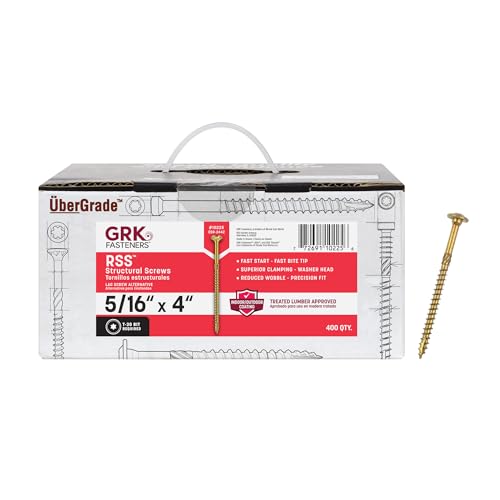
GRK Fasteners RSS5025B Structural Screw
GRK structural screws are engineered to replace lag bolts, offering similar strength with easier installation. They feature a sharp tip and thread design that reduces splitting. Builders report that they drive quickly with a standard impact driver.
Pros
- No pre-drilling required in most woods
- Corrosion resistant for outdoor use
- High shear and tensile strength
Cons
- Not for concrete or masonry
- May strip if overdriven

Hilti Kwik Bolt TZ2
Hilti’s Kwik Bolt TZ2 is a torque-controlled expansion anchor that provides high performance in cracked and uncracked concrete. It is known for its reliability in seismic applications. Professional contractors often choose this anchor for critical structural connections.
Pros
- Exceptional load capacity
- Suitable for seismic zones
- Multiple material options
Cons
- Premium price
- Requires torque wrench for installation

Hillman Fasteners 111040 Lag Screw
Hillman lag screws are a classic choice for heavy duty wood connections. They are made from carbon steel with a zinc finish for basic corrosion resistance. While they require pre-drilling, they offer reliable holding power at a fraction of the cost of structural screws.
Pros
- Low cost per unit
- Widely available in hardware stores
- Strong shear strength
Cons
- Pre-drilling required
- Not for outdoor or corrosive environments

Tapcon 316 Stainless Steel Concrete Screw
Tapcon screws are well known for their reliability in concrete. The 316 stainless steel version offers superior corrosion resistance for coastal or chemical environments. They cut threads into concrete, eliminating the need for expansion anchors. Users find them easy to install with the proper bit.
Pros
- Excellent corrosion resistance
- Removable and reusable
- No need for anchor or sleeve
Cons
- Cannot be used in cracked concrete
- Requires exact hole size

Crown Bolt 11664 Hex Bolt
Hex bolts are fundamental for steel-to-steel connections. This Crown Bolt product is a standard grade 5 hex bolt, offering a good balance of strength and cost. It is often used with nuts and washers. For structural steel, grade 5 is common, though higher grades are available.
Pros
- High tensile strength
- Versatile for many applications
- Easy to install with standard tools
Cons
- Requires nuts and washers
- Not fully corrosion resistant

Red Head Wedge Anchor 71500
Red Head wedge anchors are a popular choice for attaching items to concrete. They provide good holding power and are simple to install: drill a hole, insert, and tighten the nut. They are suitable for static loads in solid concrete. Many DIYers appreciate their simplicity.
Pros
- Easy to install
- Wide range of sizes
- Cost effective
Cons
- Not for cracked concrete
- Load capacity lower than some anchors
How they stack up
| # | Model | Material | Best for | Score | Price |
|---|---|---|---|---|---|
| 1 | Simpson Strong-Tie Strong-Bolt 2 | Carbon steel, zinc plated | Concrete and masonry anchoring | 9.4 | Check price |
| 2 | GRK Fasteners RSS5025B Structural Screw | Case hardened steel | Wood-to-wood connections | 9.2 | Check price |
| 3 | Hilti Kwik Bolt TZ2 | Carbon steel or stainless steel | Heavy duty concrete anchoring | 9.1 | Check price |
| 4 | Hillman Fasteners 111040 Lag Screw | Carbon steel, zinc plated | General heavy duty wood fastening | 8.8 | Check price |
| 5 | Tapcon 316 Stainless Steel Concrete Screw | 316 stainless steel | Outdoor concrete fastening | 8.7 | Check price |
| 6 | Crown Bolt 11664 Hex Bolt | Steel, zinc plated | Structural steel connections | 8.6 | Check price |
| 7 | Red Head Wedge Anchor 71500 | Carbon steel, zinc plated | Medium duty concrete anchoring | 8.4 | Check price |
Common questions
What is the strongest type of fastener?
There is no single strongest type; it depends on the application. For concrete, wedge anchors like the Simpson Strong-Bolt 2 offer high strength. For wood, structural screws often outperform lag bolts. For steel, high-grade bolts such as Grade 8 are extremely strong.
Do I need to pre-drill holes for lag screws?
Yes, pre-drilling is recommended for lag screws to prevent wood splitting and to make installation easier. The pilot hole should be about 75% of the screw diameter for softwoods and 85% for hardwoods.
Can I use concrete screws in brick or block?
Concrete screws can be used in brick and block, but the holding strength may be lower than in concrete. They require a pilot hole and may not be as reliable in masonry with voids. For brick, expansion anchors are often preferred.
What is the difference between a wedge anchor and a sleeve anchor?
Wedge anchors have a clip that expands against the concrete when tightened, providing high load capacity. Sleeve anchors have a sleeve that expands along its length, and they are used in lighter applications. Wedge anchors are typically stronger and more reliable in solid concrete.
How do I choose the right size fastener?
Consider the thickness of the materials being joined and the load requirements. A rule of thumb is that the fastener should penetrate at least 1 inch into the base material for adequate holding. Consult the manufacturer’s load tables for specific recommendations.
Are stainless steel fasteners worth the extra cost?
For outdoor or corrosive environments, stainless steel is worth the investment because it prevents rust and extends the life of the connection. For interior dry applications, zinc plated steel is usually sufficient.
Can structural screws replace lag bolts?
Yes, many structural screws are designed to match or exceed lag bolt performance. They offer advantages like no pre-drilling and easier installation. However, always check the manufacturer’s specifications for load ratings and approved applications.
How do I remove a fastener that is stuck?
For screws, use a screw extractor or drill out the head. For anchors, you may need to drill them out or use a hammer and chisel to break the surrounding concrete. Always follow safety precautions.
What is the importance of torque when installing anchors?
Over tightening can damage the anchor or the base material, while under tightening may not provide enough expansion. Use a torque wrench to reach the manufacturer’s recommended torque value for optimal holding strength.
Can I reuse a wedge anchor after removal?
No, wedge anchors are not designed for reuse. The expansion clip deforms during installation, and reusing them may result in reduced holding capacity. Always install new anchors for critical applications.
The bottom line
For most heavy duty tasks, the Simpson Strong-Tie Strong-Bolt 2 is the best choice for concrete anchoring, delivering exceptional strength and reliability. If you are working with wood, the GRK structural screws offer a modern and efficient alternative to traditional lag bolts. For outdoor projects where corrosion is a concern, the Tapcon 316 stainless steel screws provide superior durability. Ultimately, the right fastener depends on the material and load, but these three options cover the majority of needs.
Jake Monroe
Jake worked as a residential contractor for over a decade before shifting to full-time writing. He evaluates power tools, hand tools and workshop gear through the lens of someone who has actually used them on job sites, not just read the box.


