Which Litter Box Accessories Cut Down the Mess?
Litter Genie Plus Disposal System wins here because sealing waste daily removes most litter box odor at the source. Gorilla Grip Cat Litter Mat catches tracked granules at the box edge. DurAnimals DuraScoop Original sifts fast enough that daily scooping stays a quick habit.
Litter Genie Plus Disposal System earns the top spot because odor in a litter area mostly comes from waste sitting in an open bin. Sealing each scoop into its own pocket removes that source without a daily trip outside. Gorilla Grip Cat Litter Mat tackles the second complaint, catching granules the instant a cat steps off the box. DurAnimals DuraScoop Original matters more than its size suggests, since a scoop that sifts fast turns into a habit that actually happens.
Households often buy litter accessories in the wrong order, reaching for a covered box or a scented additive before fixing waste storage, tracking or scooping frequency. Cats have opinions too, and an accessory that makes a box less appealing just moves the problem somewhere worse. Mat materials behave very differently, since a coarse trapping surface grabs more granules but can feel less pleasant underfoot than a soft one. We compared what each accessory solves, material durability, daily ease of use and cleaning demands, then weighed that against what owners in multi cat homes report. Any sudden change in litter habits, including avoiding the box or straining, is worth raising with a veterinarian rather than treating as an accessory problem.
Our top picks
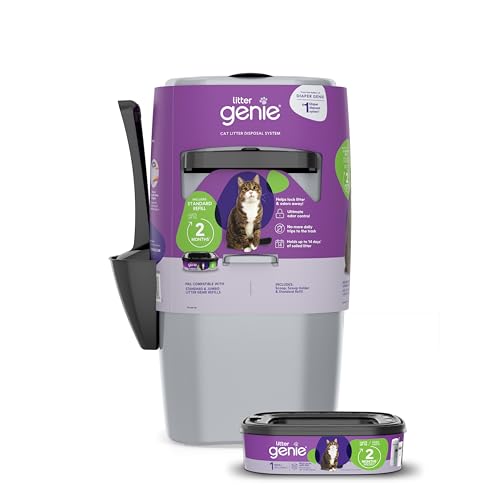
Litter Genie Plus Cat Litter Disposal System
A trapdoor drops waste straight into a sealed liner, so smell never reaches the room, which is the single biggest change most litter areas can make. One liner holds roughly two weeks of waste for a single cat, so daily upkeep takes seconds. Refill cartridges add an ongoing cost, and the trapdoor mechanism jams if you overfill it.
Pros
- Contains odor far better than an open bin
- Daily disposal takes seconds
- Compact enough to sit beside the box
Cons
- Refill cartridges are a recurring cost
- Mechanism can jam if overfilled

Gorilla Grip Cat Litter Mat
Deep grooves in the top surface pull granules off paws as a cat steps across, while a grippy backing keeps the mat from sliding into a corner. Sizing runs large enough that a cat cannot simply step over it, where smaller mats fail outright. Cleaning means lifting and shaking it outside, and fine dust in the texture needs an occasional wash.
Pros
- Catches a genuine amount of tracked litter
- Stays in place instead of sliding away
- Waterproof backing protects flooring
Cons
- Needs regular shaking or vacuuming
- Fine dust requires occasional washing

DurAnimals DuraScoop Original Cat Litter Scoop
A single piece aluminum scoop with a wide sifting head cuts through clumps that flex and snap a plastic scoop. Since it sifts quickly, scooping stops feeling like a chore, and no seam exists for waste to hide in, so it rinses clean in seconds. It weighs more in the hand than plastic, and the metal edge can scratch a plastic litter box base.
Pros
- Cuts through hard clumps without flexing
- No seams for waste to collect in
- Wide head sifts a box quickly
Cons
- Heavier than plastic scoops
- Metal edge can scratch plastic box bases

Arm & Hammer Cat Litter Deodorizer Powder
Sprinkled into fresh litter, baking soda absorbs odor between full changes instead of covering it with fragrance. Cost per use stays low, and it stretches the interval between litter changes by a few days in a busy household. Some cats reject any scent added to the box, so introducing it slowly and choosing unscented matters.
Pros
- Absorbs odor rather than masking it
- Very low cost per use
- Extends the interval between full changes
Cons
- Scented versions put some cats off
- Does not replace regular scooping

iPrimio Sifter with Deep Shovel Cat Litter Scoop
Deep sides and a long handle reach the bottom of a high walled or top entry box without tipping contents over the edge, where flat scoops usually struggle. Solid metal construction handles heavy clumping litter without bending. Extra depth makes it clumsy in a shallow tray, and the longer handle needs somewhere to hang rather than a small holder.
Pros
- Reaches the base of deep boxes
- High sides keep litter contained while sifting
- Strong enough for heavy clumping litter
Cons
- Less nimble in shallow trays
- Long handle needs storage space

Van Ness Drawstring Cat Pan Liners
A drawstring liner turns a full litter change into lifting one bag out, which matters most with non clumping litter that needs complete replacement rather than daily scooping. Dust stays contained as the bag closes. Enthusiastic diggers tear liners, letting litter escape underneath, so gentle diggers and clumping setups suit this better.
Pros
- Full changes take seconds
- Drawstring contains dust when lifting
- Available in sizes for larger pans
Cons
- Enthusiastic diggers tear through them
- Litter trapped underneath is messy to clean

IRIS USA Cat Litter Box with Scoop
High walls paired with a lower entry point stop a vigorous digger flinging litter over the edge, while an older cat can still step in without climbing. A smooth interior with no ridges makes a full clean quick, and a scoop ships included. The larger footprint needs real floor space, and cats used to a low open tray may take a few days to accept it.
Pros
- High walls contain flung litter
- Lower entry suits older cats
- Smooth interior cleans quickly
Cons
- Takes up significant floor space
- Some cats need time to adjust
Side by side
| # | Model | Type | Best for | Score | Price |
|---|---|---|---|---|---|
| 1 | Litter Genie Plus Cat Litter Disposal System | Sealed litter waste disposal pail | Best overall | 9.4 | Check price |
| 2 | Gorilla Grip Cat Litter Mat | Deep grooved trapping texture | Best litter mat | 9.2 | Check price |
| 3 | DurAnimals DuraScoop Original Cat Litter Scoop | Single piece cast aluminum | Best scoop | 9.0 | Check price |
| 4 | Arm & Hammer Cat Litter Deodorizer Powder | Baking soda based deodorizer | Best odor control | 8.7 | Check price |
| 5 | iPrimio Sifter with Deep Shovel Cat Litter Scoop | Metal construction with sifting slots | Best for deep boxes | 8.5 | Check price |
| 6 | Van Ness Drawstring Cat Pan Liners | Drawstring litter box liners | Best for quick changes | 8.2 | Check price |
| 7 | IRIS USA Cat Litter Box with Scoop | High sided pan with lower entry | Best for splash control | 8.0 | Check price |
What matters most
Fix odor at the source, not with fragrance Smell in a litter area comes from exposed waste, whether sitting in the box or in an open bin nearby. Scooping at least once a day and sealing the waste immediately removes most of it, which is why a sealed disposal pail changes a room more than any scented additive. Heavy fragrance also puts cats off, and a cat that starts avoiding a box creates a far bigger problem than the smell being treated.
Tracking gets solved right at the box edge Granules leave the box stuck to paws, so the fix sits right at the exit, pulling them off before the cat reaches carpet. A mat needs enough size that a cat cannot step across it in one stride, plus enough texture to actually grip granules instead of letting them slide. Finer, lighter litter travels further, so pairing a heavier granule size with a good mat addresses both halves of a tracking problem.
Box size and placement outrank any accessory General guidance calls for a box roughly one and a half times the cat’s length, one box per cat plus a spare, and placement in a quiet spot with a clear escape route rather than a cupboard or dead end corner. No accessory compensates for a box that is too small or a location where a cat feels cornered. Get size and placement right first, then add accessories to ease maintenance.
Match accessories to the litter type already in use Clumping litter rewards a strong sifting scoop and daily scooping, and it makes liners less useful since clumps stick to the plastic. Non clumping litter needs complete changes, exactly where liners save time. Crystal litter has its own tray systems entirely. Stick with the litter already in use rather than changing type and accessories at once, since a litter switch is what cats notice most.
Good to know
How often should you scoop a litter box?
At least once a day, and twice works better in a multi cat household. Frequent scooping controls odor and keeps the box appealing to the cat. Full litter changes depend on type, with clumping litter typically needing complete replacement far less often than non clumping litter.
Do litter mats really work?
Good ones noticeably cut down tracking, though nothing eliminates it completely. Size matters most, so a cat cannot simply step over the mat, along with a surface texture that grips granules. Extending the mat well beyond the exit in the direction a cat usually walks makes a clear difference.
Are covered litter boxes better than open ones?
Covered boxes contain smell and scattered litter for the household while concentrating odor for the cat inside, and some cats dislike the enclosed feel or single exit. Anyone using one should scoop more often. Cats avoiding a covered box will often return to the same box immediately once the lid comes off.
Can cat litter go down the toilet?
Most litter should not be flushed, since clay and crystal types block drains, and even litter marketed as flushable is banned in some areas over parasite concerns for waterways. Bagging and binning stays the safe default. Check local guidance if unsure.
Why does my cat kick litter everywhere?
Vigorous digging and covering is normal behavior. The usual fix pairs a larger box with higher sides and a lower entry point, plus a heavier litter that does not fly as far. Adding more litter depth so the cat is not scraping bare plastic often helps too.
Do deodorizing powders bother cats?
Some cats are sensitive to any added scent and will avoid a treated box. Unscented baking soda based products are the safer starting point. Introduce anything new gradually with less than the recommended amount, and stop right away if box use drops.
Are litter liners worth buying?
They work well with non clumping litter, where the whole tray gets emptied regularly, and much less well with clumping litter, which sticks to and tears them. Cats that dig hard will puncture nearly any liner, letting litter escape underneath and creating more cleanup.
What should I do if my cat stops using the litter box?
Treat it as a health matter first, since urinary problems and pain commonly show up this way, and contact a veterinarian promptly. Once medical causes are ruled out, look at cleanliness, box size, location, litter type and whether another pet blocks access.
Our take
Start with the Litter Genie Plus Disposal System, since sealing waste immediately removes the odor source instead of covering it up. Pair it with the Gorilla Grip Cat Litter Mat to catch granules right where they leave the box, and add the DurAnimals DuraScoop Original so daily scooping stays fast enough to actually happen every day.
Olivia Hartley
Olivia spent several years working at an animal shelter and a pet-supply retailer before joining the editorial team. She researches pet gear with an emphasis on safety, comfort and the fine print that owners often miss.


