How to Choose a Litter Box a Kitten Can Enter
Van Ness CP1 Small Cat Litter Pan is the easiest starting box, with sides low enough for an eight week old kitten. PetFusion BetterBox is the stronger long term buy as the kitten grows toward adult size. Necoichi Portable Cat Litter Box folds flat for carriers and vet trips.
Van Ness CP1 Small Cat Litter Pan tops this list for kittens since a young cat needs to step in, not climb. PetFusion BetterBox costs more but stays usable well past the kitten stage. Necoichi Portable Cat Litter Box folds down to almost nothing for carriers and vet visits.
Getting box size wrong causes accidents that get blamed on the kitten instead of the equipment. An eight week old cat can manage roughly a three inch step and needs to find the box without crossing the whole house. We compared entry height, interior length, wall height, material and cleaning method, then weighed that against what owners report about kittens outgrowing a first box within a few months.
What to look for
What makes a litter box right for a kitten? Entry height decides everything at eight to twelve weeks old. Aim for a step under about three inches, since a kitten forced to climb will often go beside the box instead of inside it. Interior size matters less early on, though a box roughly 1.5 times the kitten’s future adult length saves buying twice. Skip lids, doors and top entry designs for the first months, since a kitten needs to see in and get out fast.
How many boxes does one kitten need? More than most people expect. During house training, place a box on every floor the kitten can reach, never far from where it sleeps and plays. The general rule of one box per cat plus one spare still applies afterward. Affordable pans like the Petmate Basic and Van Ness CP1 make multiple placements realistic, and you can consolidate once habits are set.
Choosing litter and depth for a young cat Unscented clumping clay with a fine texture is the usual recommendation once a kitten passes eight weeks, since it feels close to soil cats instinctively dig. Keep depth around two inches so paws get purchase. Heavily scented litter puts many kittens off entirely. Watch for litter eating in very young kittens and switch to paper based pellets if it happens.
Moving from a kitten box to an adult setup Most kittens outgrow a small pan somewhere between four and six months old. Signs are obvious, including hanging over the edge or turning with difficulty inside. Introduce a larger box beside the old one instead of swapping overnight, keeping both down for a week. Boxes such as the PetFusion BetterBox and IRIS USA Open Top with Shield bridge that gap, since a shield or extra length gets added as the cat grows.
What we recommend

Van Ness CP1 Small Cat Litter Pan
Shallow walls and a small footprint make this the box most kittens use correctly from day one. Recycled polypropylene with a stain resistant surface keeps odor from soaking into the pan. Light weight means a kitten cannot tip it over, and low cost makes replacement painless once the cat outgrows it.
Pros
- Sides low enough for an eight week old kitten
- Costs little, so replacing it later is painless
- Rinses clean in a utility sink
Cons
- Outgrown within a few months
- Low walls do nothing to stop litter scatter

PetFusion BetterBox Non-Stick Litter Box
A generous 22 by 17 inch interior means the same box still fits the cat at full size, while one lowered side keeps entry easy. A non stick coating stops clumps welding to corners, and reinforced walls resist flexing when carried full. Full size adult use is the goal here, not a temporary kitten setup.
Pros
- One box lasts from kitten to adult
- Non stick coating releases urine clumps cleanly
- Sturdy enough to carry full without flexing
Cons
- Five inch entry is a stretch for the smallest kittens
- Large footprint for a temporary kitten setup

Necoichi Portable Cat Litter Box
Water resistant fabric over a collapsible frame folds into a flat disc that fits a carrier pocket. Low sides suit kittens just as well as travel days. Owners report keeping a second one folded in a spare room, since it weighs almost nothing to move around the house.
Pros
- Packs into a carrier or a car door pocket
- Low sides work for kittens straight away
- Weighs almost nothing to reposition
Cons
- Fabric absorbs odor after months of use
- Not suitable as a permanent daily box
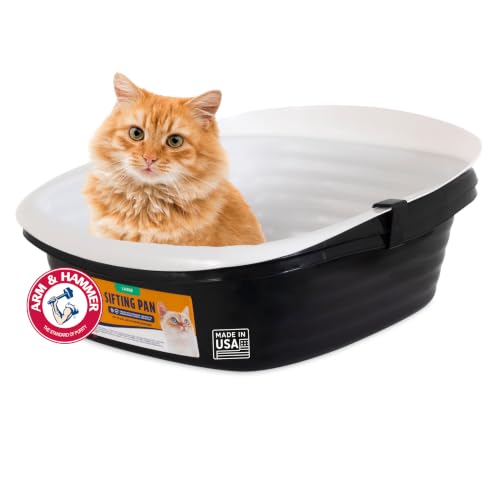
Petmate Arm & Hammer Large Sifting Litter Pan
Three nested pans include one sifting tray, so lifting the middle layer leaves clumps behind while clean litter falls through. That removes the scoop from the routine entirely, which helps since a kitten uses the box many times a day. Antimicrobial treated plastic limits odor causing bacteria between full cleanings.
Pros
- Sifting removes the need to scoop daily
- Three pans allow rotation while one dries
- Antimicrobial plastic slows odor build up
Cons
- Sifting works poorly with fine clumping litter
- Stacked pans are taller than a single tray

IRIS USA Open Top Cat Litter Box with Shield
A clip on shield rises above three sides to catch kicked litter while the front stays open and low. Removing the shield in the first weeks, then adding it once the kitten is confident, works well as a two stage setup. A side clipped scoop stays with the box instead of ending up on the floor.
Pros
- Shield can be added later as the kitten grows
- Open front keeps the box unintimidating
- Scoop stores on the box itself
Cons
- Shield clips can loosen with repeated removal
- Open design offers no odor containment
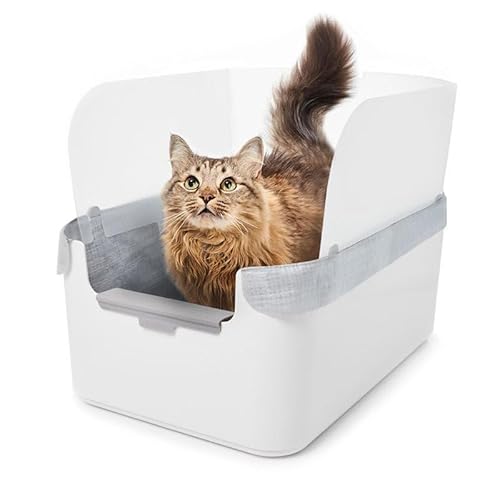
Modkat Tray Litter Box
A shallow tray pairs with a reusable tarpaulin liner, leaving no molded corners for waste to stick in. A low front wall suits a kitten, while a raised rear edge catches litter kicked backward. Neutral colors and a compact footprint keep the box from dominating a small bathroom.
Pros
- Seamless liner leaves nothing stuck in corners
- Low front entry works from kittenhood
- Reusable liner cuts single use plastic
Cons
- Liner needs replacing roughly once a year
- Costs more than a plain plastic pan

Petmate Basic Cat Litter Pan
A plain open pan with a wide low rim works well as the second or third box a kitten needs while learning. A nonstick surface rinses clean fast. Buying two lets you place boxes on separate floors, which cuts down on accidents caused simply by distance during house training.
Pros
- Cheap enough to buy several at once
- Wide low rim is easy for kittens to cross
- Nothing to assemble or clip together
Cons
- Thin walls flex when lifted full
- No scatter control at all
The lineup, side by side
| # | Model | Interior | Best for | Score | Price |
|---|---|---|---|---|---|
| 1 | Van Ness CP1 Small Cat Litter Pan | About 13.5 x 10 inches | Best overall for young kittens | 9.4 | Check price |
| 2 | PetFusion BetterBox Non-Stick Litter Box | About 22 x 17 inches | Best for growing kittens | 9.2 | Check price |
| 3 | Necoichi Portable Cat Litter Box | Collapsible fabric travel box | Best for travel and vet trips | 9.0 | Check price |
| 4 | Petmate Arm & Hammer Large Sifting Litter Pan | Three pans including one sifting tray | Best for easy cleaning | 8.8 | Check price |
| 5 | IRIS USA Open Top Cat Litter Box with Shield | About 19 x 15 inches | Best for litter scatter | 8.6 | Check price |
| 6 | Modkat Tray Litter Box | Open tray with reusable liner | Best design for small homes | 8.3 | Check price |
| 7 | Petmate Basic Cat Litter Pan | About 18.1 x 13.4 inches | Best budget spare box | 8.0 | Check price |
Good to know
What size litter box does a kitten need?
An interior length of about 13 to 18 inches works well at first, with sides no higher than roughly 3.5 inches. The Van Ness CP1 hits both figures. Plan to move up to a 20 inch or larger box before the cat turns six months old.
How high should the sides of a kitten litter box be?
Under three inches at the entry point suits an eight week old kitten. Higher walls are fine along the back and sides, as long as one edge stays low enough to step over without climbing.
When can a kitten start using a covered litter box?
Usually around four to six months old, once it moves confidently. Introduce a lid by first removing any flap door. If the kitten hesitates at the entrance, remove the cover and try again in a few weeks.
Where should a kitten’s litter box go?
Close to where the kitten sleeps and plays, in a quiet spot with a clear exit, kept away from food and water bowls. During house training, a box on each floor prevents accidents caused by distance alone.
What litter is safest for kittens?
Unscented fine clumping clay is standard from about eight weeks old. Very young kittens that mouth their litter do better on paper pellets. Scented litter and crystal litter put many kittens off using the box at all.
How often should you clean a kitten’s litter box?
Scoop at least twice a day, since kittens use the box far more often than adults. Fully empty and wash it weekly with unscented soap. A sifting pan like the Arm & Hammer set cuts down the effort involved.
Do kittens need a litter box while traveling?
For any trip over a couple of hours, yes. A collapsible option such as the Necoichi Portable Cat Litter Box fits in a carrier and gives the kitten somewhere familiar to go at a rest stop.
Why is my kitten going next to the litter box instead of inside it?
The usual causes are a step that is too high, a box too far away, or litter that is too deep or too heavily scented. Rule those out first, then have a vet check for a urinary issue if the behavior continues.
Final word
Start a new kitten on the Van Ness CP1 Small Cat Litter Pan, since a 3.5 inch wall removes the most common reason kittens miss the box. Owners who would rather buy once should go straight to the PetFusion BetterBox and its 22 inch interior. Add a Necoichi Portable box for the carrier, and keep at least two boxes down until house training is clearly settled.
Olivia Hartley
Olivia spent several years working at an animal shelter and a pet-supply retailer before joining the editorial team. She researches pet gear with an emphasis on safety, comfort and the fine print that owners often miss.

