Camping Tents That Hold Up in Real Weather Outside
The Coleman Skydome 6 is our top pick for most families thanks to fast pole-hub setup and tall headroom. Backpackers should choose the MSR Hubba Hubba 2 for its low trail weight, while the Coleman Sundome stays the safest budget buy.
The Coleman Skydome 6 suits most car campers who want tall headroom and a five-minute pitch, though its 21 pound packed weight rules out backpacking. Solo hikers and couples counting grams will prefer the MSR Hubba Hubba 2 instead.
Tent choice depends on how you travel, not just how many people sleep inside. We compared floor dimensions, rainfly coverage, pole materials, ventilation, and owner feedback on seam leaks to sort car-camping cabins from trail-ready shelters.
The top picks, ranked

Coleman Skydome 6-Person Tent
A pre-attached hub-and-pole frame lets one person pitch this dome in about five minutes. The steep walls add nearly a foot more headroom than a standard Coleman dome, so adults can move around without stooping.
Pros
- Hub poles cut pitch time to minutes
- Welded corners and covered zippers shed rain
- Center height fits standing adults
Cons
- Too heavy to carry far from the car
- Partial rainfly leaves upper windows exposed in driving rain

Coleman Sundome 4-Person Tent
This long-running dome uses a welded floor and inverted seams that owners report keeping dry through steady overnight rain. Two fiberglass poles cross the top, and a rear ground vent moves air on warm nights.
Pros
- One of the lowest prices for a sealed-floor tent
- Simple two-pole pitch newcomers manage alone
- E-port passes a power cord inside
Cons
- Fiberglass poles can crack in strong gusts
- Realistically fits two adults plus gear, not four
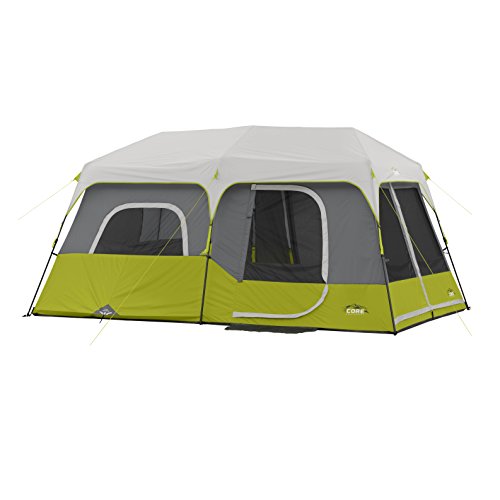
CORE 9-Person Instant Cabin Tent
Poles stay attached to the tent body, so the cabin snaps upright in around a minute. A removable divider splits the interior into two rooms, and near-vertical walls keep the full floor usable.
Pros
- Instant frame needs no pole assembly
- Divider creates separate adult and kid areas
- Zippered floor vents pull cool air in
Cons
- Bulky 31 pound pack size eats trunk space
- Large footprint needs a wide, flat site

Kelty Wireless 4 Tent
Two doors and two vestibules mean nobody climbs over a tentmate for a midnight exit. Freestanding aluminum poles hold a steady shape, and the full-coverage fly reaches close to the ground for wet weather.
Pros
- Dual doors and vestibules store boots outside
- Aluminum poles resist bending better than fiberglass
- Full fly gives real storm coverage
Cons
- Lower 53 inch peak means seated headroom only
- Vestibules are shallow for bulky packs
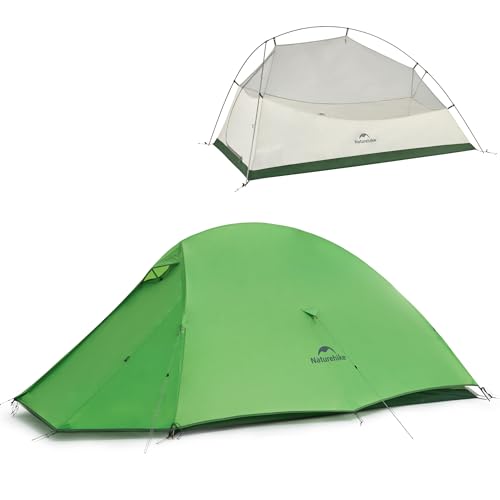
Naturehike Cloud-Up 2 Tent
Under four pounds packed, this double-wall tent brings backpacking weight down without a premium price. A 20D fabric and aluminum pole keep bulk small, and the mesh inner adds airflow in humid conditions.
Pros
- Light enough for multi-day hikes
- Double-wall build limits condensation
- Packs down to a small stuff sack
Cons
- Snug width for two broad-shouldered adults
- Single door forces climbing over a partner

MSR Hubba Hubba 2 Tent
Freestanding DAC aluminum poles and a taped 1200mm floor make this a durable choice for serious trips. It carries near three pounds yet offers two doors, and the fly pitches taut for wind-shedding.
Pros
- Strong DAC poles handle exposed ridgelines
- Two doors and vestibules for two hikers
- Compact fold fits inside a pack
Cons
- Costs far more than budget backpacking tents
- Thin floor benefits from a separate footprint

ALPS Mountaineering Lynx 1 Tent
A freestanding aluminum frame gives one hiker a stable shelter with a roomy vestibule for a pack. The polyester fly and 2000mm floor push back rain, and the single side door keeps entry simple.
Pros
- Vestibule shelters a full pack overnight
- High 2000mm floor rating resists ground moisture
- Freestanding pitch works on hard ground
Cons
- Heavier than premium solo ultralights
- Low 36 inch peak limits sitting room
What matters most
What to look for in a camping tent Match the tent to how you travel first. Car campers can carry heavy cabins with tall walls, while hikers must watch every pound. Check the floor rating in millimeters, since 1000mm handles light rain and 2000mm suits wetter ground. Aluminum poles bend less than fiberglass, and a fly that reaches near the ground blocks blowing rain better than a short cap fly.
Sizing for the people and gear you bring Tent capacity numbers assume shoulder-to-shoulder sleeping with no room for bags. A four-person rating fits two adults plus a dog and gear comfortably. Drop one number from the label if you want space for a cooler or a pack indoors. Peak height matters too, since a 72 inch cabin lets adults stand while a 40 inch dome means crawling.
Setup speed and weather resistance Instant and hub-pole tents trade packed size for a faster pitch, which helps when rain arrives before you do. Sealed seams and welded floor corners keep water out far better than a loose ground sheet. Cross-ventilation, through mesh panels or low and high vents, cuts the condensation that pools inside a sealed tent on cold nights.
Best tents for backpacking versus car camping For the trail, weight and pack size rule, so a sub-four-pound double-wall tent like the Cloud-Up or Hubba Hubba earns its keep. For the campground, comfort wins, and a Skydome or CORE cabin gives standing room and separate sleeping areas. Avoid dragging a 21 pound cabin onto a hiking trail, and skip a cramped ultralight for a family weekend at the car.
How they stack up
| # | Model | Sleeping capacity | Best for | Score | Price |
|---|---|---|---|---|---|
| 1 | Coleman Skydome 6-Person Tent | 6 people | Best overall for families | 9.3 | Check price |
| 2 | Coleman Sundome 4-Person Tent | 4 people | Best budget pick | 9.0 | Check price |
| 3 | CORE 9-Person Instant Cabin Tent | 9 people | Best for large groups | 8.9 | Check price |
| 4 | Kelty Wireless 4 Tent | 4 people | Best for car-camping comfort | 8.8 | Check price |
| 5 | Naturehike Cloud-Up 2 Tent | 2 people | Best lightweight value | 8.7 | Check price |
| 6 | MSR Hubba Hubba 2 Tent | 2 people | Best for backpacking | 9.1 | Check price |
| 7 | ALPS Mountaineering Lynx 1 Tent | 1 person | Best for solo campers | 8.6 | Check price |
Frequently asked questions
What size tent do I need for a family of four?
Look at a six-person rating for real comfort. Four-person labels assume no gear inside, so the extra floor space stores bags, a cooler, and lets kids spread out. The Skydome 6 gives a family room to change and store gear without stepping on each other.
Are cheap tents waterproof enough for rain?
Budget tents like the Coleman Sundome hold up in steady rain when the seams are sealed and the fly is set correctly. Owners report dry nights with the 1000mm floor. Heavy storms with wind test the fiberglass poles more than the fabric, so stake out every guy line.
What is the difference between a dome and a cabin tent?
Dome tents use crossing poles that slope the walls inward, which sheds wind well and packs smaller. Cabin tents use near-vertical walls for standing headroom and more usable floor, but they catch wind and weigh more. Choose a dome for backpacking and a cabin for the campground.
How much should a backpacking tent weigh?
Aim for under four pounds for a two-person trail tent. The Naturehike Cloud-Up 2 lands near 3.9 pounds and the MSR Hubba Hubba 2 near 3.1 pounds. Splitting poles, fly, and body between two hikers lowers each person’s carried load further.
Do I need a footprint under my tent?
A footprint is optional but extends floor life on rocky or root-covered ground. Thin ultralight floors like the Hubba Hubba benefit most. A cheap ground cloth cut slightly smaller than the tent works, since a sheet that sticks out collects rain and channels it under you.
Which tent sets up the fastest?
Instant tents with pre-attached poles pitch quickest. The CORE 9-Person Instant Cabin stands in about a minute, and the Coleman Skydome uses a hub system that takes roughly five minutes solo. Traditional pole-sleeve tents take longer and often need two people.
Can one person set up a large family tent?
Yes, with the right design. Hub-and-pole tents like the Skydome are built for solo setup because the frame stays connected. Very large cabins with separate poles are easier with two people, though the CORE instant frame still goes up alone.
How do I stop condensation inside a tent?
Open low and high vents to let moist air escape, and avoid sealing the tent fully on cold nights. Double-wall tents such as the Cloud-Up separate the mesh body from the fly, which moves condensation off your sleep area. Keeping wet gear in the vestibule helps too.
Are freestanding tents better than staked ones?
Freestanding tents stand on their poles alone, so you can pitch on hard or rocky ground and reposition easily. All the aluminum-pole tents here are freestanding. You still stake the fly and guy lines for storm stability, but the body holds shape without stakes.
The bottom line
For most campers heading out by car, the Coleman Skydome 6 is the pick, combining a quick hub-pole pitch with room to stand and stay dry. Backpackers who count every ounce should take the MSR Hubba Hubba 2 instead, and anyone on a tight budget will not go wrong with the proven Coleman Sundome.
Sierra Daniels
Sierra's background is in landscape design and nursery retail. She focuses on lawn and garden equipment, outdoor furniture and gear durability, weighing published specs against how materials actually hold up outside.


