6 Family Camping Tents That Sleep Six or More
Coleman Skydome 6-Person balances space, weather protection and setup speed for most families. CORE 9 Person Instant Cabin pitches fastest after a late arrival. Eureka Copper Canyon LX 6 gives full standing headroom for longer stays.
Coleman Skydome 6-Person is the tent most families should buy first. CORE 9 Person Instant Cabin wins on setup speed, and Eureka Copper Canyon LX 6 offers the most livable standing room.
Capacity numbers count sleeping pads laid edge to edge with nothing else inside, a scenario nobody actually camps in. Add duffels, a cot or a dog, and a six person tent sleeps four comfortably. We compared floor dimensions, peak heights, rainfly coverage and setup systems, plus owner reports about rain and wind, to rank these seven tents.
What we recommend

Coleman Skydome 6-Person Tent
Steep walls rise instead of sloping toward head height, giving noticeably more usable space than a classic dome. A pre attached pole system lets one adult handle setup alone. Owners report the welded floor and inverted seams hold up in real rain.
Pros
- Steep walls add real usable floor space
- One person can set it up alone
- Handles sustained rain well for the price
Cons
- Six person rating runs optimistic with gear packed in
- Single door means climbing over sleepers
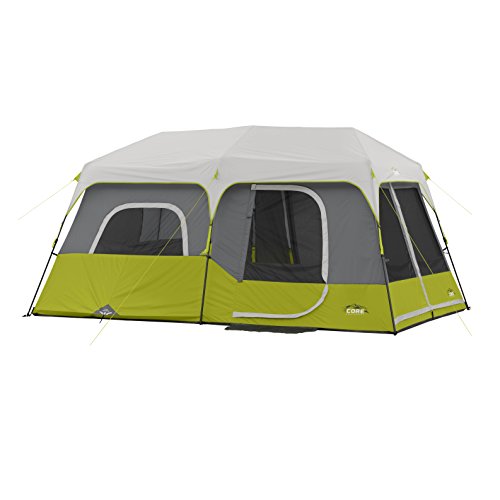
CORE 9 Person Instant Cabin Tent
Pre attached telescoping poles get this cabin standing in about a minute, which changes the mood of any trip starting after dark. A room divider splits the space into two sleeping areas for kids and adults on different schedules. Near vertical cabin walls make the nine person floor genuinely usable rather than nominal.
Pros
- Pitches in roughly a minute
- Room divider creates two separate spaces
- Near vertical walls maximize floor use
Cons
- Heavy and bulky once packed
- Tall shape catches wind on exposed sites
Eureka Copper Canyon LX 6 Person Tent
Seven feet of headroom spans nearly the whole floor, letting adults stand and dress normally, which matters more on a week long trip than a weekend. Steel and fiberglass poles keep the frame sturdy, and large mesh panels keep it breathable in summer heat. This tent suits a base camp rather than any distance carried on foot.
Pros
- True standing height throughout
- Excellent ventilation for hot weather
- Square floor fits cots and air beds neatly
Cons
- Partial rainfly leaves windows exposed in storms
- Packed weight runs heavy

Coleman Sundome 6-Person Tent
A simple two pole pitch has made the Sundome a default first family tent for years. Its floor keeps water out better than the low price suggests. Headroom concentrates near the center, so it suits sleeping more than sitting out a rainy afternoon.
Pros
- Simple and hard to pitch wrong
- Reliable floor and seam sealing
- Packs small and stores easily
Cons
- Sloping walls cut usable space at the edges
- Basic ventilation next to cabin styles

Kelty Wireless 6 Person Tent
Backpacking design habits carry over here, so fly coverage, guy points and pole quality sit a step above typical big box tents. Two doors and two vestibules mean nobody climbs over anyone at night. Boots stay outside the sleeping area yet dry under the vestibule.
Pros
- Two doors and vestibules for gear storage
- Full coverage fly handles real weather
- Better pole and fabric quality than entry tents
Cons
- Costs more than big box equivalents
- Setup takes longer than instant designs

Marmot Limestone 6P Tent
Marmot builds this tent for mountain weather rather than only July sunshine, pairing a full coverage fly with taped seams and a wind resistant pole structure. The floor runs generously sized, and ceiling height stays high across most of it. Cost climbs accordingly, but it earns its price when the forecast turns bad.
Pros
- Aluminum poles handle wind better than fiberglass
- Full coverage fly with sealed seams
- Roomy floor with high usable ceiling
Cons
- Premium price for a family tent
- Heavier than lighter weather focused models

Coleman WeatherMaster 6-Person Tent with Screen Room
An attached screen room adds a bug free living area, transforming a rainy week or a mosquito heavy lakeside site. A hinged door and tall ceiling beat crawling through a zipped panel for daily use. Footprint runs large, so check the pitch size at a site before booking.
Pros
- Screen room adds bug free living space
- Hinged door beats a zipped panel
- Tall ceiling suits longer stays
Cons
- Needs a large, level pitch
- Bulky and heavy to transport
Compared at a glance
| # | Model | Floor size | Best for | Score | Price |
|---|---|---|---|---|---|
| 1 | Coleman Skydome 6-Person Tent | 10 by 9 feet | Best overall | 9.4 | Check price |
| 2 | CORE 9 Person Instant Cabin Tent | 14 by 9 feet | Best for fast setup | 9.2 | Check price |
| 3 | Eureka Copper Canyon LX 6 Person Tent | 10 by 10 feet | Best for standing room | 9.0 | Check price |
| 4 | Coleman Sundome 6-Person Tent | 10 by 9 feet | Best budget | 8.8 | Check price |
| 5 | Kelty Wireless 6 Person Tent | 10 by 9 feet | Best value | 8.6 | Check price |
| 6 | Marmot Limestone 6P Tent | 10 by 9 feet 6 inches | Best for bad weather | 8.3 | Check price |
| 7 | Coleman WeatherMaster 6-Person Tent with Screen Room | 11 by 9 feet plus screen room | Best for long trips | 8.0 | Check price |
How to choose
How generous are tent capacity ratings really? Manufacturers calculate sleeping capacity with standard pads laid side by side and zero room for bags, boots or a dog. Most families settle on subtracting two people from the printed rating. A six person tent suits a family of four with duffels comfortably. A nine person cabin suits six people who want room to move.
Peak height vs usable height: what is the real difference? A dome tent reaches peak height at one point in the middle, then slopes away fast. A cabin tent holds close to full height across most of the floor. Rainy afternoons spent inside favor cabin geometry over an extra foot of quoted peak height. Wind heavy sites favor the dome shape instead, since it sheds gusts better.
Why does rainfly coverage matter more than peak height? A partial fly covers only the roof and leaves mesh windows exposed, fine in dry summer weather and miserable in driving rain. A full coverage fly reaches close to the ground and usually creates vestibules for wet boots. Taped or sealed seams matter here, along with a bathtub style floor that turns up at the edges.
Instant tent vs traditional poles: which setup is better? Instant tents with pre attached telescoping poles pitch in about a minute but pack heavy and bulky. Traditional pole sleeve or clip designs take longer and reward practice, yet they usually pack smaller and handle wind better. Pitching once in the yard before a trip beats reading instructions by flashlight at a campsite.
Frequently asked questions
What size tent does a family of four need?
A six person tent is the practical minimum once duffels and clothing enter the picture. Cots or trips longer than a few nights call for an eight or nine person cabin instead, giving room to live rather than just sleep.
Are instant tents worth the extra bulk?
Yes, if late arrivals or impatient kids are common on your trips. The tradeoff is a heavier, larger packed size and generally weaker wind performance than a comparable dome.
How do I keep a family tent dry in heavy rain?
Choose a full coverage rainfly, pitch on ground that sheds water rather than collects it, and guy out the fly properly. Keep gear away from the walls so condensation does not transfer onto it.
Do I need a footprint or groundsheet?
It is cheap insurance against floor abrasion and punctures. Trim it slightly smaller than the tent floor so rain does not pool between the layers.
Cabin or dome shape: which suits family camping better?
Cabins give more standing room and usable floor, suiting established campgrounds and longer stays. Domes shed wind and rain better, suiting exposed sites and shoulder season trips.
How many doors should a family tent have?
Two, if the budget allows it. A single door means someone climbs over sleeping bodies for every night time trip, and two doors also improve cross ventilation on warm nights.
Why does the inside of my tent get wet without rain?
That is condensation from breath and damp ground, not a leak. Open roof vents and window mesh, skip cooking inside, and leave a gap between gear and the tent walls to let air move.
How should a family tent be stored between trips?
Dry it fully before packing, even if that means pitching it at home for a day. A damp tent stored away grows mildew fast and ruins the waterproof coating.
Our pick
Coleman Skydome 6-Person is the family tent to recommend first because it balances usable space, weather protection and a setup one adult can manage. Pick the CORE 9 Person Instant Cabin when arriving late and pitching fast matters most, or the Eureka Copper Canyon LX 6 to stand up and stay a while.
Sierra Daniels
Sierra's background is in landscape design and nursery retail. She focuses on lawn and garden equipment, outdoor furniture and gear durability, weighing published specs against how materials actually hold up outside.