6 RV Holding Tank Treatments That Actually Work
Unique RV Digest-It leads with an enzyme and bacteria culture that clears clogged sensors within days, based on specifications and owner feedback. Camco TST Orange Scent follows for value with pre-measured drop-in tablets. Reliance Products Bio-Blast offers the lowest cost per treatment among liquid formulas.
Unique RV Digest-It, Camco TST Orange Scent, and Reliance Products Bio-Blast rank as the top three RV holding tank treatments here. Each relies on bacteria or enzymes to digest waste rather than cover odor with fragrance. Tank size and dump frequency decide which format works best, from liquid concentrate to drop-in tablet.
Formula type, dosage ratio, and format weighed most heavily in this comparison, pulled directly from product specifications. Owner feedback on sensor accuracy and odor control added a second layer of evidence. Products were then grouped by real use case, including full-time living, weekend trips, and portable toilets, instead of ranked on scent alone.
What we recommend

Unique RV Digest-It Holding Tank Treatment
A live bacteria and enzyme culture inside this liquid concentrate digests waste and toilet paper over several days. Owners report clogged tank sensors clear up after two or three doses. Both black and gray tanks accept the formula, and it contains no formaldehyde.
Pros
- Digests solid waste and toilet paper effectively
- Restores accurate sensor readings within days
- Works safely in black and gray tanks
Cons
- Full effect takes several days to appear
- Bottle cap can loosen and spill liquid

Camco TST Orange Scent RV Holding Tank Treatment
Pre-measured drop-in tablets remove the need for measuring cups with this formula. One tablet treats a standard black tank fill and leaves a light orange scent behind. Enzyme assistance breaks down waste while the formaldehyde-free base stays safe for septic systems.
Pros
- Skips measuring and pouring entirely
- Compact tablets store easily in small rigs
- Light scent avoids overpowering fragrance
Cons
- Cold water slows tablet dissolving
- Fixed dose can’t scale for larger tanks

Reliance Products Bio-Blast Enzyme-Based Holding Tank Treatment
Bio-Blast delivers an enzyme base at a lower cost per treatment than most liquid competitors. Waste and paper breakdown happen without added fragrance oils. Campers sensitive to strong deodorizer smells often choose this unscented option.
Pros
- Costs less per treatment than most liquids
- Unscented formula suits fragrance-sensitive campers
- Breaks down both waste and toilet paper
Cons
- Odor control lags behind scented formulas
- Hot weather demands more frequent reapplication
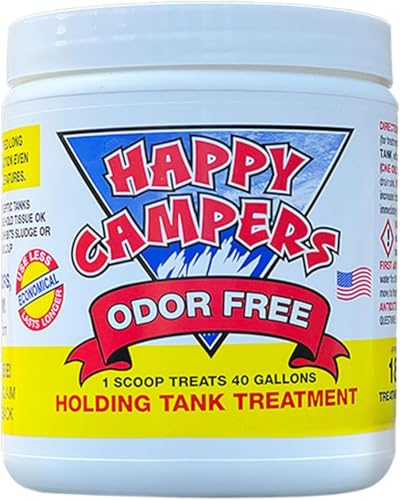
Happy Campers Organic RV Holding Tank Treatment
Powder packets suit frequent, ongoing use in this organic formula, pre-measured for daily doses. Full-time RVers manage daily tank cycles without harsh chemical fumes. Gray tanks and portable toilets accept the same packets as black tanks.
Pros
- Handles daily use without harsh fumes
- Organic formula skips synthetic chemical odor
- Treats black tanks, gray tanks, and portable toilets
Cons
- Packets take up more storage space than tablets
- Per-use cost runs higher than liquid concentrates

Walex Bio-Pak Drop-Ins Holding Tank Treatment
Walex sizes these single-use packets for cassette and portable toilets rather than full holding tanks. Each packet dissolves fast and controls odor for a few days of light use. A biodegradable formula fits occasional weekend trips well.
Pros
- Sized correctly for small portable toilets
- Dissolves quickly even in cold water
- Biodegradable formula breaks down safely
Cons
- Poor value for large permanent tanks
- Odor control window is shorter than full tank treatments

Thetford Aqua-Kem RV Holding Tank Deodorant
Aqua-Kem’s concentrated liquid holds up through extended dry-camping stretches and off-season storage. Formaldehyde-free chemistry prevents odor buildup even after weeks of sitting unused. A blue-tinted dye confirms the treatment mixed through the tank during inspection.
Pros
- Controls odor through long storage periods
- Dye confirms the treatment mixed properly
- Suits infrequent dumping schedules well
Cons
- Blue dye can stain light-colored fittings
- Scent runs stronger than unscented options

Camco TST Ultra-Concentrate Tank Deodorizer
This ultra-concentrated formula stretches further per bottle than standard-strength liquids. Large tanks or multiple rigs get more treatments from a single container. Lavender scent rounds out a formula that still skips formaldehyde and dye.
Pros
- Yields more treatments per bottle than standard liquids
- Dye-free formula avoids staining tank components
- Formaldehyde-free lavender scent covers odor
Cons
- Small bottle makes precise measuring important
- Lavender scent may overwhelm some users
How to pick the right one
What RV Holding Tank Treatment Actually Does Bacteria and enzymes break down solid waste, toilet paper, and biofilm inside black and gray tanks. Untreated sludge clogs sensors and traps the gas that causes odor. Some formulas add a live culture, others rely on a chemical digestant, and several combine both. Older formaldehyde-based treatments have mostly given way to formaldehyde-free versions that still handle heavy use. Matching a formula to how often the rig gets dumped narrows the field quickly.
Liquid vs Drop-In vs Powder: Which Format Fits Your Tank Liquid concentrates let campers scale the dose to match tank size, which suits larger or irregularly shaped tanks. Drop-in tablets skip measuring altogether, trading precision for speed. Powder packets dissolve a bit slower in cold water but pack flat in tight storage spaces. Weekend campers often reach for single-dose tablets since tracking ounces per gallon adds a step they would rather skip. Cost per treatment tends to drop with liquid concentrates as tank usage climbs, which favors full-time RVers.
Best RV Tank Treatment for Full-Time, Weekend, and Portable Use Full-time RVers cycle through treatment every few days, so cost per use and mild chemistry matter more than scent strength. Weekend campers dump less often and can rely on stronger single-dose tablets without worrying about repeated chemical exposure. Portable and cassette toilet owners need smaller packets sized for tanks under five gallons rather than full holding tank doses. Dry campers who go weeks between dump stations benefit from formulas built for extended storage, since standard treatments can lose strength after a week or two. Matching packet size to tank capacity avoids both underdosing and wasted product.
Why Tanks Still Smell After Treatment and How to Fix It Persistent odor despite regular treatment usually points to low water levels rather than a weak product. Every flush needs enough water to submerge waste fully and keep the bacterial culture active. Dumping too early, before the culture finishes breaking down solids, leaves residue that causes odor on the next fill. Sensor errors often trace back to dried buildup on the tank wall, which a wand flush clears better than treatment alone. Rinsing the tank right after dumping resets the cycle and stops buildup from compounding over time.
The lineup, side by side
| # | Model | Format | Best for | Score | Price |
|---|---|---|---|---|---|
| 1 | Unique RV Digest-It Holding Tank Treatment | Liquid concentrate | Best overall | 9.4 | Check price |
| 2 | Camco TST Orange Scent RV Holding Tank Treatment | Drop-in tablets | Best value | 9.1 | Check price |
| 3 | Reliance Products Bio-Blast Enzyme-Based Holding Tank Treatment | Liquid concentrate | Best budget | 8.8 | Check price |
| 4 | Happy Campers Organic RV Holding Tank Treatment | Powder packets | Best for full-time RVers | 8.6 | Check price |
| 5 | Walex Bio-Pak Drop-Ins Holding Tank Treatment | Single-use drop-in packets | Best for portable toilets | 8.4 | Check price |
| 6 | Thetford Aqua-Kem RV Holding Tank Deodorant | Liquid concentrate | Best for long-term storage | 8.2 | Check price |
| 7 | Camco TST Ultra-Concentrate Tank Deodorizer | Liquid ultra-concentrate | Best for large or multiple tanks | 8.0 | Check price |
Frequently asked questions
What does RV holding tank treatment actually do?
It introduces bacteria, enzymes, or a chemical digestant that break down waste and toilet paper. This process shrinks the sludge that clogs sensors and traps odor gas. Sensors also read more accurately once solid buildup stops coating the tank wall.
How often should you add tank treatment?
Most labels call for one dose after every dump and refill. Full-time RVers sometimes treat every few days when the black tank fills faster than average. Dosage and frequency vary by formula strength, so checking the label matters more than following a fixed rule.
Is formaldehyde-free treatment as effective as older formulas?
Enzyme and bacteria-based products break down waste as well as formaldehyde versions did, based on current formulations. Formaldehyde-free formulas also stay safer for septic systems and dump station treatment plants. Many campgrounds now require formaldehyde-free products for exactly that reason.
Can you use the same treatment in black and gray tanks?
Several liquid and powder treatments list both tank types on the label. Gray tanks generally need less frequent treatment since they hold less solid waste. Checking compatibility on the packaging prevents applying a black-tank-only formula where it isn’t needed.
How much treatment do you need for a small vs large tank?
Dosage usually scales with gallons, commonly one ounce of liquid per 40 gallons of capacity. Pre-measured tablets and packets are typically sized for a standard 30 to 40 gallon black tank. Larger aftermarket tanks may need two doses to match the ratio on the label.
Do drop-in tablets control odor as well as liquid treatments?
Tablets use enzyme or chemical bases similar to liquids, just in solid form, according to product listings. Cold water can slow how fast a tablet dissolves, which may delay full effectiveness. For most weekend trips, the gap in odor control stays minor.
Is RV holding tank treatment safe for septic systems?
Formaldehyde-free formulas break down safely at dump stations and home septic systems. Enzyme and bacteria-based products avoid killing the beneficial bacteria septic tanks depend on. A formaldehyde-free label matters most for campers dumping into a home septic connection.
Why does an RV tank still smell after treatment?
Low water during flushes is the most common cause of lingering odor. A faulty tank vent or a dried p-trap elsewhere in the RV can let sewer gas escape independent of the tank. Buildup on the tank wall from past neglect sometimes needs a manual wand flush before treatment alone can finish the job.
What is the best RV holding tank treatment for full-time living?
Powder packets and enzyme-based liquids designed for daily cycles tend to fit full-time use best. Mild, non-toxic chemistry matters more than scent strength when treatment happens every few days. Happy Campers Organic and Unique RV Digest-It both target this frequent-use pattern.
Final word
Enzyme-based liquids like Unique RV Digest-It handle the widest range of tank sizes and use cases. Drop-in tablets and powder packets trade some flexibility for convenience, which suits weekend campers and full-time RVers differently. Matching format and dosage to dump frequency matters more than any single brand claim.
Sierra Daniels
Sierra's background is in landscape design and nursery retail. She focuses on lawn and garden equipment, outdoor furniture and gear durability, weighing published specs against how materials actually hold up outside.