How to Pick Affordable Horse Boots That Still Protect
Weaver Leather Prodigy Athletic Boots protect the splint bone best for the price, and the closure stitching survives repeated washing. Tough 1 Neoprene Splint Boots handle daily schooling at low cost. Intrepid International Neoprene Splint Boots are the cheapest set here with a genuine reinforced strike pad.
Weaver Leather Prodigy Athletic Boots reach the splint bone instead of stopping at mid cannon, and their stitched closures outlast the washing that kills cheaper straps. Tough 1 Neoprene Splint Boots cost little and fit a wide range of legs for everyday schooling. Intrepid International Neoprene Splint Boots are the cheapest set that still gets pad placement right.
Listing photos rarely show where a strike pad actually sits, so a boot can look protective and still miss the splint bone entirely. We compared pad placement, neoprene thickness, stitched versus glued closures, breathability and how each boot held up after washing off mud, weighing what long term owners report about which straps fail first.
What matters most
What does a splint or brushing boot actually protect? Its job is shielding the inside of the lower leg, where the opposite hoof strikes during movement. That means the splint bone and cannon area take the impact. A reinforced pad must sit low enough to cover the splint bone, not just the mid cannon. Photos in listings rarely show this placement clearly, so check pad position before buying.
How tight should a horse boot fit? Fit outweighs material when it comes to comfort and function. A boot that rotates during work rubs the leg raw, while one fastened too tight restricts circulation. Aim for snug enough that a finger barely slides underneath, with the pad centered on the inside of the leg. Recheck fit after ten minutes of work, since boots settle. Cannon bone circumference, not your usual size, should guide the purchase.
Does neoprene make a horse’s legs too hot? Neoprene costs little, washes easily and absorbs impact well, which explains its popularity in budget boots. Its downside is insulation, since it traps heat against the leg during sustained work. Short schooling sessions rarely cause problems. Long rides, hot climates or horses prone to leg heat call for perforated or ventilated designs instead, and removing boots promptly after work helps regardless of material.
How long should a set of boots last with proper care? Closures fail before neoprene does in most budget boots, either wearing smooth or pulling away from the boot body. Stitched straps outlast glued ones by a wide margin. Rinsing mud and grit from the hook side regularly prevents grip loss. Washing after muddy work and air drying away from direct heat can stretch a cheap set across several seasons instead of one.
The top picks, ranked

Weaver Leather Prodigy Athletic Boots
This boot extends the strike pad further down the inner leg than most budget options, reaching the splint bone instead of stopping at mid cannon. Reinforced stitching holds the closures together long after glued straps give out on cheaper boots. Owners report the neoprene stays flexible even after dozens of washes.
Pros
- Strike pad reaches the splint bone, not just mid cannon
- Closure stitching outlasts glued budget straps
- Neoprene stays flexible after repeated washing
Cons
- Warmer than ventilated boots on long summer rides
- Sizing runs generous for fine legged horses

Tough 1 Neoprene Splint Boots
Many yards default to this boot because it costs little, fits a wide range of leg shapes and hoses clean in seconds. Neoprene thickness is reasonable and the strike pad sits in the right spot. Heat builds up during long sessions, since neoprene traps warmth against the leg.
Pros
- Low cost for a full set of four boots
- Fits a broad range of leg shapes
- Hoses clean in seconds after muddy work
Cons
- Neoprene traps heat during long rides
- Hook and loop wears faster than premium closures

Intrepid International Neoprene Splint Boots
A genuine reinforced pad covers the strike zone here, unlike some competitors that rely on plain neoprene at this price. Straps are the first part to wear out and overall construction stays basic. Light schooling, turnout and growing youngsters are what this boot suits best.
Pros
- Lowest price for a boot with a real strike pad
- Suits light schooling and turnout well
- Cheap enough to keep as a spare set
Cons
- Straps wear out sooner than pricier boots
- Thinner neoprene absorbs less impact

Roma Neoprene Brushing Boots
Field use, not arena work, drove this design, so the shape stays put through hours of turnout. Closures resist being pulled loose by mud and movement. Cleanup after a wet week is straightforward, though the heavier build is more than a short schooling session needs.
Pros
- Stays in position through long turnout
- Closures resist loosening in mud
- Cleans up well after wet conditions
Cons
- Heavier than needed for short schooling sessions
- Limited airflow in warm weather
Shires ARMA Neoprene Brushing Boots
A closer, contoured fit reduces the rubbing that comes from a boot rotating mid stride. Sizing stays consistent across the range, which helps when ordering without a fitting. Conventional leg shapes suit this boot better than very fine or very heavy limbs.
Pros
- Contoured shape cuts down on rotation and rubbing
- Sizing consistency simplifies ordering online
- Low profile stays neat during a schooling session
Cons
- Close fit suits average leg shapes best
- Less forgiving if you size incorrectly

Professional’s Choice VenTECH Splint Boots
Perforated neoprene lets air move through, solving the heat problem that affects every other boot on this list. Construction quality sits above the rest of the group. Cost is the highest in this roundup, so it earns its place only if heat is a genuine issue for your horse.
Pros
- Perforations noticeably cut down heat buildup
- Build quality is a step above the rest of the group
- Holds its shape well over years of use
Cons
- Costs more than every other boot on this list
- Perforations collect grit that needs regular rinsing
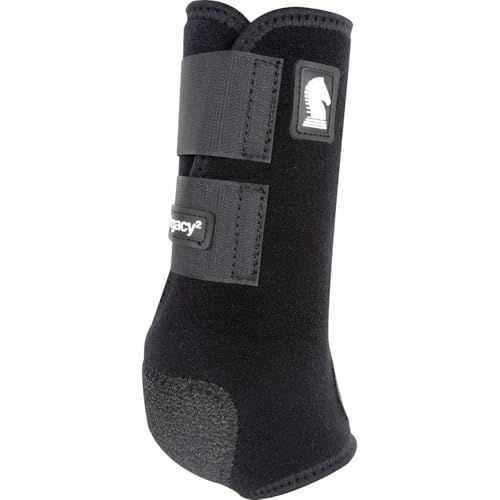
Classic Equine Legacy2 Front Boots
Hard turning disciplines call for suspensory support as well as strike protection, and a contoured sling under the fetlock delivers both. That specialization is also its limit, since a flatwork horse gains little from it. Construction quality is a clear step above plain neoprene boots.
Pros
- Adds suspensory support beyond strike protection
- Double locking closures stay put under load
- Durable enough for regular competition use
Cons
- More support than a flatwork horse needs
- Priciest and least budget appropriate option here
Side by side
| # | Model | Type | Best for | Score | Price |
|---|---|---|---|---|---|
| 1 | Weaver Leather Prodigy Athletic Boots | Athletic splint boot | Best overall | 9.4 | Check price |
| 2 | Tough 1 Neoprene Splint Boots | Neoprene splint boot | Best value | 9.2 | Check price |
| 3 | Intrepid International Neoprene Splint Boots | Neoprene splint boot | Best budget | 9.0 | Check price |
| 4 | Roma Neoprene Brushing Boots | Brushing boot | Best for turnout | 8.8 | Check price |
| 5 | Shires ARMA Neoprene Brushing Boots | Brushing boot | Best for schooling | 8.6 | Check price |
| 6 | Professional’s Choice VenTECH Splint Boots | Ventilated splint boot | Best for ventilation | 8.3 | Check price |
| 7 | Classic Equine Legacy2 Front Boots | Support front boot | Best for performance | 8.0 | Check price |
Common questions
What is the difference between splint boots and brushing boots?
The terms are used almost interchangeably. Brushing boot is more common in the United Kingdom, splint boot in North America. Check strike pad position rather than the name on the packaging.
How tight should horse boots be?
A finger should barely fit between the boot and the leg, snug but not restricting circulation. Boots commonly settle and loosen slightly, so recheck after ten minutes of work.
Can horses wear boots during turnout?
Some designs are made for it, but many are not, and leaving boots on for hours in wet conditions traps moisture and grit against the skin. Choose a turnout specific design and remove boots daily to check the legs underneath.
How do you clean neoprene horse boots?
Hose off the bulk of the mud first, then wash with mild soap and water. Rinse the hook and loop thoroughly to clear embedded grit, then air dry away from direct heat. Machine washing and tumble drying degrade neoprene quickly.
Do budget boots protect as well as expensive ones?
For ordinary schooling and turnout, a well fitted budget boot with a properly placed strike pad handles the core job. Extra cost buys ventilation, suspensory support, tougher closures and a boot that keeps its shape longer.
How long do horse boots typically last?
A decent budget set gives two to three seasons with regular cleaning and drying. Closures usually fail before the neoprene does, so keeping grit out of the hook and loop extends life the most.
Should a horse wear boots on all four legs?
It depends on the work. Front boots address the most common strike injuries. Hind boots are worth adding for hard turns, jumping or any horse that interferes behind, so watch how your horse moves before deciding.
Do horse boots cause leg heat?
Neoprene raises leg temperature during sustained work, which is why ventilated designs exist. Remove boots promptly after riding instead of leaving them on while you untack.
What size horse boots should I buy?
Measure the cannon bone circumference rather than guessing from your horse’s height or breed. Sizing charts vary between brands, so a size that fits one boot may not fit another.
Are hind boots necessary for jumping?
Many jumping horses interfere or overreach on landing, so hind boots add real protection there. Watch for nicks or rubs on the hind legs after work to judge whether your horse actually needs them.
Final word
Weaver Leather Prodigy Athletic Boots earn the top spot because the strike pad reaches the splint bone and the stitched closures survive washing that kills cheaper boots. Everyday schooling calls for less, and Tough 1 Neoprene Splint Boots hose clean in seconds for that job. Riders working long sessions in heat get the clearest upgrade from Professional’s Choice VenTECH Splint Boots, the one boot here built to solve that specific problem.
Olivia Hartley
Olivia spent several years working at an animal shelter and a pet-supply retailer before joining the editorial team. She researches pet gear with an emphasis on safety, comfort and the fine print that owners often miss.