How to Pick a Reptile Terrarium for Size and Ventilation
Front opening glass, like the Exo Terra Glass Natural Terrarium, suits most humidity loving reptiles. The REPTI ZOO Reptile Glass Terrarium adds more floor space for terrestrial species at a similar build quality. Chameleons need constant airflow, which is why the Zoo Med ReptiBreeze Open Air Screen Cage suits them better than any glass option.
Species dictate the build far more than budget does. Crested geckos and tropical snakes need glass that traps humidity, while chameleons need a screen cage that keeps air moving. The Exo Terra Glass Natural Terrarium handles the widest range of humidity loving species among the seven compared here. REPTI ZOO’s Reptile Glass Terrarium offers more floor space for terrestrial lizards, and the Zoo Med ReptiBreeze Open Air Screen Cage is the one real fit once a chameleon enters the picture.
Terrarium shopping trips up new keepers because glass and screen solve opposite problems. Glass locks in heat and moisture, which suits tropical species but can suffocate one that needs airflow. Screen ventilates constantly, which chameleons require but which drains humidity from a room within minutes. We compared construction type, ventilation design, access style, floor space and lid strength for mounting lights. Then we checked those specs against what owners report about seals, door alignment and long term durability.
The shortlist, ranked

Exo Terra Glass Natural Terrarium
Dual front doors open at the animal’s eye level instead of from above, which many reptiles read as less threatening. A raised base frame leaves room for a substrate heater underneath, and the stainless mesh lid passes UVB and infrared light through cleanly. A printed background ships fitted as standard, though many keepers swap it for a custom bioactive build.
Pros
- Front doors lower stress during feeding and cleaning
- Sealed glass panels hold humidity for tropical species
- Wiring ports keep heat and misting cables tidy
Cons
- Weighs enough to make repositioning difficult once planted
- Costs more than screen or all plastic enclosures
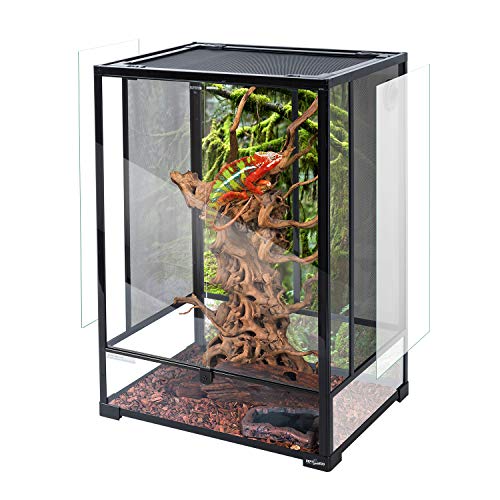
REPTI ZOO Reptile Glass Terrarium
REPTI ZOO trades some finish for extra floor area, which matters most for terrestrial species like bearded dragons and leopard geckos. Front doors lock, and the screen top carries a lighting fixture without sagging. Owners report that door alignment needs attention during assembly, so check silicone seams before the tank is stocked.
Pros
- More floor space per unit than most glass competitors
- Screen top supports a mounted lighting fixture
- Locking doors suit escape prone species
Cons
- Door alignment needs attention during assembly
- Seam quality varies between individual units

Zoo Med ReptiBreeze Open Air Screen Cage
Chameleons develop respiratory infections in still air, so an all screen build is the standard recommendation rather than a workaround. An aluminum frame keeps the tall cage light enough for one person to move once furnished. Every wall doubles as a climbing surface, though humidity drains out almost as fast as a mister adds it.
Pros
- Airflow matches what chameleons and arboreal lizards need
- Aluminum frame stays light even fully furnished
- Screen walls give climbing grip on every side
Cons
- Cannot hold humidity without an automated mister
- Mesh traps feeder insects and needs regular cleaning
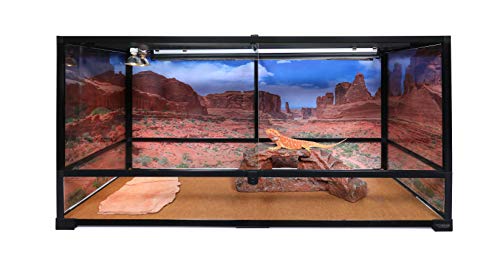
Carolina Custom Cages Terrarium
Adult bearded dragons, uromastyx and monitors outgrow the footprints most brands stop at, which is the gap Carolina Custom Cages fills. Front doors slide or hinge across the full width for cleaning and handling. Shipping weight is substantial, so decide where the finished enclosure will sit before it arrives.
Pros
- Footprint sized for adult monitors and large lizards
- Full width doors ease cleaning and handling
- Frame holds up well at larger sizes
Cons
- Heavy enough that one person cannot assemble it alone
- Requires a stand rated for the finished weight
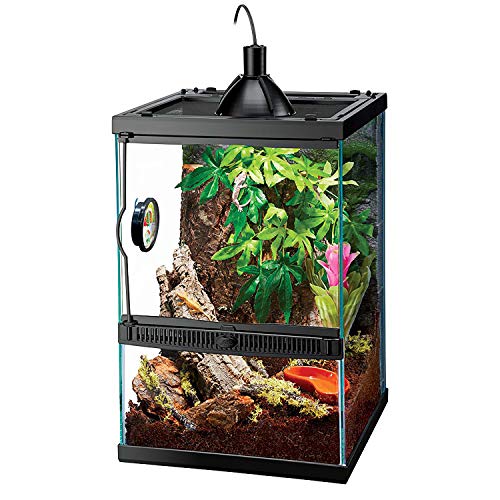
Zilla Front Opening Terrarium
Zilla keeps the layout simple: one front door, a locking screen top and a raised base for under tank heat. Ventilation suits temperate species without extra add ons. Finish is plainer than premium glass builds, with a basic background, but the core setup covers a first snake or gecko correctly.
Pros
- Covers the basics for a first reptile without extras
- Locking top suits escape prone species
- Raised base works with an under tank heat mat
Cons
- Background and fittings are basic compared to premium glass
- Door seal fits looser than higher end glass units

Tetra Fauna Deluxe ReptoHabitat
Tetra bundles a tank, screen top and basic decor so a first time keeper has a working setup on day one. Top access makes deep cleaning simple but stresses species that dislike overhead reaching. Included heating and lighting are entry level, and most owners replace them within the first few months.
Pros
- Functional straight out of the box for a first setup
- Top access simplifies deep cleaning
- Lower cost entry point for a complete starter kit
Cons
- Top opening design stresses nervous species
- Bundled heating and lighting need upgrading quickly

Exo Terra Faunarium
Every keeper eventually needs a faunarium for quarantine, transport or separating feeding animals, even without a permanent tropical setup. Molded plastic sterilizes easily between uses, and a hinged flap in the lid allows feeding without lifting the whole top. Ventilation is generous enough that humidity drops fast, so long term tropical species need a different enclosure.
Pros
- Sterilizes quickly between different animals
- Feeding flap avoids opening the entire lid
- Light enough to carry to a vet visit
Cons
- Not built as a permanent home for most species
- Vented lid lets humidity escape quickly
What matters most
Should you choose glass or screen for your reptile? Species decide this before preference does. Humid climate animals, including crested geckos, tropical snakes and dart frogs, need glass because it locks in moisture and heat. Chameleons and several arboreal lizards need constant fresh air, since stagnant conditions bring on respiratory infections quickly. Hybrid builds pair a glass lower section with a screen upper half for animals that need both. Check a species care sheet before assuming either build works for a given animal.
How much floor space and height does a reptile actually need? Terrestrial species such as bearded dragons and leopard geckos live across the floor, so a long, wide enclosure beats a tall one of equal volume. Arboreal animals, including chameleons and many tree snakes, use vertical space instead and need branches more than floor area. Gallon capacity hides this difference completely. Compare length, depth and height figures against a care sheet for the animal’s adult size, never its size at purchase.
Is front opening access worth paying more for? Reaching down from above mimics how a hawk or owl approaches, and many reptiles treat it as a genuine threat. Front doors let a keeper feed, clean and handle at the animal’s level, lowering stress and easing taming. Shelf placement also gets easier, since no overhead clearance is needed. Latches still need to hold firmly, because a persistent snake will test every gap in a door.
What else should you plan before buying heating and lighting? An enclosure has to physically support whatever equipment the species requires. Confirm the top will carry a UVB fixture and a basking lamp without sagging, and check for ports or gaps for a thermostat probe and misting lines. A raised base matters if an under tank heater is part of the plan. Humidity is hardest to fix after setup. A dry room paired with a humidity loving species calls for glass and an automated mister rather than relying on hand misting.
Compared at a glance
| # | Model | Construction | Best for | Score | Price |
|---|---|---|---|---|---|
| 1 | Exo Terra Glass Natural Terrarium | Glass with dual front doors | Best overall | 9.4 | Check price |
| 2 | REPTI ZOO Reptile Glass Terrarium | Glass with hinged front doors | Best value glass | 9.2 | Check price |
| 3 | Zoo Med ReptiBreeze Open Air Screen Cage | Aluminum frame, black screen on all sides | Best for chameleons | 9.0 | Check price |
| 4 | Carolina Custom Cages Terrarium | Glass body with screen top | Best for large lizards | 8.8 | Check price |
| 5 | Zilla Front Opening Terrarium | Glass with single front door | Best for beginners | 8.6 | Check price |
| 6 | Tetra Fauna Deluxe ReptoHabitat | Glass tank with screen cover | Best starter kit | 8.3 | Check price |
| 7 | Exo Terra Faunarium | Molded plastic with vented lid | Best for juveniles and quarantine | 8.0 | Check price |
Common questions
What size terrarium does a reptile need?
Size by the animal’s adult dimensions and how it lives, not its size at purchase. Terrestrial lizards need length and width. Arboreal species need height instead. A species specific care sheet gives real minimum floor area, since gallon figures alone hide whether that space is usable.
Is glass or screen better for a pet reptile?
Neither wins outright, it depends on the species. Glass traps heat and humidity, which suits tropical and temperate animals. Screen keeps air moving constantly, which chameleons need to avoid respiratory illness.
Do reptile terrariums need front opening doors?
Front access is not mandatory, but it changes daily handling for the better. Reaching in from above resembles a predator’s approach and stresses many species. Front doors also let you place the enclosure on a shelf, since no overhead clearance is required.
How do you keep humidity up in a screen enclosure?
It is genuinely difficult, which is why screen suits species that tolerate lower humidity. An automated mister on a timer, a fogger, live plants and a moisture retentive substrate all help. Covering part of the screen with acrylic can reduce airflow further for species that need it.
Can a fish tank work as a reptile terrarium?
For some terrestrial species, yes, with a secure screen lid added. Top only access and poor cross ventilation are the main drawbacks. Glass depth on a fish tank often makes mounting heating or lighting awkward too.
How often should a reptile terrarium be cleaned?
Spot clean waste and uneaten food daily, and change water daily as well. A full substrate change and disinfection typically happens monthly for simple setups. Bioactive enclosures with a cleanup crew need full changes far less often.
Do reptile terrariums need locking doors?
Snakes and climbing species make locks close to essential. A snake loose in a house is a real problem, not a minor inconvenience. Locking screen tops and door latches come standard on better built enclosures, and aftermarket clips work on the rest.
What surface should a terrarium sit on?
Choose a stand or surface rated well above the filled weight, since substrate, water and decor add up fast. The surface needs to be flat, because an unsupported glass base can crack under pressure. Pair any under tank heater with a thermostat and make sure the base is raised.
Top opening or front opening, which is better for a reptile?
Front opening lowers stress for most species and works well on a shelf. Top opening enclosures are easier to deep clean and often cost less. Nervous or defensive species usually do better with a front door.
What is the best reptile terrarium for a beginner?
A front opening glass terrarium with a locking screen top and a raised base covers most first setups well. Look for adequate ventilation for the specific species and room to add a heat mat underneath. Starter kits bundle basics but often need a lighting or heating upgrade within months.
Our take
Most keepers should start with the Exo Terra Glass Natural Terrarium, since front access, sealed glass and built in wiring ports make daily care easier for years. Choose the REPTI ZOO Reptile Glass Terrarium instead when floor space matters more than finish detail. Chameleon keepers should skip both and pick the Zoo Med ReptiBreeze Open Air Screen Cage, since airflow is a health requirement for that species rather than a preference.
Olivia Hartley
Olivia spent several years working at an animal shelter and a pet-supply retailer before joining the editorial team. She researches pet gear with an emphasis on safety, comfort and the fine print that owners often miss.

