What Should Small Pet Birds Be Eating Daily?
Kaytee Forti-Diet Pro Health Parakeet Food ranks first, pairing coated seed with pellets so selective feeders still get vitamins. ZuPreem FruitBlend Pellets suit any bird moving off an all-seed diet. Lafeber Classic Nutri-Berries bridge the two, binding whole seed into foraging clusters with a complete base.
Keeping budgies, cockatiels, finches or canaries and want one dependable staple? Kaytee Forti-Diet Pro Health Parakeet Food is the sensible starting point. ZuPreem FruitBlend Pellets fit better once a vet has recommended moving off seed, and Lafeber Classic Nutri-Berries make that switch far less painful.
Picking bird food is harder than it looks, because birds eat what they like rather than what balances. Sunflower and millet go first, the rest gets kicked out, and a balanced bag turns into a high-fat diet in practice. We compared guaranteed analysis panels, ingredient order, seed and pellet sizing against species, added vitamins and probiotics, plus what owners report about waste and acceptance. Discuss any diet change with an avian vet, particularly for an older or unwell bird.
Before you buy
Seed, pellets, or both: what should a small bird eat daily? All-seed diets cause more nutritional problems in pet birds than anything else. Birds eat what they enjoy, not what balances, so a mix becomes a fat-heavy diet within days. Formulated pellets fix that by putting identical nutrition in every bite, which is why avian vets usually want them as the base. Seed still has a role as a measured portion and a training reward. Most owners settle on a pellet base, a small daily seed serving and fresh vegetables. That arrangement holds up better than an all-or-nothing switch.
How to read a bird food label past the marketing Ingredient order tells you most of the story, since the first three items make up the bulk of the bag. Guaranteed analysis comes next: check crude protein and crude fat, and treat a high fat figure as a sign of heavy sunflower or safflower content. Words like natural and premium carry no legal definition. A stated complete diet claim does mean the manufacturer intends it as the sole food. One detail matters more than the rest: vitamins sprayed onto hulls get discarded when the bird shells the seed, so a fortified mix is not equal to a pellet.
How to match food to your bird’s species and beak size Small bird foods are not interchangeable across species. Finches and canaries need fine seed such as canary grass and millet, and cannot manage a large parakeet pellet. Budgies handle standard parakeet mixes and small pellets comfortably. Cockatiels take larger seed and pellet grades and eat considerably more by weight. Buying a bag sized for a bigger bird leads to waste, because your bird eats only the smallest fragments and leaves the balanced remainder. Check the species named on the bag before the brand.
How to switch a fussy bird onto pellets safely Birds recognise food by sight, so a sudden swap can leave one refusing to eat, and small birds cannot fast for long. Owners report gradual works: blend a small proportion of the new food into the familiar one, then raise it over a week or two. Offer the new food first thing in the morning when appetite peaks. Weigh the bird and watch droppings throughout the transition. Never starve a bird into converting. If weight drops or eating stops, revert to the old food and speak to an avian vet before trying again.
Our top picks

Kaytee Forti-Diet Pro Health Parakeet Food
Most budgie owners land here, and the reason is the pellet component mixed through the seed. Kaytee coats the blend with vitamins, omega-3 and probiotics, so even a bird picking favourites gets some of the formula. Seed sizing targets parakeets and small conures, not finches or canaries.
Pros
- Seed-raised birds accept it without a fight
- Pellet share survives selective feeding better than coated seed alone
- Stocked almost everywhere, so restocking is easy
Cons
- Birds still pick out favourites and waste some
- Seed pieces are too large for finches and canaries
ZuPreem FruitBlend Flavor Pellets for Small Birds
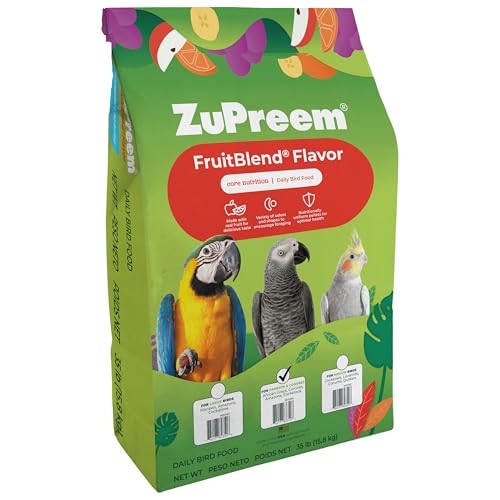
Avian vets often name FruitBlend when a bird needs a complete formulated diet instead of a mix. Fruit flavouring and colour exist to make that switch palatable to a bird raised on millet. Small bird sizing is shaped for budgies, lovebirds and cockatiels, and owners report conversion runs over days or weeks rather than overnight.
Pros
- Identical nutrition in every bite, so nothing gets picked around
- Small pellet size suits budgies and cockatiels
- Cage floor waste drops sharply against seed
Cons
- Seed-raised birds resist at first and need a slow transition
- Added colours put off owners who want a plain formula

Lafeber Classic Nutri-Berries for Cockatiels
Whole seeds and grains get bound into a ball around a balanced base, so a bird has to work at it. That combination gives foraging behaviour and complete nutrition in one item, which is why it works as a step between seed and pellets. Owners report a single berry holds a cockatiel’s attention far longer than a full seed dish.
Pros
- Genuine enrichment value for a caged bird
- Complete nutrition arrives in a seed-like format
- Useful intermediate step when converting to pellets
Cons
- Crumbs collect under the perch and in the tray
- Fat content sits higher than a plain maintenance pellet

Higgins Vita Seed Parakeet Food
Whole seeds, grains and dried fruit and vegetable pieces make up this mix, with no artificial colours or preservatives. Reading the ingredient list feels closer to a forage blend than a supermarket bag. Based on specifications, the vitamin coating is lighter than Kaytee’s, which suits owners already serving fresh greens daily.
Pros
- Clean ingredient list free of artificial dyes
- Varied textures keep a bored bird interested
- Pairs well with a fresh vegetable routine
Cons
- Selective feeding remains possible with any mix
- Dried fruit pieces often get left in the dish

Volkman Avian Science Super Parakeet Seed Mix
Breeders and aviary keepers are the target here, people who move through food quickly and judge it on seed quality rather than coatings. Cleaned millet and canary grass seed carry the mix, with a modest sunflower share. Owners report noticeably less dust and hull debris than budget supermarket bags produce.
Pros
- Clean, low-dust seed with a good hull ratio
- Sunflower share stays sensible for small birds
- Larger bags suit a flock or several cages
Cons
- Light fortification means it cannot stand as a sole diet
- Harder to find than mainstream supermarket brands

RoudyBush Daily Maintenance Nibles Bird Food
RoudyBush extrudes a maintenance pellet with no artificial colours or flavours, aimed at owners who want pellet nutrition without dyes. Nibles is the small grade intended for budgies, cockatiels and similar birds. Based on specifications, this is a straightforward daily ration rather than a treat or enrichment food.
Pros
- Uniform nutrition removes selective feeding entirely
- Plain formula avoids added dyes and flavourings
- Long-standing choice among avian keepers and breeders
Cons
- Muted appearance slows conversion from a colourful mix
- Offers less enrichment than seed or bound clusters

Wild Harvest Advanced Nutrition Parakeet Food
Widely stocked and easy to grab, this bag keeps a budgie fed without much thought. Seeds sit alongside fortified pellets and dried fruit and vegetable pieces. Owners report treating it as a base to build on with fresh greens, rather than relying on it as a complete diet.
Pros
- Available in most supermarkets and pet aisles
- Carries a pellet component alongside the seed
- Budgies take to it readily without coaxing
Cons
- Filler share runs higher than premium mixes
- Fruit and vegetable pieces get ignored regularly
How they stack up
| # | Model | Suited to | Best for | Score | Price |
|---|---|---|---|---|---|
| 1 | Kaytee Forti-Diet Pro Health Parakeet Food | Budgies, parakeets, small parrots | Best overall | 9.4 | Check price |
| 2 | ZuPreem FruitBlend Flavor Pellets for Small Birds | Budgies, cockatiels, lovebirds | Best for converting off seed | 9.2 | Check price |
| 3 | Lafeber Classic Nutri-Berries for Cockatiels | Cockatiels, conures, similar sized birds | Best for foraging and enrichment | 9.0 | Check price |
| 4 | Higgins Vita Seed Parakeet Food | Parakeets and budgies | Best for natural ingredients | 8.8 | Check price |
| 5 | Volkman Avian Science Super Parakeet Seed Mix | Budgies, parakeets, aviary flocks | Best for multi-bird aviaries | 8.6 | Check price |
| 6 | RoudyBush Daily Maintenance Nibles Bird Food | Budgies, cockatiels, small parrots | Best plain pellet | 8.3 | Check price |
| 7 | Wild Harvest Advanced Nutrition Parakeet Food | Parakeets and budgies | Best budget | 8.0 | Check price |
Good to know
Are pellets really better than seed for small birds?
Pellets remove selective feeding, which is the main nutritional risk with any mix. Most avian vets recommend a pellet base plus fresh vegetables and a small seed portion. That said, a bird refusing pellets but eating well on a fortified mix with fresh food is better off than one that stops eating.
How much should I feed a budgie each day?
Roughly one to two teaspoons daily covers most budgies, varying with age, activity and how much fresh food you offer. Topping up a dish that looks full is a common error, since the top layer is usually empty hulls. Blow the hulls off before deciding whether more is needed.
Can finches and canaries eat parakeet food?
Not well. Parakeet mixes carry seeds too large for a finch beak, so the bird eats the fine millet and abandons the rest. Buy a finch or canary specific blend with appropriate seed sizes, or a small pellet formulated for those species.
Why does my bird throw food everywhere?
Part of it is natural foraging behaviour and part is selective feeding. A deeper dish, a seed guard around the cage, or a foraging format such as bound seed clusters all cut the mess. Check whether the scattered material is empty hulls rather than wasted food before worrying.
Is sunflower seed bad for small birds?
Small amounts do no harm, but sunflower is high in fat and birds eat it first while ignoring everything else. Mixes with a modest sunflower share encourage more balanced eating. Treat it as an occasional reward rather than a bulk ingredient in the daily dish.
Do budgies and cockatiels need grit?
Parrot type birds shell their seeds, so they do not need grit, and excess grit can cause crop problems. Finches, canaries and doves swallow seed whole and may benefit from a small amount. Ask an avian vet about your species rather than offering it by default.
How should I store bird food?
Airtight container, cool and dark, and buy bag sizes you will finish within a couple of months. Nutritional value falls over time, and a warm cupboard invites mould and pantry moths. Discard anything that smells musty or shows webbing in the seed.
What fresh foods can I add to a small bird’s diet?
Leafy greens, grated carrot, broccoli florets, capsicum and small amounts of fruit all work alongside a base diet. Avocado, chocolate, caffeine, alcohol and salty foods are dangerous to birds. Introduce anything new gradually, clear uneaten fresh food within a few hours, and check with an avian vet if your bird has a health condition.
How long does converting a bird to pellets take?
Owners commonly report two to six weeks, and stubborn seed-raised adults take longer. Mixing pellets into the familiar food and increasing the ratio slowly is the usual route. Monitor weight daily during the change, since a bird that quietly stops eating loses condition fast.
Our pick
Kaytee Forti-Diet Pro Health Parakeet Food remains the practical everyday staple for budgie and small parrot owners, because its pellet share survives the picking that ruins plain seed mixes. Follow your vet toward ZuPreem FruitBlend Pellets if a fully formulated diet is the goal. Lafeber Classic Nutri-Berries smooth the road between the two, keeping the foraging behaviour birds want while delivering the full formula.
Olivia Hartley
Olivia spent several years working at an animal shelter and a pet-supply retailer before joining the editorial team. She researches pet gear with an emphasis on safety, comfort and the fine print that owners often miss.