What Should You Actually Feed a Large Pet Bird?
ZuPreem FruitBlend Flavor Pellets Large leads for daily feeding, since every piece carries identical nutrition in a macaw sized pellet. Lafeber Nutri-Berries wins with seed addicts because the texture still allows tearing. Kaytee Fiesta Macaw supplies chewing variety alongside a pellet base.
ZuPreem FruitBlend Flavor Pellets Large is the simplest route to a balanced diet for a macaw, Amazon or African grey. Birds that refuse pellets outright usually accept Lafeber Nutri-Berries, which keeps the tearing behaviour seed eaters want. Kaytee Fiesta Macaw still earns cage space as variety rather than as the main meal.
Large parrots make feeding hard for three reasons. Seed only diets run high in fat and short on several nutrients, pellets fix that but get rejected, and a piece sized for a conure is wrong for a macaw. We compared seven currently sold foods on published guaranteed analysis, listed ingredients, format and piece size, alongside owner reports on acceptance and conversion. Discuss any diet change with an avian vet.
How to pick the right one
Pellets or seed blends: what each format actually does Pellets put identical nutrition in every bite, which removes selective feeding entirely. Blends deliver variety, texture and foraging value, but let a bird eat only what it likes. Most avian vets suggest a pellet base with blends, fresh vegetables and nuts layered on as supplements. Deciding that split first makes the rest of the shopping simple.
Why pellet size matters more for macaws and cockatoos Hand a macaw small pellets and it crushes and drops most of them, which reads as refusal but is really a sizing problem. Foods labelled for large parrots give a big beak something to grip and manipulate. Go too far the other way and a smaller parrot gives up on macaw sized pieces. Match the size to the species rather than to whichever bag is in stock.
How to convert a seed addicted parrot without a fight Birds that have eaten seed for years commonly refuse pellets outright, and starving one into compliance is dangerous. Mix pellets in gradually, offer new food first thing in the morning when hunger is highest, and use a bridging product such as Nutri-Berries. Weigh the bird regularly through the change. Weight loss is a reason to stop and call an avian vet.
How to store parrot food so it stays fresh Fats in nuts and seeds turn rancid, and added vitamins degrade once air reaches them. Buy bag sizes you will finish within a few weeks. Keep food sealed, cool and out of sunlight, and never tip new food on top of old. Premium blends with high fat content suffer fastest.
What we recommend

ZuPreem FruitBlend Flavor Pellets Large
Every pellet carries the full formula, so a bird cannot pick out favourites and leave the nutrition behind. Fruit flavouring and colour lift acceptance well above plain pellets. Large sizing gives a macaw or Amazon beak something it can grip and crack properly.
Pros
- Complete nutrition rules out selective feeding
- Flavouring raises acceptance over plain pellets
- Piece size matches large beaks
Cons
- Added colouring puts some owners off
- Offers less foraging value than a blend

Lafeber Nutri-Berries Parrot Food
Whole grains and seeds are bound into balls with the nutrition mixed through, so a bird chews and shreds while eating a balanced food. That texture explains why pellet refusers often accept these. Stuffed inside a puzzle toy, they double as a foraging item.
Pros
- Accepted by birds that reject pellets
- Keeps natural chewing behaviour intact
- Loads easily into foraging toys
Cons
- Fat content sits above plain pellets
- Shredding leaves debris on the cage floor

Higgins Sunburst Gourmet Blend Macaw
Seeds, nuts, dried fruit and vegetable pieces come mixed at macaw scale, giving a bored bird plenty to sort through. Variety is both the appeal and the flaw, since a parrot can eat only the nuts. Run it as part of a diet built around a pellet.
Pros
- Wide ingredient mix keeps birds interested
- No artificial colours
- Large pieces suit big beaks
Cons
- Selective feeding comes easily
- Not nutritionally complete on its own
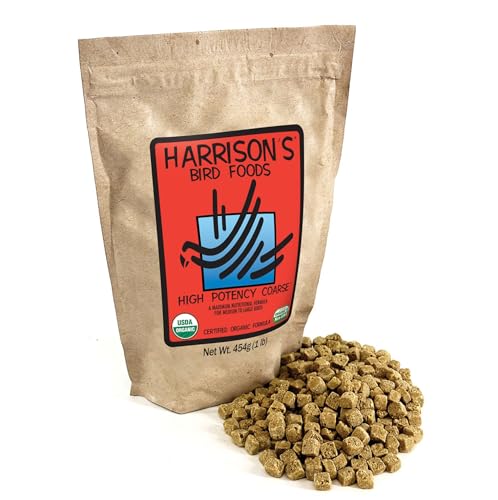
Harrison’s Bird Foods High Potency Coarse
Certified organic ingredients and no added colour define this coarse pellet, formulated for birds needing higher nutritional density. Absence of flavouring makes conversion slower than with ZuPreem. Avian vets recommend it often, which is how most owners end up trying it.
Pros
- Certified organic ingredient list
- No artificial colours or preservatives
- Frequently recommended by avian vets
Cons
- Conversion takes longer without flavouring
- Shelf life shortens once the bag opens

Roudybush Daily Maintenance Bird Food
A short, transparent ingredient list and no dyes or added sugars make this the pick for owners avoiding both. Several pellet sizes exist, so matching the species is straightforward. Acceptance depends almost entirely on how patiently the conversion is handled.
Pros
- Short, readable ingredient list
- Sizes available for different species
- Consistent between bags
Cons
- Plain look lowers first acceptance
- Little enrichment value on its own

Kaytee Fiesta Macaw Bird Food
Stocked almost everywhere, this blend mixes seeds, nuts and fortified pieces at macaw scale. Big pieces give a strong beak something worth working on. Selective feeding applies here as with any blend, so keep a pellet as the base of the diet.
Pros
- Easy to find and restock
- Plenty of chewing material
- Fortified pieces add vitamins to the mix
Cons
- Birds pick the nuts out first
- Not a complete diet by itself

Volkman Avian Science Super Parrot Food
Ingredient grade and freshness set this apart from mass market mixes, which suits owners committed to a seed based diet. Seeds, grains and dried produce make up a broad mix. Fresh vegetables alongside remain necessary for the diet to hold up nutritionally.
Pros
- Noticeably fresher than budget blends
- Broad range of seeds and grains
- Accepted readily by most birds
Cons
- Needs fresh food to balance the diet
- Selective feeding stays possible
The lineup, side by side
| # | Model | Format | Best for | Score | Price |
|---|---|---|---|---|---|
| 1 | ZuPreem FruitBlend Flavor Pellets Large | Extruded pellet | Best overall | 9.4 | Check price |
| 2 | Lafeber Nutri-Berries Parrot Food | Bound seed and grain balls | Best for fussy eaters | 9.2 | Check price |
| 3 | Higgins Sunburst Gourmet Blend Macaw | Mixed seed, nut and fruit blend | Best variety blend | 9.0 | Check price |
| 4 | Harrison’s Bird Foods High Potency Coarse | Coarse organic pellet | Best organic option | 8.7 | Check price |
| 5 | Roudybush Daily Maintenance Bird Food | Extruded pellet | Best plain pellet | 8.5 | Check price |
| 6 | Kaytee Fiesta Macaw Bird Food | Fortified seed and nut blend | Best value | 8.2 | Check price |
| 7 | Volkman Avian Science Super Parrot Food | Premium seed and grain blend | Best seed blend quality | 8.0 | Check price |
Questions worth asking
Is a seed only diet bad for large parrots?
Seed only diets typically run high in fat and short on several key nutrients. Avian vets link them to long term health problems, and most recommend a formulated pellet base with seeds and nuts as extras. Ask an avian vet about your particular bird.
How do you switch a parrot from seed to pellets?
Slowly, raising the pellet proportion in the familiar food over weeks rather than days. Offer the new food when the bird is hungriest, and weigh it throughout. Involve an avian vet if your bird refuses to eat.
What is the difference between Nutri-Berries and pellets?
Pellets are extruded so every bite is uniform. Nutri-Berries bind whole seeds and grains into balls the bird tears apart, which preserves foraging behaviour. Fat content runs higher in the berries.
How much should a large parrot eat per day?
Species, body size and activity all shift the answer, so packaging guidance is a starting point only. Weighing your bird regularly tells you more than measuring food does. An avian vet can set portions from weight and body condition.
Are coloured pellets safe for birds?
Coloured pellets sell widely and are generally considered safe. Owners who prefer to avoid dyes have uncoloured options in Harrison’s and Roudybush. Acceptance usually runs higher with the coloured versions, which is the trade off.
Which fruits and vegetables can large parrots eat?
Leafy greens, carrot, sweet potato, peppers, apple without seeds and berries all appear on standard safe lists. Avocado, chocolate, caffeine and alcohol are considered dangerous. Check any unfamiliar item before offering it.
Can macaws eat nuts every day?
Nuts run high in fat and usually work better as treats or training rewards. Macaws tolerate more than smaller species, though portion control still applies. Watch weight if nuts become a daily habit.
Which food is best for an African grey?
Greys do well on a complete pellet sized for large parrots, with fresh vegetables alongside. Calcium status matters in this species, so regular veterinary blood work beats guessing with supplements.
How long does an open bag of parrot food last?
A few weeks in most homes, and less in warm or humid conditions. Sealed containers in a cool cupboard protect both the fats and the added vitamins.
Do foraging foods improve parrot behaviour?
Owners frequently report calmer birds when food requires chewing and manipulation rather than a quick bowl. Spreading meals across foraging toys stretches the effect further through the day.
Our pick
ZuPreem FruitBlend Flavor Pellets Large is the food to build a large parrot’s diet around, since it is complete, correctly sized and easier to convert onto than plain pellets. Start resistant birds on Lafeber Nutri-Berries instead. Keep blends such as Kaytee Fiesta Macaw as enrichment, and bring an avian vet into any diet change.
Olivia Hartley
Olivia spent several years working at an animal shelter and a pet-supply retailer before joining the editorial team. She researches pet gear with an emphasis on safety, comfort and the fine print that owners often miss.