What Larger Pet Birds Need in a Health Kit
Harrison’s Bird Foods High Potency Coarse takes the top spot, a certified organic pellet milled coarse enough for a macaw beak. ZuPreem Natural Blend for Large Birds is the value pick, dye free and bagged for big appetites. Planet Pleasures Pinata toys tackle the boredom behind feather plucking.
Harrison’s Bird Foods High Potency Coarse is the single most consequential purchase for a macaw, Amazon, African grey or cockatoo. ZuPreem Natural Blend for Large Birds delivers complete nutrition at a friendlier cost per bag. Planet Pleasures Pinata Foraging Bird Toys handle the enrichment side these species genuinely need.
Large parrots differ from small companion birds in ways that change what you buy. Decades of lifespan mean small daily conditions compound, high intelligence turns boredom into feather destructive behaviour, and high fat seed diets drive obesity. Beak size also rules out foods milled for budgies. We compared published formulations, feeding guidance, enrichment design and long term owner reports to rank the seven below.
Before you buy
What large parrots need beyond a bowl of seed Seed only diets push large parrots toward obesity, fatty liver disease and vitamin A deficiency, because the bird eats the fattiest seeds and abandons the rest. Formulated pellets remove that choice. Intelligence and neophobia work against you, so conversion can run weeks or months of gradual mixing. Never pull seed abruptly. Weigh the bird through any change, since a large parrot that stops eating declines fast.
Why does pellet size matter for a macaw? Give a macaw small bird pellets and it crushes and drops most of them, eating far less than the bowl suggests. Coarse and large sizes give the beak something substantial to work against and cut waste sharply. Sizing runs both ways, though, since a smaller parrot handed macaw pieces often gives up. Match grind to species instead of buying whatever bag is on the shelf.
How enrichment prevents feather destructive behaviour Plucking in large parrots links strongly to boredom, thin foraging opportunity and understimulation. Wild birds spend most of the day finding and processing food, while a bowl of pellets takes minutes. Shreddable toys, foraging puzzles, hidden treats and rotated cage furniture all stretch that time back out. Budget for a steady supply of destructible toys, because a toy that survives a year is a toy the bird ignored.
Does an indoor parrot need a UVB lamp and clean air? Window glass blocks the UVB wavelengths involved in vitamin D3 synthesis, so a bird beside a sunny window receives none. A lamp on a timer at the specified distance closes that gap. Air quality matters just as acutely: overheated non stick cookware fumes, aerosols and scented products are serious respiratory hazards. Book an annual avian vet check early, since parrots hide illness until it is well advanced.
The best picks, ranked
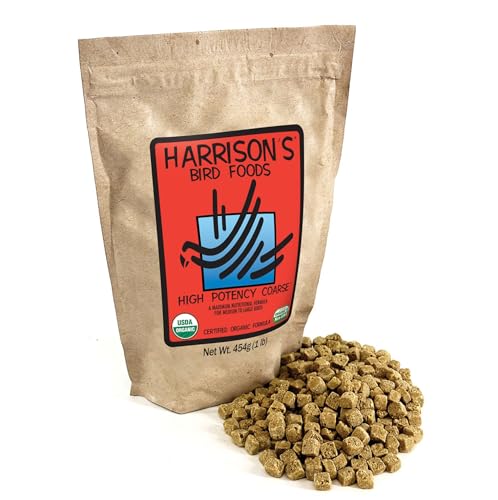
Harrison’s Bird Foods High Potency Coarse
Certified organic ingredients, no added colours and no artificial preservatives define this coarse pellet. High potency formulation targets birds converting off seed and birds recovering from illness. Avian vets recommend it more than any other diet in this list, though conversion takes patience because nothing is flavoured to tempt a fussy parrot.
Pros
- Organic formulation with no artificial additives
- Coarse grind suits macaws and large Amazons
- Widely recommended by avian veterinarians
Cons
- Conversion runs slow without flavouring
- Costs more per pound than mainstream pellets

ZuPreem Natural Blend Pellets for Large Birds
Dye free pellets sized for large parrots come in bags matched to how fast a macaw empties them. Identical nutrition in every pellet makes selective feeding impossible. Owners report it as the practical everyday diet, with acceptance running better than plain pellets usually manage.
Pros
- Complete nutrition at a workable cost for big birds
- No added colours
- Bag sizes match real consumption
Cons
- Uncoloured pellets take longer to be accepted
- Bags need careful resealing to stay fresh

Lafeber Classic Nutri-Berries Parrot Food
Whole seeds and grains coated in a balanced formula are pressed into balls the bird holds, tears and works through. Stubborn seed eaters accept that texture where uniform pellets fail. Owners report it as the most reliable bridge between seed and a formulated diet, and it doubles as a foraging item.
Pros
- Texture preserves foraging behaviour
- Accepted by birds that refuse plain pellets
- Works as an enrichment item too
Cons
- Fat content sits above plain pellets
- Birds can pick around the outer coating

Zoo Med AvianSun Deluxe Floor Lamp
An adjustable gooseneck on a floor stand positions a UVB bulb at the right distance beside a macaw sized cage, with nothing clamped to the bars. Window glass filters out the UVB wavelengths birds use for vitamin D3, so a sunny room supplies none. Owners report the stand is what makes the setup workable on a large cage.
Pros
- Places UVB correctly beside a large cage
- Height and angle both adjust
- Leaves cage bars free for perches and toys
Cons
- Bulb usually sold separately
- A determined bird can knock the stand over

Kaytee Exact Rainbow Chunky Parrot Food
Varied shapes and colours target birds that reject uniform pellets out of boredom rather than nutrition. Each piece still carries the same fortified formula. Owners report the shape variety restarts eating in birds that quit on a single pellet, while noting the colours serve appearance only.
Pros
- Shape variety helps bored eaters
- Same nutrition in every piece
- Widely stocked and easy to reorder
Cons
- Added colours deter some owners
- Chunky pieces get crumbled and wasted
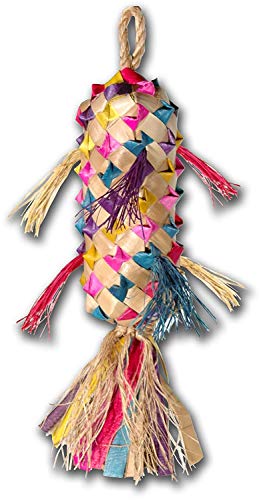
Planet Pleasures Pinata Foraging Bird Toy
Natural palm leaf gives a large parrot hours of destruction, which is exactly the point when boredom drives feather damage. Treats hidden inside stretch the foraging time further. Strong beaked birds get through one quickly, and owners report that speed as evidence the toy is doing its job.
Pros
- Redirects chewing that otherwise targets feathers
- Natural material with no coatings
- Hidden treats extend foraging time
Cons
- Large macaws destroy one fast
- Shredded debris needs clearing from the cage floor

Polly’s Pet Products Pastel Pumice Perch
Pumice texture wears nail tips down during ordinary perching and gives the beak an abrasive surface to work against. Fit it as one perch among several rather than the sleeping spot. Owners report fewer nail clipping sessions, which matters with a bird that resents handling.
Pros
- Cuts how often nails need clipping
- Gives the beak an abrasive surface
- Available in large parrot diameters
Cons
- Causes foot irritation if used as the main perch
- Texture traps droppings and needs regular scrubbing
How they stack up
| # | Model | Type | Best for | Score | Price |
|---|---|---|---|---|---|
| 1 | Harrison’s Bird Foods High Potency Coarse | Certified organic formulated pellet | Best overall | 9.4 | Check price |
| 2 | ZuPreem Natural Blend Pellets for Large Birds | Extruded complete pellet | Best value complete diet | 9.2 | Check price |
| 3 | Lafeber Classic Nutri-Berries Parrot Food | Coated whole grain and seed clusters | Best for seed conversion | 9.0 | Check price |
| 4 | Zoo Med AvianSun Deluxe Floor Lamp | Floor standing lamp with adjustable gooseneck | Best indoor light setup | 8.8 | Check price |
| 5 | Kaytee Exact Rainbow Chunky Parrot Food | Fortified formulated food, chunky size | Best for picky eaters | 8.5 | Check price |
| 6 | Planet Pleasures Pinata Foraging Bird Toy | Natural palm leaf, shreddable | Best for feather plucking prevention | 8.2 | Check price |
| 7 | Polly’s Pet Products Pastel Pumice Perch | Pumice grooming texture | Best for beak and nail care | 8.0 | Check price |
Common questions
How do you convert a large parrot from seed to pellets?
Gradually, over weeks or months, raising the pellet share inside the familiar seed rather than switching in one go. Weigh the bird regularly, since large parrots refuse unfamiliar food for a long time. Coated products such as Nutri-Berries often bridge the gap because the texture still allows foraging.
Why do large parrots pluck their feathers?
Causes span medical disease, boredom, thin foraging opportunity, hormonal behaviour and household stress. Medical causes are common enough that a plucking bird needs an avian vet examination before anyone calls it behavioural. Where boredom drives it, more foraging and destructible enrichment usually helps.
Do large parrots need a UVB lamp?
Indoor birds benefit, because window glass blocks the relevant wavelengths entirely. Run the lamp on a timer at the distance the manufacturer specifies. Birds eating a complete pellet already receive supplemented D3, which reduces the benefit without erasing it.
How often should parrot toys be replaced?
Constantly, and that is the design intent. Shreddable foraging toys exist to be destroyed, and a large macaw can finish one in hours. Rotate a set in and out so the cage keeps changing, since familiar toys stop holding attention.
Which foods are dangerous to parrots?
Avocado, chocolate, caffeine, alcohol, onion, garlic and heavily salted or sugared foods all belong on the avoid list. Remove fruit pits and apple seeds too. Overheated non stick cookware fumes are the most serious household hazard and can kill a bird quickly.
How much should a large parrot eat each day?
Species and individual metabolism both move the number, so start from the guidance on the specific food. Weighing on a perch scale tells you far more, since weight is the clearest signal from a bird that conceals illness. Call an avian vet about any sudden change in either direction.
Are cuttlebone and mineral blocks enough calcium for large birds?
They help and they condition the beak, but only when the bird actually uses them. Birds on a complete formulated diet generally receive adequate calcium already. African greys run a higher risk of calcium problems, which argues for veterinary blood work rather than guesswork.
How often does a large parrot need a vet visit?
An annual wellness examination is the standard recommendation, with blood work as advised. Find an avian vet before an emergency arrives, since many small animal practices do not treat birds.
Is a pumice perch safe for a macaw to sleep on?
No. Abrasive perches belong in a secondary position where the bird stands occasionally. Constant standing on pumice irritates the feet, so keep a smooth or natural branch perch as the main resting spot.
The verdict
Harrison’s Bird Foods High Potency Coarse is the diet to work toward for a large parrot, because a formulated organic food removes the selective feeding behind most long term health problems in these species. ZuPreem Natural Blend for Large Birds covers the same ground as a sensible everyday alternative. Keep Planet Pleasures Pinata toys in steady supply, since a food bowl alone never touches boredom.
Olivia Hartley
Olivia spent several years working at an animal shelter and a pet-supply retailer before joining the editorial team. She researches pet gear with an emphasis on safety, comfort and the fine print that owners often miss.


