Bike Helmets Built to Handle Trail and Road Riding
Giro Register MIPS fits the widest range of head shapes and carries rotational protection at a mainstream level. Bell Trace MIPS adds a removable visor for commuting in low sun and spray. For long summer road miles, POC Ventral Air MIPS moves the most air of the seven.
Giro Register MIPS covers the most ground for everyday outdoor riding. Universal sizing suits round and intermediate heads, and the Roc Loc dial tightens one handed while you are moving. Bell Trace MIPS handles commuting for less and offers a visor version. POC Ventral Air MIPS earns its place on hot road rides, where internal channelling beats raw vent count.
Listings advertise grams and vent holes. Neither predicts comfort. Head shape compatibility does, and so does whether the retention cradle holds the shell steady over broken ground. We compared published weights, vent and channel layouts, retention designs and rotational protection systems, then read what owners report about pad wear and pressure points. Ranking favours helmets people keep wearing, because an uncomfortable helmet ends up hanging on a hook.
What matters most
How should a bike helmet fit? Sit it level, roughly two finger widths above your eyebrows. Side straps should form a V just under each ear, with one finger of slack under the chin strap. Tighten the dial, then shake your head hard: the helmet should move your scalp, not slide. Head shapes fall into round, intermediate and long oval, and brands lean toward different profiles. Pressure at front and back with gaps at the sides means an oval shell on a round head.
What does MIPS actually do, and how is WaveCel different? Both address angled impacts, where the head twists as well as decelerates, which describes most real cycling crashes. MIPS uses a low friction liner that slides a few millimetres inside the shell. WaveCel, as on the Bontrager Rally, uses a cellular structure that collapses and shears. Independent testing supports both approaches. The shared cost is space: each system fills volume that would otherwise be ventilation, so protected helmets run slightly warmer.
Which matters more, helmet ventilation or weight? Ventilation, for almost everyone. Weight differences across this group sit under a hundred grams, and nobody notices that after ten minutes of riding. Airflow differences show up on the first warm climb and stay obvious. Look at internal channelling rather than counting holes, since channels that pull air across the scalp beat big openings that stall. Lazer’s Sphere and the POC Ventral Air both win on channels rather than hole count.
When should you replace a bike helmet? Immediately after any real impact. Expanded polystyrene crushes to absorb energy and never recovers, so a helmet that looks fine may already be spent. Absent a crash, manufacturers generally recommend replacement every three to five years, because sweat salts, UV and general handling degrade foam and webbing. Check the date stamp moulded inside the shell if you cannot remember the purchase year.
What we recommend
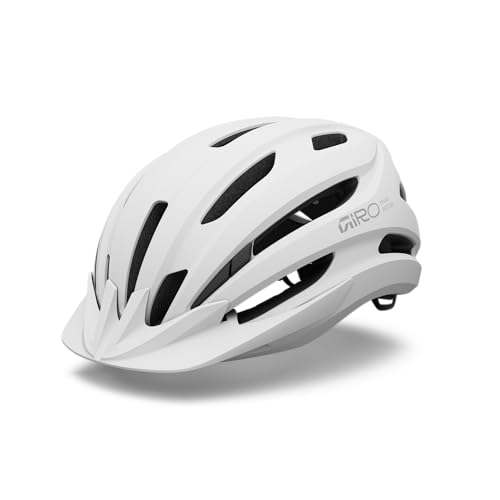
Giro Register MIPS
Universal sizing stretches across a wide band of head circumferences, which explains why this shell suits so many riders. Roc Loc Sport tightens the cradle one handed, useful at a red light with a bag in the other hand. MIPS sits inside as a low friction layer, adding rotational protection without performance pricing.
Pros
- Suits round and intermediate head shapes
- One handed dial adjusts while riding
- Rotational protection at a mainstream level
Cons
- Heavier than dedicated road helmets
- No mount point for a rear light

Bell Trace MIPS
Visor versions block low winter sun and deflect spray thrown up by the front wheel. Ergo Fit holds its dial setting over kerbs and broken tarmac. Owners report pads compressing within a season, though replacement pad sets drop in within minutes and cost little.
Pros
- MIPS included at an entry level
- Visor helps in rain and low sun
- Dial holds position on rough roads
Cons
- Pads compress within a season
- Venting struggles on long warm climbs

Smith Convoy MIPS
Shell drops lower at the back and temples, covering the areas trail crashes tend to find. Strap routing clears goggle straps, and the visor pivots up out of the way for long climbs. All that extra shell material adds weight, the usual trade for coverage.
Pros
- More coverage than any road shell here
- Visor and goggles work together
- Stays planted on rough descents
Cons
- Heaviest shape in this group
- Visor catches wind at road speed

Lazer Sphere MIPS
Internal channels route air across the scalp rather than over the shell, so it breathes better than its vent count suggests. Advanced Rollsys tightens from the top of the head, which some riders reach more easily than a rear dial. Shell runs slightly long, favouring oval head shapes.
Pros
- Airflow beats helmets with more vent holes
- Top mounted dial is easy to reach mid ride
- Comfortable on sustained climbs
Cons
- Round heads may feel side pressure
- Rollsys mechanism feels unfamiliar at first

POC Ventral Air MIPS
Large ventral openings feed deep internal channels, built for riders who overheat on summer road rides. Finish quality steps above the mainstream helmets listed, from strap webbing to moulded shell edges. Those same wide openings let rain and grit through on bad days.
Pros
- Coolest helmet here on hot days
- High grade materials and finish
- Comfortable across multi hour rides
Cons
- Open vents let in rain and debris
- Aimed at frequent riders rather than occasional use

Specialized Chamonix MIPS
Shell shape runs broader than performance road helmets, relieving the temple pressure some riders feel elsewhere. Thicker pads add comfort on longer commutes and gravel days. That more enclosed shape trades airflow for comfort, so it runs warmer in midsummer.
Pros
- Relieves pressure points for wider heads
- Handles road, gravel and commuting alike
- Straps and buckle sit comfortably
Cons
- Ventilation is adequate rather than strong
- Thick padding holds heat in summer
Bontrager Rally WaveCel
WaveCel swaps the sliding MIPS layer for a collapsible cellular structure that crumples under angled impact. Boa dial adjustment is finer than most rear cradles, tightening in small increments. That cellular liner occupies vent space, so airflow drops against the open shells here.
Pros
- Different, well documented approach to rotation
- Boa dial gives fine fit adjustment
- Crash replacement policy included
Cons
- Runs warmer than open vented helmets
- Heavier than comparable road helmets
How they stack up
| # | Model | Protection | Best for | Score | Price |
|---|---|---|---|---|---|
| 1 | Giro Register MIPS | MIPS rotational layer | Best overall | 9.4 | Check price |
| 2 | Bell Trace MIPS | MIPS rotational layer | Best value | 9.2 | Check price |
| 3 | Smith Convoy MIPS | MIPS rotational layer | Best for trail riding | 9.0 | Check price |
| 4 | Lazer Sphere MIPS | MIPS rotational layer | Best ventilation for the money | 8.8 | Check price |
| 5 | POC Ventral Air MIPS | MIPS rotational layer | Best for hot weather road riding | 8.6 | Check price |
| 6 | Specialized Chamonix MIPS | MIPS rotational layer | Best comfort for wider heads | 8.3 | Check price |
| 7 | Bontrager Rally WaveCel | WaveCel cellular liner | Best alternative protection technology | 8.0 | Check price |
Good to know
What size bike helmet do I need?
Wrap a tape measure around your head about a centimetre above the eyebrows and compare that number with the brand’s own chart. Sizing varies between manufacturers, so a medium in one brand is not a medium in another. Universal fit models like the Giro Register cover a wider band.
Is MIPS worth paying extra for?
Independent testing supports rotational systems reducing the forces transmitted in angled impacts, and angled impacts are the common real world crash. On mainstream helmets the added cost is small. Most riders should take it rather than save on it.
Which helmet is best for a round head shape?
Giro and Specialized shells tend to suit rounder heads, which is part of why the Register and Chamonix fit so many riders. Lazer’s Sphere runs longer and favours oval heads. Symptoms of a mismatch are pressure at the forehead and rear with gaps above the ears.
Can you use a mountain bike helmet for road riding?
Yes. Expect slightly more weight and a visor that catches wind in a low position. There is no safety argument against it, and plenty of riders own one trail helmet and use it for everything.
Do you need a visor on a bike helmet?
Visors block low sun, rain and trail debris, which is why mountain bike helmets fit them as standard. At road speed in a low position they can cut into your forward view. Most are removable, so the choice stays open after purchase.
Are expensive bike helmets safer than cheap ones?
Every helmet sold has to meet the same certification, so a budget certified helmet is not unsafe. Extra money buys ventilation, lower weight, finer retention adjustment and rotational protection. Those affect comfort and angled impact performance more than the baseline certification does.
How do you fit a helmet over a ponytail or long hair?
Look for a retention cradle that drops low at the rear, since a high cradle presses directly on a gathered ponytail. Several designs include a ponytail port or split cradle. Braiding lower or splitting the hair either side of the strap junction also works.
Can you attach a light or camera to a bike helmet?
Some shells include moulded mount points; the Giro Register does not. Adhesive mounts work on smooth shell areas, but avoid drilling or bolting through the foam, which compromises the structure. Strap mounted lights that thread through existing vents are the safer approach.
How do you clean a bike helmet?
Pull the pads out and hand wash them in mild soap, then air dry. Wipe the shell and straps with a damp cloth. Skip solvents entirely, keep it out of the dishwasher, and never leave it in a hot car, since heat distorts the foam.
How long does a bike helmet last if you never crash?
Three to five years is the usual manufacturer guidance. Sweat, UV exposure and repeated compression from the retention dial break down foam and webbing over time. Storage matters too, since a helmet kept in a hot garage ages faster than one kept indoors.
The bottom line
Giro Register MIPS is the helmet to suggest to most outdoor riders, since it accommodates a broad range of head shapes and includes rotational protection without premium spending. Bell Trace MIPS covers commuting for less, Smith Convoy takes the trail pick, and POC Ventral Air earns its place on long summer road miles. Whichever you shortlist, try it on first, because head shape decides comfort more reliably than any published specification.
Derek Holt
Derek has a background coaching recreational and amateur athletes and has worked the sales floor at specialty fitness retailers. He focuses on equipment durability, ergonomics and realistic use cases rather than marketing claims.