Entry-Level Road Bikes Compared by Frame and Drivetrain
For most new riders, the Retrospec Amaury balances an aluminum frame, carbon fork, and Shimano Claris shifting without a mid-tier price jump. The Vilano Forza matches that drivetrain at a lower tier, and the Vilano Shadow suits riders who want the simplest 21-speed setup for climbing.
Riders who want a carbon fork and Shimano Claris shifting without a mid-tier price bracket should start with the Retrospec Amaury. Its rim brakes lose some bite in wet weather compared to disc-equipped options, a tradeoff worth weighing before buying.
Spec sheets rarely explain how frame geometry, gearing range, and drivetrain quality affect a new rider day to day, which makes a first road bike tricky to pick. We compared drivetrain components, frame material, wheel size, and owner feedback across listings to separate real differences from marketing language.
How to choose
What Makes a Road Bike Beginner-Friendly Aluminum frames dominate entry-level road bikes, balancing weight and cost better than steel while staying more affordable than carbon. Drivetrain quality matters more than most new riders expect: a smoother-shifting groupset like Shimano Claris makes early rides less frustrating than a rougher base-level setup. Nearly every model in this category standardizes on 700c wheels, so tire and tube replacement rarely differentiates one bike from another. Rim versus disc brakes affects stopping consistency more in wet weather than dry conditions.
How Shimano Claris, Sora, and Tourney Compare Shimano’s entry-level road groupsets run from Tourney at the base through Claris and up to Sora, each tier adding smoother shifting and a slightly wider gear range. Several bikes in this comparison use Claris, a 2×8 speed setup that gives beginners 16 usable gear combinations without Sora’s added cost. Tourney-based bikes often pair a triple chainring for a 21-speed range, trading shifting refinement for a wider gear spread on hills. All three tiers stay mechanical and cable-actuated, so maintenance remains straightforward for first-time owners.
What Frame Size Fits a New Rider Seat tube length in centimeters determines road bike frame size, and getting it wrong affects comfort more than any single component choice. Riders under about five foot four should check whether a brand offers a compact or extra-small frame, since not every model here ships in that size. A properly fitted frame lets a rider straddle the top tube flat-footed with a small gap to spare. Reach to the handlebars matters too, and a shorter stem or narrower bar can fine-tune fit between standard sizes.
Rim Brakes vs Disc Brakes on a First Road Bike Most beginner road bikes stick with rim brakes because they weigh less, cost less to replace, and are simpler to adjust at home. Mechanical disc brakes, the only type found at this price point, hold stopping power more consistently in rain or on descents but add weight to both wheels. Dry-weather riders on flat to rolling terrain rarely notice a meaningful difference between the two systems. Wet-weather commuters or anyone tackling hillier routes may find the disc brake trim, where offered, worth the extra weight.
What we recommend

Retrospec Amaury Road Bike
A 6061 aluminum frame pairs with a full carbon fork on the Amaury, cutting front-end vibration on rougher pavement. Shimano Claris 2×8 speed shifters give beginners a familiar, low-maintenance drivetrain. Drop bars allow several hand positions across longer rides.
Pros
- Carbon fork cuts vibration versus all-aluminum forks
- Shimano Claris shifters are easy to learn and widely serviceable
- Drop bar shape supports multiple hand positions
Cons
- Rim brakes lose stopping power in wet conditions
- Fewer frame size options than some competitors

Vilano Forza Aluminum Road Bike
Shimano Claris 2×8 speed gearing, the same groupset found on pricier entry-level bikes, drives the Forza’s lighter aluminum frame. Tektro dual-pivot brakes give new riders consistent stopping power while they learn to modulate speed on descents. This build sits a step above Vilano’s own Shadow model in weight and componentry.
Pros
- Claris groupset matches costlier competitors
- Tektro brakes give predictable stopping power
- Lighter frame than Vilano’s entry Shadow model
Cons
- Aluminum fork transmits more vibration than carbon
- Stock saddle often gets replaced after initial rides

Vilano Shadow Road Bike
A 21-speed Shimano-shifted drivetrain across a triple chainring keeps the Shadow simple, giving new riders a wide gear range for climbs without a 2x setup to learn. Its aluminum frame and alloy caliper brakes cover the basics without extra features to manage.
Pros
- Wide 21-speed range helps on climbs
- Aluminum frame keeps overall weight reasonable
- Straightforward drivetrain suits first-time shifters
Cons
- Steel fork adds weight versus aluminum or carbon
- Triple chainring shifting is less refined than 2x Claris
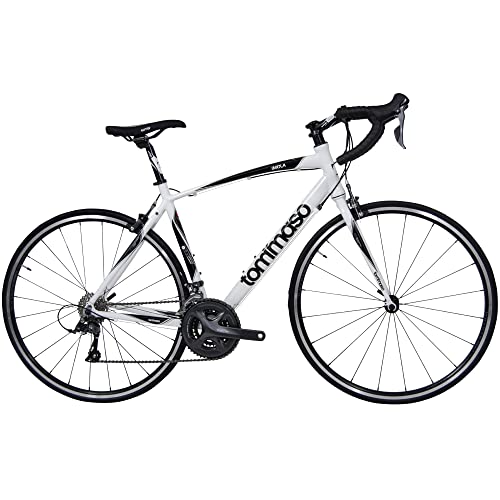
Tommaso Imola Endurance Road Bike
A taller head tube and relaxed endurance geometry keep riders less hunched over than race-oriented frames on the Imola. Shimano Claris 2×8 speed shifting handles gearing, and some listings add a mechanical disc brake variant alongside the standard rim brake build.
Pros
- Relaxed geometry reduces strain on back and shoulders
- Carbon fork smooths out longer rides
- Disc brake trim available for more stopping power
Cons
- Taller head tube gives up some aerodynamic position
- Disc brake version weighs more than the rim brake build
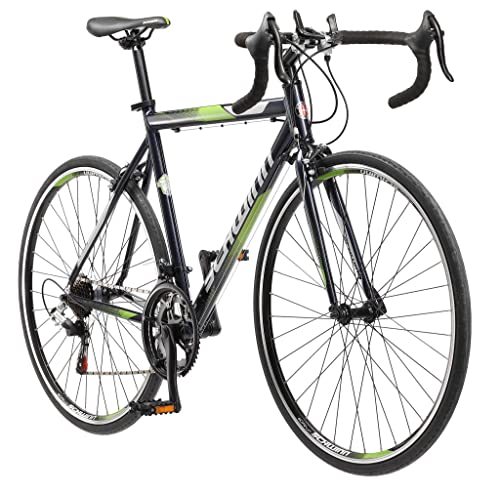
Schwinn Volare 1200 Road Bike
A lighter aluminum frame meets a simplified Shimano 14-speed drivetrain on the Volare 1200, which owners report stays in adjustment longer than higher-speed groupsets. It suits riders splitting time between fitness rides and commuting rather than racing.
Pros
- Simplified 14-speed drivetrain stays in adjustment longer
- Lightweight frame is easy to carry up stairs or curbs
- Drop bar still allows an upright grip near the stem
Cons
- Narrower gear range than 2×8 speed competitors
- Fewer size options for taller riders

Golden Cycles Elite Road Bike
Smaller frame sizes than many competitors give shorter riders proper standover height without an oversized top tube on the Elite. An aluminum frame, Shimano-based drivetrain, and alloy caliper brakes round out a build typical of the category.
Pros
- Smaller sizes fit petite and shorter riders accurately
- Aluminum frame keeps weight manageable
- Shorter drop bar reach than some competitor frames
Cons
- Component spec is more basic than Claris-equipped competitors
- Limited color and trim availability

ZIZZO Forte Road Bike
A minimalist aluminum build trims weight on the Forte, which owners note accelerates quicker from stops than heavier steel-fork entry bikes. Shimano components handle shifting, and 700c wheels match the rest of the category for tire and tube availability.
Pros
- Lighter build accelerates quicker from a stop
- 700c wheels use widely available tire and tube sizes
- Minimalist build has fewer parts to maintain
Cons
- Fewer stock accessories than commuter-focused competitors
- Less cushioned ride on rough pavement without a carbon fork
How they compare
| # | Model | Frame | Best for | Score | Price |
|---|---|---|---|---|---|
| 1 | Retrospec Amaury Road Bike | 6061 aluminum | Best overall | 9.4 | Check price |
| 2 | Vilano Forza Aluminum Road Bike | 6061 aluminum | Best value | 9.2 | Check price |
| 3 | Vilano Shadow Road Bike | Aluminum | Best budget | 9.0 | Check price |
| 4 | Tommaso Imola Endurance Road Bike | Aluminum, endurance geometry | Best for long-distance comfort | 8.7 | Check price |
| 5 | Schwinn Volare 1200 Road Bike | Aluminum | Best for casual commuting | 8.5 | Check price |
| 6 | Golden Cycles Elite Road Bike | Aluminum, compact sizing available | Best for smaller riders | 8.2 | Check price |
| 7 | ZIZZO Forte Road Bike | Lightweight aluminum | Best lightweight pick | 8.0 | Check price |
Common questions
What is the best road bike for beginners on Amazon?
Based on specifications, the Retrospec Amaury stands out for combining an aluminum frame, carbon fork, and Shimano Claris shifting, a component mix usually found on pricier bikes.
How many gears does a beginner road bike need?
A Shimano Claris 2×8 speed setup, offering 16 gear combinations, covers most flat to rolling terrain for new riders without the added complexity of a 3x drivetrain.
Is Shimano Claris good enough for a first road bike?
Yes, Claris is a mechanical, cable-actuated groupset built specifically for entry-level road bikes, and owners report it shifts more smoothly than base-tier Tourney components.
Can I commute on an entry-level road bike?
Yes, models like the Schwinn Volare 1200 with a simplified 14-speed drivetrain suit mixed commuting and fitness riding better than race-focused frames.
Rim brakes or disc brakes for a beginner road bike?
Rim brakes are lighter and simpler to maintain for dry-weather riding, while mechanical disc brakes, offered on bikes like the Tommaso Imola, hold stopping power more consistently in rain.
What frame size should a beginner road bike be?
Frame size should be based on seat tube length matched to rider height, and shorter riders should confirm a brand offers a compact or smaller frame before buying.
Is aluminum or steel better for a first road bike?
Aluminum keeps weight lower than steel at a similar price, which is why most entry-level road bikes in this comparison use aluminum frames with only occasional steel forks.
Which beginner road bike is best for long-distance riding?
The Tommaso Imola’s endurance geometry, with a taller head tube and carbon fork, keeps riders less hunched over on longer rides than race-oriented frames.
Road bike or hybrid bike, which suits a beginner better?
A road bike’s drop bars and narrower tires favor speed on pavement, while a hybrid trades some of that speed for a more upright position and wider tires on mixed surfaces; riders sticking to paved routes and group rides get more from a road bike’s gearing and geometry.
Final word
Among these seven, the Retrospec Amaury remains the strongest overall pick for beginners, since its carbon fork and Shimano Claris drivetrain outperform the category without a complicated setup. Riders prioritizing lower cost over componentry should look at the Vilano Shadow instead, and anyone planning longer or wetter rides should consider the Tommaso Imola for its endurance geometry and available disc brake trim.
Derek Holt
Derek has a background coaching recreational and amateur athletes and has worked the sales floor at specialty fitness retailers. He focuses on equipment durability, ergonomics and realistic use cases rather than marketing claims.

