Which Backpack Cooler Keeps Ice Longest? 7 Compared
YETI Hopper BackFlip 24 holds ice longest here, helped by a closed cell liner and a HydroLok zipper that seals when the pack tips. RTIC Backpack Cooler offers 30 cans at lower cost. IceMule Pro floats when loaded, so paddlers should start there.
YETI Hopper BackFlip 24 suits campers and tailgaters who need ice to survive into a second day. Its welded DryHide shell and leakproof zipper let the pack ride flat in a trunk without soaking anything. Weight is the penalty, near 5.3 pounds before you load it. Hikers counting ounces will prefer the 2.6 pound Hydro Flask Day Escape.
Three variables fight each other in this category: insulation thickness, interior volume and shoulder comfort. Thicker foam buys ice hours, then steals capacity and adds weight. We compared can counts, liner construction, closure design, empty weight and harness hardware across the seven. Owner reports on leaking seams, stiff zippers and strap wear after a season decided the close calls.
Before you buy
What to look for in a backpack cooler Can counts assume an empty pack with no ice at all. Plan on two thirds of that number once you add a sensible ice ratio. Closure type answers the next question. A leakproof zipper, like HydroLok on the YETI, lets the pack lie flat in a trunk, while a water resistant zipper weeps. Check empty weight before you fall for capacity. Five pounds of pack plus 15 pounds of contents is a real load two miles in. Welded seams beat stitched ones, because stitch holes are where melt water finds daylight.
How long ice actually lasts Foam thickness sets the ceiling. How you pack decides whether you reach it. Two parts ice to one part contents by volume holds cold far longer than a scattering of cubes. Pre chill both the pack and the drinks overnight and you buy several extra hours. Block ice outlasts cubes and suits multi day trips. Closed cell liners, used on the Hopper BackFlip 24 and the RTIC, slow the warm air exchange that happens every time the lid opens. Shade counts for more than most buyers expect, since a dark shell in full sun burns through a day of cold.
Carrying comfort once it is loaded Empty, every pack here feels fine. Twenty pounds rewrites the verdict. Contoured shoulder straps, a sternum strap and ideally a waist belt shift weight off the shoulders onto the hips. Ventilated back panels, such as the mesh channels on the TOURIT, cut the wet shirt that soft coolers are known for. Load cans low and against your spine. Compression straps or external bungee webbing stop contents sliding as the ice level drops. Anyone with a bad lower back should cap the load near 20 cans instead of chasing the largest interior.
Which cooler suits hiking, paddling or the beach On water, sealing outranks ice hours. Roll top designs such as the IceMule Pro close completely and float when loaded, which fits kayaks, rafts and wading anglers. Hikers should shop by empty weight first, and the 2.6 pound Hydro Flask Day Escape shows what that trade looks like. Beach and park days ask the least of a cooler. Wide lids and organizer pockets, as on the Coleman Chiller and CleverMade Pacifica, matter more there than another hour of ice. Sand kills zippers faster than saltwater does, so rinse the closure before it dries.
The top picks, ranked

YETI Hopper BackFlip 24 Soft Cooler
A ColdCell closed cell liner holds its shape as ice melts, so the pack never sags into a bag of slush. HydroLok zipper teeth seal the top completely. Load it with roughly 20 pounds of ice, or 24 cans with a lighter ice ratio.
Pros
- Rigid liner stops bread and produce getting crushed
- Sealed zipper lets the pack lie flat in a trunk
- DryHide shell shrugs off brush, hooks and boat decks
Cons
- Heaviest empty weight of the seven at 5.3 pounds
- Zipper needs lubricant and two hands to open

RTIC Backpack Cooler
Thirty cans fit inside, more room than the YETI gives, and closed cell foam surrounds all of it. Welded seams replace stitching at the base, where melt water usually finds a way out. Padded shoulder straps plus a chest strap steady the load on a long walk to the water.
Pros
- Thirty can interior beats most premium rivals
- Welded base seams stop seepage at the corners
- Chest strap keeps the pack from swinging on rocks
Cons
- Zipper resists water but is not fully leakproof
- Wide body catches on brush along narrow trails

IceMule Pro Cooler Large
Roll the top down, clip the buckle, and the 20 liter body becomes waterproof. An air valve in the wall inflates a second insulating layer beside the foam. Loaded, it floats, so a capsized kayak does not cost you lunch.
Pros
- Seals fully when rolled, even if it goes overboard
- Floats with drinks inside, which suits kayaks and rafts
- Rolls flat to almost nothing for the hike out
Cons
- Roll top opens slower than a zipper at a tailgate
- Single compartment leaves nowhere dry for a phone

Hydro Flask Day Escape Soft Cooler Pack 20L
At roughly 2.6 pounds empty, this is the lightest full size pack in the group. Thinner high density insulation and a lighter shell fabric explain that number. Bungee webbing across the front carries a wet towel or rain shell outside the cold space.
Pros
- Lightest pack here, which shows after the first mile
- Leakproof zipper is rare at this carry weight
- Front bungee holds wet gear away from food
Cons
- Thinner insulation gives up ice hours to the YETI
- Soft walls let cans shift when it is half full

CleverMade Pacifica Insulated Cooler Backpack
Food and drinks stay apart in this one. A heat sealed waterproof section takes about 30 cans, while separate dry pockets hold plates, napkins and cutlery. Structure in the walls keeps it upright on grass rather than tipping into the blanket.
Pros
- Dry pockets keep sandwiches out of melt water
- Squared shape stands up on uneven grass
- Built in opener saves hunting for one at the park
Cons
- Insulation trails expedition packs by several hours
- Extra pockets add bulk you do not want on a hike

Coleman Chiller Series Soft-Sided Backpack Cooler
Coleman aimed this at ballfields, beach paths and long afternoons in a folding chair. Roughly 28 cans sit under a lid that swings wide, so grabbing a drink takes one hand. A front zip pocket keeps keys, phone and sunscreen away from the ice.
Pros
- Wide lid opening speeds up drink runs for a group
- Front pocket separates keys from wet cans
- Light enough that a child can carry a share
Cons
- Liner is leak resistant, so avoid laying it flat
- Ice fades early under direct afternoon sun
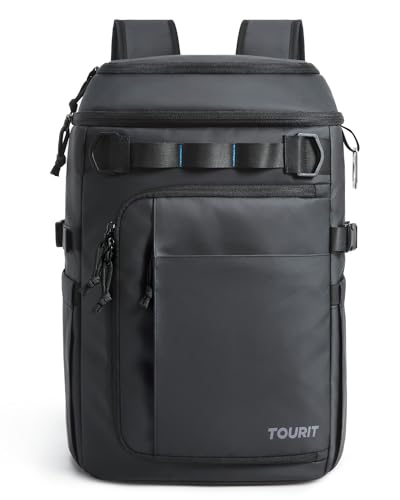
TOURIT Backpack Cooler
Basics done cheaply: 30 can capacity, a PEVA lined compartment and pockets on the front and both sides. Padded mesh on the back panel opens air channels against your shirt. Day trips are its range, not overnight camps.
Pros
- Mesh back panel cuts the sweat patch on warm days
- Side and front pockets swallow phone, keys and snacks
- Folds down small for storage between trips
Cons
- Thin foam loses ice faster than anything else here
- Liner seams can weep if the pack lies flat
How they stack up
| # | Model | Capacity | Best for | Score | Price |
|---|---|---|---|---|---|
| 1 | YETI Hopper BackFlip 24 Soft Cooler | Approximately 20 lb of ice or 24 cans | Best overall | 9.4 | Check price |
| 2 | RTIC Backpack Cooler | 30 cans | Best value | 9.2 | Check price |
| 3 | IceMule Pro Cooler Large | 20 L, approximately 18 cans | Best for paddling and fishing | 9.0 | Check price |
| 4 | Hydro Flask Day Escape Soft Cooler Pack 20L | 20 L, approximately 26 cans | Best lightweight | 8.8 | Check price |
| 5 | CleverMade Pacifica Insulated Cooler Backpack | Approximately 30 cans | Best for picnics | 8.6 | Check price |
| 6 | Coleman Chiller Series Soft-Sided Backpack Cooler | Approximately 28 cans | Best for family day trips | 8.3 | Check price |
| 7 | TOURIT Backpack Cooler | 30 cans | Best budget | 8.0 | Check price |
Frequently asked questions
How long do backpack coolers keep ice?
Premium packs with closed cell foam hold ice around 24 hours in warm weather when packed two parts ice to one part contents. Thin budget liners are better judged in hours than days.
Are backpack coolers worth it compared with a hard cooler?
For anything involving a walk, yes. Hard coolers keep ice longer but cannot be carried hands free down a trail, a beach path or a dock. Plenty of people end up owning one of each.
Which backpack cooler is best for kayaking?
IceMule Pro stands out, because a roll top closure seals fully and the loaded pack floats. Zippered packs can let water in if they go under.
How many cans fit in a backpack cooler with ice?
Stated capacities in this group run from about 18 to 30 cans. Add ice and roughly two thirds of the advertised number is realistic.
Can you put dry ice in a soft backpack cooler?
Most manufacturers advise against it. Dry ice can damage a liner and needs venting to release gas. Block ice or frozen water bottles work better for long trips.
What is the difference between a leakproof and a water resistant zipper?
A leakproof zipper such as HydroLok seals the opening, so the pack can travel on its side. Water resistant zippers shed splashes but seep melt water once the pack tips over.
Do backpack coolers leak when the ice melts?
Welded seams and a heat sealed liner contain melt water fully. Stitched liners and leak resistant zippers, common on budget packs, can seep if the bag lies flat in a car.
Is a backpack cooler heavy to carry when full?
Loaded with 20 pounds, harness design decides how it feels. A sternum strap and waist belt move weight to the hips, which matters more than the empty weight on the spec sheet.
How do you clean a backpack cooler?
Rinse it with warm water and mild soap, then dry it fully open so mildew cannot start. Zippers last longer with occasional lubricant, and beach trips call for a fresh water rinse to clear sand.
YETI Hopper BackFlip 24 vs RTIC Backpack Cooler: which should you buy?
Pick the YETI for ice life and a shell that survives rough use. Choose the RTIC when 30 cans of capacity and a lower outlay matter more than the last few hours of cold.
The verdict
YETI Hopper BackFlip 24 takes the top spot, because nothing else here pairs that ice life with a shell built for boat decks and brush. Campers and tailgaters get their 5.3 pounds back in cold hours. Buyers who want a bigger interior and a smaller outlay should take the RTIC Backpack Cooler instead. Anyone loading a kayak should ignore both and carry the IceMule Pro, since a pack that floats and seals fully beats one that only resists splashes.
Sierra Daniels
Sierra's background is in landscape design and nursery retail. She focuses on lawn and garden equipment, outdoor furniture and gear durability, weighing published specs against how materials actually hold up outside.


