AeroGarden Systems Compared by Pods, Light and Height
AeroGarden Bounty Elite leads the range with nine pods, a 50 watt LED and 24 inches of headroom, enough to fruit dwarf tomatoes. Harvest handles a six pod herb rotation on a normal counter. Cutting salad weekly? Farm 24XL runs 24 pods across two independent light zones.
AeroGarden Bounty Elite fits buyers who want fruit rather than leaves, since nine pods under a 50 watt panel with 24 inches of headroom carry dwarf tomatoes and peppers through flowering. Its footprint eats a serious share of a small counter. Anyone sticking to basil and lettuce gets identical results from the much smaller Harvest.
Model names repeat across sizes here, and the real differences hide in the specification list instead of the product photos. We compared pod counts, LED wattage, maximum grow height, control panel type, reservoir capacity and counter footprint, then read owner reports on pump noise and light panel longevity. One non AeroGarden system earned a place where it genuinely undercuts the range.
What to look for
What separates the AeroGarden models Four numbers decide this entire range: pod count, LED wattage, maximum grow height and reservoir size. Pod count sets how many plants run at once. Wattage determines whether a plant only leafs out or pushes through to flower. Grow height is the quiet dealbreaker, since a 12 inch hood stops a tomato long before it blooms. Panel differences between Basic and Elite versions change daily convenience, not what you can actually grow.
How many pods do you actually need Three pods suit a single herb habit, usually basil plus one companion. Six covers a working rotation of parsley, mint, dill and a lettuce or two. Nine opens the door to mixing herbs with a fruiting plant, because peppers and dwarf tomatoes each want two or three pods to fill out properly. Jump to 24 only when salad gets cut weekly. Half empty trays waste both light and nutrient solution.
Best for small kitchens and desks Counter depth matters more than width in most kitchens, which is why Harvest Elite Slim wins this branch. Its narrowed base sits against a backsplash while keeping six pods and the full 20 watt panel. Sprout goes smaller again at three pods, and a 10 watt draw makes it viable beside a monitor. Bounty and Farm units need depth that a 24 inch counter rarely spares once a kettle and knife block are in place. Measure from the wall outward before ordering, not just along the edge.
Growing tomatoes and peppers indoors Herbs finish happily under 12 inches, so Harvest models cap there deliberately. Dwarf tomatoes, chilli plants and bush cucumbers need 24 inches or more to flower, putting the Bounty pair at the bare minimum. Farm 24XL stretches to 36 inches and can carry a staked vine variety. Raise the hood as growth continues, holding it a few inches above the canopy so stems stay compact rather than leggy. Liquid plant food every two weeks counts far more here than with herbs, because fruiting drains nutrients quickly.
The best picks, ranked

AeroGarden Bounty Elite
Nine pods sit under a 50 watt full spectrum panel that lifts to 24 inches. That headroom is the threshold where dwarf tomatoes and chilli plants actually flower and set fruit. A touchscreen runs the light schedule, vacation mode and feeding reminders, while stainless trim shrugs off the water spotting that dulls plastic bowls after a season.
Pros
- Grow height clears dwarf tomatoes and chilli plants
- 50 watt panel pushes plants to fruit, not just leaf
- Stainless finish wipes clean without hard water marks
Cons
- Claims a large share of a standard kitchen counter
- Pump stays audible in an open plan room at night
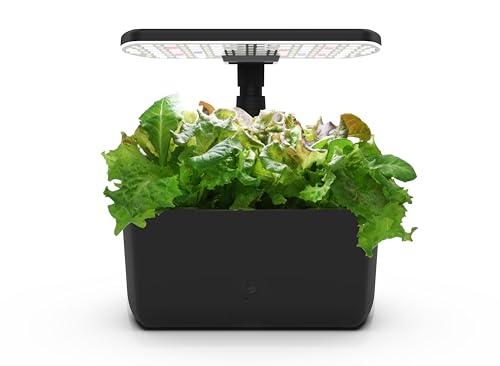
AeroGarden Harvest
Six pods under a 20 watt panel match what most households actually grow indoors: basil, mint, parsley and leaf lettuce. Grow height stops at 12 inches, so herbs finish comfortably and fruiting plants never get the chance to flower. Button controls cover the timer and flash when water or plant food runs low.
Pros
- Compact enough for a standard 24 inch deep counter
- Six pods suit a working herb rotation
- Lowest power draw among the mid size models
Cons
- Twelve inch ceiling rules out tomatoes and peppers
- Plastic bowl shows scale marks in hard water areas

AeroGarden Harvest Elite Slim
Same six pods and 20 watt light as the Harvest, mounted on a base narrowed to sit flush against a backsplash. Stainless trim and a shallower bowl make this the tidiest unit in the lineup. Grow height holds at 12 inches, so the crop list does not change at all.
Pros
- Narrow base fits counters that other models overhang
- Stainless trim suits a modern kitchen finish
- Runs the same pod economics as the standard Harvest
Cons
- Shallower reservoir needs topping up more often
- Gains no grow height over the regular Harvest

AeroGarden Farm 24XL
Twenty four pods split across two trays, each under its own hood that raises to 36 inches. Independent zones let lettuce run a short cycle while tomatoes climb on the other side. A 60 watt array and a deep reservoir stretch several days between top ups, which suits growers who travel for work.
Pros
- Thirty six inches of headroom handles staked vine crops
- Separate zones run two crop schedules at once
- Highest yield potential of any AeroGarden here
Cons
- Wants a dedicated table rather than counter space
- Replanting all 24 pods at once is a real commitment

AeroGarden Bounty Basic
Bounty Basic carries the nine pods, 50 watt panel and 24 inch grow height of the Elite, then swaps the touchscreen for a plain LCD. Trim is plastic instead of stainless. For peppers and dwarf tomatoes, growing results track the Elite closely, because light and headroom are identical.
Pros
- Matches the Elite on grow height and lighting
- Nine pods allow a mixed herb and vegetable planting
- Simpler panel means fewer menus to learn
Cons
- Plastic trim marks more readily than stainless
- Drops the vacation mode for longer absences

AeroGarden Sprout
Three pods under a 10 watt panel make this the entry point, sized for a windowsill or a desk corner. Roughly 10 inches of grow height covers basil, mint and one salad crop. Parents often choose it for children, since the full cycle from sponge to harvest stays visible and easy to manage.
Pros
- Smallest footprint across the AeroGarden range
- Ten watt draw works beside a monitor or on a sill
- Right scale for teaching children how growing works
Cons
- Three pods limit you to one or two herbs
- Small reservoir needs refilling every few days

iDOO 12 Pods Hydroponics Growing System
iDOO fits twelve sponge slots above a 4.5 litre reservoir, with a light arm that reaches roughly 21 inches. Generic sponges replace proprietary pods, so any seed packet from a garden centre works. Build quality sits below AeroGarden, and light falls off noticeably toward the tray edges.
Pros
- Sponge slots accept seed you already have on the shelf
- Twelve slots in a footprint close to a nine pod Bounty
- Large reservoir stretches the gap between refills
Cons
- Light spread weakens at the outer tray positions
- No feeding reminder system or app support
Compared at a glance
| # | Model | Seed pods | Best for | Score | Price |
|---|---|---|---|---|---|
| 1 | AeroGarden Bounty Elite | 9 | Best overall | 9.4 | Check price |
| 2 | AeroGarden Harvest | 6 | Best value | 9.2 | Check price |
| 3 | AeroGarden Harvest Elite Slim | 6 | Best for narrow counters | 9.0 | Check price |
| 4 | AeroGarden Farm 24XL | 24 | Best for large harvests | 8.8 | Check price |
| 5 | AeroGarden Bounty Basic | 9 | Best for fruiting on a budget | 8.6 | Check price |
| 6 | AeroGarden Sprout | 3 | Best for a first try | 8.3 | Check price |
| 7 | iDOO 12 Pods Hydroponics Growing System | 12 sponge slots | Best alternative to AeroGarden | 8.0 | Check price |
Common questions
What is the difference between AeroGarden Harvest and Bounty?
Harvest runs six pods under a 20 watt LED with 12 inches of grow height. Bounty steps to nine pods, a 50 watt panel and 24 inches of headroom. That extra height is precisely what lets Bounty models fruit tomatoes and peppers instead of stopping at herbs.
Can you grow tomatoes in an AeroGarden?
Yes, in Bounty and Farm units, which offer 24 and 36 inches of headroom. Dwarf and cherry varieties suit indoor hoods best, since standard tomatoes simply outgrow them. Harvest and Sprout models cap too low for a plant to reach flowering.
Which AeroGarden is best for a small kitchen?
Harvest Elite Slim, because its narrowed base tucks against a backsplash while keeping six pods and the 20 watt light. Sprout works where even that is too much, at three pods on a 10 watt panel. Bounty and Farm units need noticeably more counter depth.
Do you have to use AeroGarden branded seed pods?
No. Grow anything kits supply empty pods, sponges and domes so you can sow your own seed in any model. Branded pods arrive pre seeded purely for convenience. iDOO skips the question entirely by using generic sponges from the start.
How much electricity does an AeroGarden use?
Panels range from 10 watts on Sprout to 60 watts across Farm 24XL, running roughly 15 hours a day. Even the largest unit draws about what a pair of household bulbs would. Pump consumption is negligible next to the lighting.
How often do you add water and plant food?
Top up water whenever the level indicator drops, which lands every few days on small reservoirs and closer to a week on Farm 24XL. Liquid plant food goes in every two weeks across every model. Most control panels flash a reminder for both jobs.
Is an AeroGarden worth it compared to a sunny windowsill?
Indoors, usually yes, since a north facing sill rarely gives basil enough light to stay compact. LED panels deliver a consistent 15 hour day through winter. Anyone with a bright south facing sill and a summer only growing habit gains much less.
How do you stop algae in an AeroGarden reservoir?
Keep pod covers seated so light never reaches the water surface. Drain and rinse the bowl fully between crops, brushing out the pump housing while it is empty. Owners who let algae establish often end up replacing the pump rather than cleaning it.
AeroGarden vs iDOO: which hydroponic system should you buy?
Pick AeroGarden for even light spread, feeding reminders and taller hoods on the Bounty and Farm units. Choose iDOO if sowing your own seed matters and twelve slots beat nine. Its light does weaken at the tray edges, so rotate plants occasionally.
Are AeroGarden systems noisy at night?
Pumps cycle rather than run constantly, and owners describe the sound as a soft trickle. Bounty and Farm units are the most audible, because larger reservoirs move more water. Kitchens with a door solve it; open plan studios may notice it during quiet hours.
Our take
Bounty Elite earns the recommendation for anyone who wants fruit and not just leaves, since 24 inches of headroom with a 50 watt panel is the floor for dwarf tomatoes and peppers. Herb growers should take Harvest Elite Slim instead and reclaim the counter space it saves. Reserve Farm 24XL for households genuinely cutting salad every week, because a half planted 24 pod tray wastes light and nutrient alike.
Sierra Daniels
Sierra's background is in landscape design and nursery retail. She focuses on lawn and garden equipment, outdoor furniture and gear durability, weighing published specs against how materials actually hold up outside.
You might also need

Pellet Grills Compared for Smoke Flavor and Control

Weekend Wanderer: Lightweight Travel Backpacks That Pack Big
Brighten Every Step: Top Outdoor Step Lights for Safety and Style
