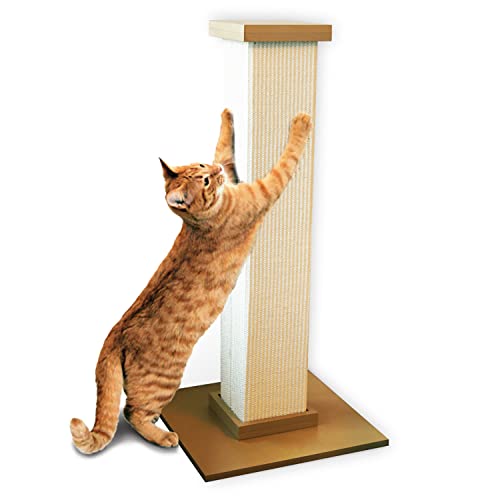
Which Cat Tree Survives Daily Climbing and Scratching
FEANDREA’s 67.7 inch tower wins for most homes. Full length sisal posts allow a real stretch, and an anti-tip strap kills sway. Yaheetech’s 54.5 inch tree repeats that layout under lower ceilings. Three or more cats? Go Pet Club’s 72 inch F2040 adds separate perches.
FEANDREA’s 67.7 inch tower suits a one or two cat household best. Sisal posts run long enough for a full body stretch. An anti-tip fitting ties the top board to a wall stud, so a hard landing no longer rocks the frame. Plush covering is the catch, since it traps shed hair and wants a weekly vacuum.
Listing photos hide the parts that fail. Thin shelves sag, narrow bases rock, and short posts force a cat to crouch instead of reach. We compared stated height, base dimensions, post material and included hardware across seven towers. Owner reports covering the first year of ownership settled the close calls. Wall straps and replaceable sisal counted heavily.
Our top picks

FEANDREA 67.7-Inch Multi-Level Cat Tree
Condos, perches and a hammock stack across 67.7 inches of frame. Natural sisal wraps the posts, the one surface cats shred rather than ignore. An anti-toppling fitting bolts the top board to a wall stud, and owners credit that single part for the steady feel.
Pros
- Post length allows a full vertical stretch
- Wall fitting stops sway after a hard landing
- Condo, perch and hammock suit shy and bold cats alike
Cons
- Plush fabric collects shed hair
- Awkward to move once the frame is bolted together

Yaheetech 54.5-Inch Multi-Level Cat Tree
Two enclosed condos, several perches and sisal posts fill a 54.5 inch frame. CARB certified chipboard keeps formaldehyde emissions low in a room where a cat sleeps most of the day. Lower height clears a dresser and fits a landing under an eight foot ceiling.
Pros
- Two condos is generous for this height
- Certified panels limit indoor emissions
- Short enough for low ceilings and stair landings
Cons
- Perches feel small for cats past twelve pounds
- Bolts need retightening after a few weeks

Go Pet Club 72-Inch Cat Tree F2040
Six feet of frame gives three or four cats somewhere to be that is not each other’s perch. Faux fur covers the boards, sisal runs up the support posts, and a ladder opens the upper condos to smaller cats. Measure the corner before ordering, because the footprint is genuinely large.
Pros
- Separate levels defuse territory disputes
- Ladder gives kittens and older cats a route up
- Height doubles as an escape from dogs and toddlers
Cons
- Claims a large corner of floor space
- Assembly runs long with many boards and bolts

Armarkat Classic Real Wood Cat Tree A6401
Pressed wood posts replace the cardboard tubes budget towers hide inside. That frame absorbs a fifteen pound cat launching off the top perch without shuddering. Sisal rope covers each post end to end, and beige faux fleece perches are wide enough to sprawl across.
Pros
- Frame stays rigid under large cats
- Wide perches suit cats that sleep sprawled
- Light fabric hides shed fur between cleanings
Cons
- Plain styling looks dated beside modern furniture
- Base rocks unless the floor sits flat

Catit Vesper V-High Base Cat Tree
Walnut finished MDF panels read as furniture, not pet equipment. Memory foam cushions lift off the platforms for washing, and worn sisal mats swap out one at a time. Open platforms leave fewer hiding holes, so confident cats take to it faster than nervous ones.
Pros
- Panels wipe clean instead of trapping hair
- Cushions and sisal mats replace separately
- Reads as furniture in a living room
Cons
- Few enclosed spaces for timid cats
- Hard platforms need the cushions to stay comfortable

PAWZ Road 51-Inch Cat Tree
Platforms and condo openings are sized for Maine Coons and Ragdolls, the cats that wedge awkwardly into a standard tower. Raised edges on the padded top perch give a heavy cat something to lean into. At 51 inches it stays low and wide, a sensible trade for bulky animals.
Pros
- Condo and perches fit cats over fifteen pounds
- Low centre of gravity cuts sway
- Raised perch edges help a big cat settle
Cons
- Less vertical territory than a six foot tower
- Wide base uses more floor area per level

Amazon Basics Cat Tree with Scratching Posts
Two levels, jute wrapped posts and one covered perch cover the basics. Buy it for a spare room, a kitten’s first scratcher, or an apartment where a six foot tower makes no sense. Assembly takes minutes, and low weight makes it easy to shift between rooms.
Pros
- Cheapest route to a legitimate scratching post
- Light enough to carry room to room
- Slots into corners tall towers cannot reach
Cons
- Too short for an adult cat to stretch fully
- No condo, hammock or ladder
What matters most
What to look for in a cat tree Three things decide whether a cat uses the tower: stability, post length and perch width. Cats land hard. A frame that rocks teaches them to stay off within days. Posts need roughly thirty inches of uninterrupted scratching surface, which is what an average adult covers in a full stretch. Perches should be wide enough to lie on rather than balance on. Sisal beats carpet for scratching, because the coarse vertical grain grips claws and sheds fewer loose loops.
How tall should a cat tree be, and where should it go Between 50 and 70 inches covers most homes. Vertical space matters more than floor space, since height hands an anxious cat a retreat above dog and toddler level. A 72 inch frame like the Go Pet Club F2040 needs a real corner to itself. Low ceilings and stair landings suit the 54.5 inch Yaheetech better. Set any tower against a wall near a window. Watching birds drives daily use more than an extra platform ever does.
Best cat trees for kittens, seniors and large breeds Kittens want short hops and a ladder, which is why the Go Pet Club ladder matters more than its six feet. Stiff older cats need the first perch under about twelve inches, then even spacing above it. Maine Coons and Ragdolls never fit standard condo openings, so the oversized PAWZ Road platforms solve a real problem. Open designs such as the Catit Vesper suit one profile only: a confident adult cat with no interest in hiding.
Living with it: hair, wobble and worn sisal Plush covering holds hair, so a vacuum brush attachment earns its place weekly. Panelled finishes wipe clean instead. Retighten every bolt about a month in, because early climbing loosens hardware on nearly every model. Sisal wears out long before the frame does, and that is where cheap towers end their life. Rewrapping a bare post with sisal rope and a staple gun adds years for very little effort. Replaceable mats, as on the Vesper, make that job trivial.
Side by side
| # | Model | Height | Best for | Score | Price |
|---|---|---|---|---|---|
| 1 | FEANDREA 67.7-Inch Multi-Level Cat Tree | 67.7 inches | Best overall | 9.4 | Check price |
| 2 | Yaheetech 54.5-Inch Multi-Level Cat Tree | 54.5 inches | Best value | 9.1 | Check price |
| 3 | Go Pet Club 72-Inch Cat Tree F2040 | 72 inches | Best for multi-cat homes | 8.9 | Check price |
| 4 | Armarkat Classic Real Wood Cat Tree A6401 | 64 inches | Best for heavy climbers | 8.7 | Check price |
| 5 | Catit Vesper V-High Base Cat Tree | MDF panels with walnut finish | Best for modern rooms | 8.5 | Check price |
| 6 | PAWZ Road 51-Inch Cat Tree | 51 inches | Best for large breeds | 8.2 | Check price |
| 7 | Amazon Basics Cat Tree with Scratching Posts | Compact two level tower | Best budget | 8.0 | Check price |
Common questions
How tall should a cat tree be for everyday use?
Between 50 and 70 inches works for most homes. Post length matters more than total height. A cat needs about thirty inches of uninterrupted sisal to stretch out. Tall towers built from short segmented posts are worse than a mid height one with long ones.
Do cat trees stop cats scratching the sofa?
Often, though placement decides it. Parked in a spare room, a tower changes nothing. Stand a sisal post directly beside the furniture being clawed, then shift it gradually once the habit moves. Cats scratch to mark rooms they live in, not rooms they never enter.
Which cat tree is best for two or three cats?
Go Pet Club’s 72 inch F2040. Separate levels matter more than total size. Squabbles start when cats share one perch. Condos at different heights let each cat claim a spot, which is why height beats width in a multi-cat home.
Is sisal or carpet better on a cat tree?
Sisal wins for scratching. Its coarse vertical grain grips claws, and it resists pulling into long loose loops the way carpet does. Carpet still earns its place on perches and platforms, where cats lie down instead of digging in.
How do I stop a cat tree from wobbling?
Start with a model that ships a wall strap, as FEANDREA does, then anchor it into a stud. Check the floor next. A rug edge or an uneven board causes most rocking. Retighten all bolts after the first month of climbing.
Can a Maine Coon use a standard cat tree?
Not comfortably. Big breeds get stuck in typical condo openings and hang off narrow perches. Look instead for oversized platforms and a wide low base, which is exactly the design brief of the PAWZ Road 51 inch tree.
What should I do when the sisal posts wear out?
Rewrap them. Sisal rope by the roll, a staple gun and an afternoon restore a worn tower rather than replacing it. Designs built around replaceable sisal mats, such as the Catit Vesper, shorten that job to a few minutes.
Where should a cat tree go in the house?
Against a wall with a window view, in a room the family actually uses. Cats want to watch traffic, indoors and out. Push one into a quiet back bedroom and it becomes a hiding spot at best, furniture at worst.
Are cat trees worth it for a single indoor cat?
Yes, mostly for the scratching surface and the high perch. Indoor cats with no vertical option redirect both needs onto sofas and shelves. One tall post plus a perch above eye level handles both, which a compact tower already provides.
FEANDREA vs Yaheetech: which cat tree should I pick?
FEANDREA’s extra thirteen inches and its wall fitting make it the steadier choice for an adult cat that jumps. Yaheetech suits low ceilings and lighter cats, and its CARB certified panels are a point in its favour. Ceiling height usually settles it.
The verdict
Buy the FEANDREA 67.7 inch tower for a typical one or two cat home. Long sisal posts and a stud anchor fix the two failures that make cats abandon a tree: nothing to stretch on, and a frame that rocks. Homes with three or more cats should size up to the Go Pet Club F2040 for its separate perches. Owners of a Maine Coon or Ragdoll should ignore height altogether and take the oversized PAWZ Road platforms.
Olivia Hartley
Olivia spent several years working at an animal shelter and a pet-supply retailer before joining the editorial team. She researches pet gear with an emphasis on safety, comfort and the fine print that owners often miss.