Cat Scratching Posts That Survive Daily Clawing
SmartCat The Ultimate Scratching Post leads on stability, pairing a 32 inch column with a 16 inch square base. FUKUMARU Cat Scratching Post 33.8 Inch adds height for Maine Coons and other long bodied breeds. PetFusion Ultimate Cat Scratcher Lounge redirects cats that shred rugs instead of furniture legs.
SmartCat The Ultimate Scratching Post is the pick for a home with one determined adult cat. A 32 inch column allows a full stretch, and 16 inches of base in each direction absorbs a hard sideways lean. Woven sisal fabric shreds into short fibres rather than unwinding into rope loops. Its limitation is cosmetic and practical at once: bare beige weave with no perch, no toy and no replacement sleeve.
Most scratcher failures come down to physics, not taste. Cats quit a post that rocks mid stretch, and a short column forces a hunched posture they avoid. We compared base dimensions, total height, surface construction and assembly method across the seven listings. Aggregated owner feedback then settled the ranking, specifically reports on tipping, loose fibres and how each surface held up in a two cat household.
Our top picks
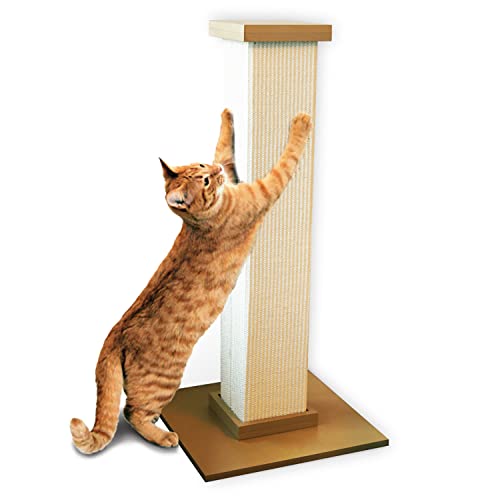
SmartCat The Ultimate Scratching Post
Pioneer Pet wraps a 32 inch column in woven sisal fabric, so claws draw out short fibres instead of catching long rope loops. Sixteen inches square at the base supplies enough footprint to absorb the full weight of a 15 pound cat leaning in. Four screws join post to base, and owners report years of daily clawing before the weave thins.
Pros
- Column height allows a full adult stretch at 32 inches
- Square base absorbs a hard sideways lean without rocking
- Woven fabric sheds far less mess than rope wrap
Cons
- Bare beige weave looks utilitarian beside furniture
- No replacement sleeve once the surface shreds through

FUKUMARU Cat Scratching Post 33.8 Inch
At 33.8 inches this is the tallest column here, which suits Maine Coons and Ragdolls that hunch against shorter posts. Natural sisal rope covers the full length, while a solid wood platform supplies the ballast instead of a plastic tray. Dangling from the top is a ball toy, useful for getting a kitten to investigate during the first week.
Pros
- Tallest column in this group for long bodied cats
- Wood platform grips hardwood better than plastic
- Rope runs dense from the base to the top
Cons
- Rope loosens into loops sooner than woven fabric
- Shed fibres gather around the base and need vacuuming

PetFusion Ultimate Cat Scratcher Lounge
Rugs, doormats and stair treads pull in horizontal scratchers, and a vertical post never redirects that habit. Roughly 34 inches long, this curved slab of recycled corrugated cardboard covers the behaviour and works as a nap spot between sessions. Corn starch adhesive bonds the layers, and flipping the slab exposes a second untouched face.
Pros
- Matches cats already clawing rugs and carpet
- Reversible slab doubles the usable surface
- Curved top gives a lounging spot as well
Cons
- Cardboard crumbs collect on the floor underneath
- Wears through faster than sisal with two cats

Catit Vesper V-High Base Cat Tree
Two sisal wrapped columns carry an MDF platform and a top box, so two cats claim separate levels instead of competing for one. Walnut effect panels read as furniture rather than carpeted tubing. Catit sells replacement sisal sleeves for the columns, which is unusual here and stretches the life well past one worn wrap.
Pros
- Sleeves swap out when the sisal wears down
- Perch and box separate two cats by level
- Wood effect finish suits open plan rooms
Cons
- Panel build takes longer to assemble than one post
- Columns fall short of a dedicated 32 in stretcher

Amazon Basics Cat Scratching Post with Hanging Ball
Sixteen inches of sisal rope rise from a carpet covered board, which covers the basics for kittens and small adults. Height is the hard limit, since a grown cat cannot reach full extension against it. Set beside a favourite napping chair as a second or third scratcher, it still does useful work.
Pros
- Small footprint slots in beside a sofa arm
- Light enough to carry between rooms
- Sensible starter post while a kitten grows
Cons
- Too short for an adult cat to stretch fully
- Carpeted base confuses cats already clawing rugs

TRIXIE Mijas Scratching Post
Trixie stacks a plush platform on one sisal column, so a scratch and a perch share a single narrow square base. Column diameter runs thick, letting claws sink in rather than skate across the surface. A threaded rod through the post holds the build together, and plush on the base traps loose hair that needs brushing out.
Pros
- Thick column gives claws something to sink into
- Platform adds a resting spot without a full tree
- Narrow base tucks into a corner or beside a shelf
Cons
- Plush covering holds shed hair and needs brushing
- Narrow base is less planted than a 16 in square

SmartCat Bootsie’s Bunk Bed and Scratching Post
A sisal fabric scratching pad sits on the roof of an enclosed sleeping nook, taking up about 22 by 15 inches of floor. Cats that hide get a ground level den instead of a high perch they will not use. Surface material matches the Ultimate post, so wear behaviour is the same, just laid flat.
Pros
- One footprint covers a den and a scratching pad
- Same woven sisal fabric as the Ultimate post
- Low profile suits stiff or arthritic older cats
Cons
- Flat pad will not satisfy a vertical stretcher
- Enclosed bed needs vacuuming out now and then
Compared at a glance
| # | Model | Height | Best for | Score | Price |
|---|---|---|---|---|---|
| 1 | SmartCat The Ultimate Scratching Post | 32 in | Best overall | 9.4 | Check price |
| 2 | FUKUMARU Cat Scratching Post 33.8 Inch | 33.8 in | Best for large breeds | 9.2 | Check price |
| 3 | PetFusion Ultimate Cat Scratcher Lounge | Recycled corrugated cardboard | Best for cats that scratch flat surfaces | 9.0 | Check price |
| 4 | Catit Vesper V-High Base Cat Tree | Two sisal columns, wooden panels | Best for multi cat homes | 8.7 | Check price |
| 5 | Amazon Basics Cat Scratching Post with Hanging Ball | 16 in | Best budget | 8.5 | Check price |
| 6 | TRIXIE Mijas Scratching Post | Single sisal post with top platform | Best value | 8.2 | Check price |
| 7 | SmartCat Bootsie’s Bunk Bed and Scratching Post | Covered bed with scratch surface on top | Best for small apartments | 8.0 | Check price |
Before you buy
What to look for in a heavy duty scratching post Three measurements decide how long a scratcher lasts: base width, column height and surface material. Bases narrower than roughly 14 inches rock once a 12 pound cat leans sideways, and a rocking post gets abandoned within days. Woven sisal fabric outlives sisal rope because shredding leaves short fibres instead of loops a claw can hook. Avoid carpet wrapped columns altogether. Carpet teaches a cat that pile is fair game, which works directly against the point of buying one.
Vertical post or flat scratcher: which does your cat want? Look at the existing damage before spending anything. Claw marks high on door frames and sofa backs point to a tall vertical stretcher such as the SmartCat Ultimate. Shredded rugs and stair treads point to a flat slab like the PetFusion lounge. Two cats with different habits usually need one of each. Placement decides more than quantity, so each piece belongs where the damage already is.
Sizing for large breeds, kittens and senior cats Measure from the floor to the toes of a raised front paw, then add a few inches of margin. Maine Coons, Ragdolls and big domestic shorthairs generally need the 33.8 inch FUKUMARU column to stand straight against it. Kittens do fine on the 16 inch Amazon Basics post and outgrow it inside a year. Arthritic seniors want the opposite of height. Bootsie’s Bunk Bed lets an older cat work at shoulder level with all four feet on the floor.
Placement and getting more life out of the surface Sleeping spots and doorways attract the most scratching, so start there rather than in a spare room. Catnip rubbed into fresh sisal builds the habit during the first week. Rotating a worn column a quarter turn exposes untouched weave and buys several more months. Only the Catit Vesper takes a true replacement sleeve, while the PetFusion slab flips over for a second face. Double sided tape on the old sofa target closes it off while the new habit forms.
Common questions
How tall should a cat scratching post be?
About 30 inches covers a full stretch for an average adult cat. Large breeds do better at the 33.8 inches FUKUMARU offers. Anything under 20 inches really only suits kittens.
Is sisal or cardboard better for scratching posts?
Sisal lasts longer and handles vertical clawing, which is why it leads this list. Cardboard costs less and suits cats working on flat surfaces, though it sheds crumbs and wears through sooner.
Why does my cat ignore the scratching post?
Height, stability or location explains almost every case. A post that rocks under weight gets rejected on the first try, and one parked in a spare room never joins the daily route. Shift it next to the clawed furniture and use often starts within days.
Which scratching post is best for large cats?
FUKUMARU’s 33.8 inch column gives the most stretch, and the SmartCat Ultimate wins on planted stability with its 16 inch square base. Either works for a cat over roughly 12 pounds.
What is the difference between sisal rope and sisal fabric?
Rope is wound around the column and can unravel into long loops once a claw catches one. Fabric is woven flat and shreds into short fibres, keeping the surface usable longer. SmartCat uses fabric, FUKUMARU uses rope.
How many scratching posts does one cat need?
One per cat plus a spare is the usual guideline in multi cat homes. Spreading them across rooms counts more than the total, because cats claw where they sleep and where they enter.
Can a scratching post stop furniture damage?
Redirecting the behaviour is realistic, provided the scratcher sits where the damage happens and matches the direction your cat already claws. A vertical post next to a shredded rug rarely changes anything.
Do cat scratching posts need replacing?
Most reach the end once the surface shreds through to the core. Catit sells sisal sleeves for the Vesper columns, and the PetFusion lounge flips for a second side, so both last longer than a sealed post.
Are cat trees better than a single scratching post?
Trees add perches and suit households with two or more cats claiming levels. One tall post is sturdier per pound and simpler to place next to the furniture under attack.
The bottom line
Buy SmartCat The Ultimate Scratching Post for a single adult cat that claws daily, because the wide base stays planted and woven sisal fabric wears down slowly. Owners of a Maine Coon or another long bodied breed should go up to the 33.8 inch FUKUMARU for the extra stretch. If the damage at your place is on rugs rather than furniture legs, skip posts entirely and start with the PetFusion Ultimate Cat Scratcher Lounge.
Olivia Hartley
Olivia spent several years working at an animal shelter and a pet-supply retailer before joining the editorial team. She researches pet gear with an emphasis on safety, comfort and the fine print that owners often miss.


