Which Cat Scratching Post Fits a Small Apartment?
SmartCat Ultimate Scratching Post leads at 32 inches tall, enough for a full adult stretch on a base that will not rock. PetFusion Ultimate Cat Scratcher Lounge suits cats that claw flat surfaces instead. Amazon Basics Cat Scratching Post keeps the footprint near 16 inches square.
SmartCat Ultimate Scratching Post suits most apartment cats. Woven sisal runs the full 32 inch column, so an adult can pull through a complete stretch. Its base measures 16 inches square and stays planted during that pull. Downside: it is a bare post, with no perch, hideaway or dangling toys. Catit and Hepper cover buyers who want the scratcher to look like furniture.
Apartments raise the stakes. Floor area is scarce, landlords notice shredded carpet, and one wobble sends a cat straight back to the sofa arm. We compared published heights, base dimensions and surface materials, then weighted stability and stretch room above extras. Owner feedback on shedding and refill cycles settled the remaining ties.
Our top picks
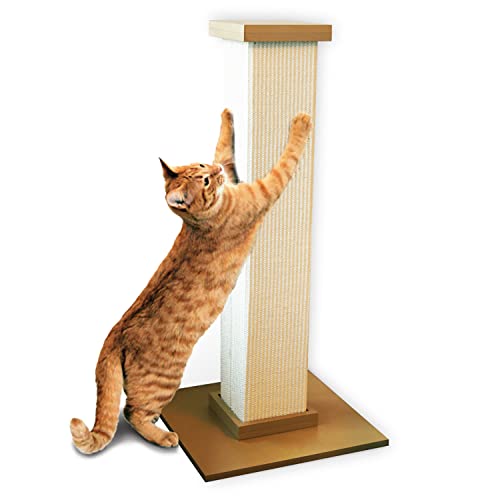
SmartCat Ultimate Scratching Post by Pioneer Pet
Woven sisal fabric covers the column instead of wound rope, so loose loops never end up on the floor. Height reaches 32 inches, clearing the roughly 30 inch reach of a stretching adult cat. A weighted base spanning 16 inches square holds firm through a hard downward pull.
Pros
- 32 inch column clears a full adult stretch
- Sisal fabric frays without shedding rope loops
- Wide base absorbs a hard downward pull
Cons
- Bare post with no perch or hideaway
- Worn sisal cannot be replaced

PetFusion Ultimate Cat Scratcher Lounge
Plenty of cats claw across a surface rather than up it, and this curved slab targets that habit. Recycled corrugated cardboard is bonded with corn starch glue, so no formaldehyde sits inside the stack. Flip it once one face wears down, then let the cat nap along the curve.
Pros
- Curved deck works as lounger and scratcher
- Both faces scratch, doubling usable life
- Sits flush against a wall or sofa side
Cons
- Loose cardboard crumbs need vacuuming
- Offers no vertical stretch at all

Amazon Basics Cat Scratching Post
Jute wraps a short column set on a carpet covered base. Width stays under 16 inches, which fits a hallway corner or the gap beside a bed. Kittens and smaller adults get what they need; a long bodied cat will outreach the 19.7 inch height.
Pros
- Smallest footprint among the vertical posts here
- About 5 pounds, easy to shift between rooms
- Two part assembly, post bolts to base
Cons
- Under 20 inches, short for a big cat
- Light base slides on tile or laminate
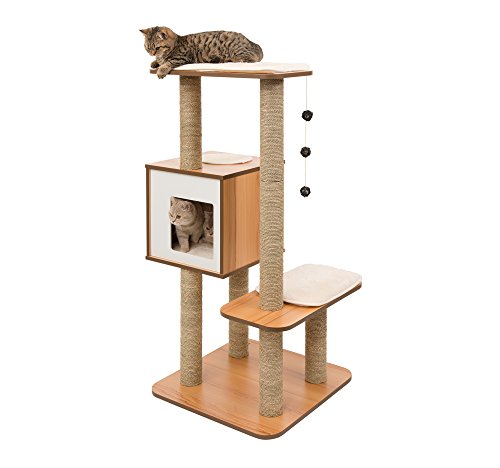
Catit Vesper V-High Base Cat Furniture
Vesper stacks a hideaway box, two sisal posts and a top perch inside 22 inches square. Building upward beats scattering three separate objects around a studio. MDF panels in a walnut finish read as furniture, which counts in a room you also live in.
Pros
- Perch, hideaway and posts share one footprint
- Walnut finish suits a visible living area
- Catit sells replacement sisal sleeves
Cons
- Many panels and fixings at assembly
- 47.5 inches tall and awkward to reposition

Hepper Hi-Lo Cat Scratcher
Birch plywood frames a cardboard insert that locks at high, low or flat. Switching the angle every few weeks keeps a bored cat returning to the same frame. Inserts drop in without tools, so only the worn cardboard goes in the bin.
Pros
- Three scratching angles from one frame
- Insert swaps out without tools
- Plywood edges blend into a living room
Cons
- Inserts become a recurring purchase
- Even the high setting falls short of a full stretch

Necoichi Cozy Cat Scratcher Bowl
Corrugated cardboard coils into a shallow bowl roughly 15.7 inches across. Cats settle inside and claw the rim at the same time, pairing two habits in one object. Its round shape drops into a corner or beside an armchair without blocking a walkway.
Pros
- Round shape tucks into an unused corner
- Puts a scratcher where cats already nap
- About 2.2 pounds, simple to lift and vacuum under
Cons
- Cardboard wears through faster than sisal
- Sides sit too shallow for large breeds

SofaScratcher Couch Corner Cat Scratching Post
This wedge parks against the sofa corner a cat already targets. Sisal covers the exposed face, handing claws a surface built to shred. Because it borrows the sofa footprint, nothing new appears on a rented studio floor plan.
Pros
- Adds no floor footprint of its own
- Redirects claws at the exact target spot
- No assembly, just position and go
Cons
- Needs a squared off furniture corner
- About 14 inches, so no full stretch
How to choose
What to look for in an apartment scratcher Three numbers predict whether a post gets used. Height matters most, since a grown cat reaches close to 30 inches mid stretch, and a 19 inch column cuts that short. Base width comes second: a post that rocks once teaches a cat to distrust it. Surface sets the running cost. Woven sisal fabric outlasts everything else here, sisal rope sheds loops, and cardboard wears fastest while costing least to renew.
Does your cat scratch up or across? Look at the existing damage before shopping. Claw marks climbing a sofa arm or a curtain mean a vertical scratcher, which points to the SmartCat post or the Catit Vesper. Shredded rugs and doormats say the opposite, favouring the PetFusion Lounge or the Necoichi bowl. Buying against the habit is the usual reason a new scratcher sits untouched in a corner. Two cat households often need one of each.
Best picks for studios and tight rentals Floor area runs out long before wall height does. Catit Vesper V-High Base stacks a hideaway, two posts and a perch inside 22 inches square, beating three separate objects spread around one room. SofaScratcher goes further and claims no floor at all. Renters worry about the carpet a landlord inspects, so redirection at the damaged spot beats a post parked somewhere convenient for you.
Refills, mess and long term upkeep Upkeep splits into two costs: refills and floor mess. Hepper Hi-Lo takes drop in inserts, so a refresh means one sheet of cardboard rather than a whole new scratcher. PetFusion buys a second life by flipping over. Every cardboard design sheds crumbs, so keep a vacuum close. Sisal posts such as the SmartCat never need refilling, yet a worn column cannot be renewed, which turns upkeep into a slow replacement cycle instead of a recurring one.
How they compare
| # | Model | Height | Best for | Score | Price |
|---|---|---|---|---|---|
| 1 | SmartCat Ultimate Scratching Post by Pioneer Pet | 32 in | Best overall | 9.4 | Check price |
| 2 | PetFusion Ultimate Cat Scratcher Lounge | 33.5 in x 10.5 in x 14 in | Best for cats that scratch flat | 9.2 | Check price |
| 3 | Amazon Basics Cat Scratching Post | 15.7 in x 15.7 in x 19.7 in | Best budget | 9.0 | Check price |
| 4 | Catit Vesper V-High Base Cat Furniture | 22 in x 22 in x 47.5 in | Best for vertical space | 8.8 | Check price |
| 5 | Hepper Hi-Lo Cat Scratcher | High, low and flat | Best adjustable angle | 8.6 | Check price |
| 6 | Necoichi Cozy Cat Scratcher Bowl | About 15.7 in | Best for nap and scratch | 8.3 | Check price |
| 7 | SofaScratcher Couch Corner Cat Scratching Post | Standard sofa and armchair corners | Best for protecting a sofa | 8.0 | Check price |
Frequently asked questions
How tall should a cat scratching post be?
Target 28 to 32 inches for an adult. Stretching is half the reason cats scratch, and a stubby post only serves kittens. SmartCat Ultimate reaches 32 inches, while Amazon Basics stops near 20.
Which scratching post is best for a small apartment?
Catit Vesper V-High Base. It builds upward, combining a hideaway, perch and two sisal posts inside a 22 inch square footprint. Where even that is too much floor, SofaScratcher borrows space you already gave to the sofa.
Is sisal or cardboard better for scratching?
Sisal lasts far longer and leaves almost no debris, which is why vertical posts use it. Cardboard appeals to flat scratchers and renews cheaply. Many households keep one of each surface.
Can a scratching post stop a cat clawing the sofa?
Often, provided it goes at the spot already under attack. Redirection beats punishment every time. SofaScratcher exists for this job, and owners report better results after pairing it with sticky tape on the fabric for a few weeks.
Do cat scratchers need refills?
Only cardboard ones. Hepper Hi-Lo uses replaceable inserts and PetFusion flips once. Sisal posts wear slowly and get replaced whole, though Catit does sell sleeve refills for the Vesper.
Where should a scratching post go in a studio?
Beside a sleeping spot, or along a doorway the cat walks through daily. Cats stretch on waking and mark near entrances. Tucking a post into a spare corner is the quickest way to have it ignored.
SmartCat Ultimate vs PetFusion Lounge: which should I buy?
Choose SmartCat when claws climb furniture legs or curtains. Choose PetFusion when the target is a rug or doormat. Habit decides this, not height.
How do you get a cat to use a new scratcher?
Put it where the damage already is, work catnip into the surface, and play beside it for several days. Stability matters too, because one wobble on the first try puts most cats off permanently.
Are cardboard scratchers safe for cats?
Yes, when the glue is non toxic. PetFusion bonds its layers with corn starch adhesive rather than formaldehyde based resin. Swallowing the odd flake is normal and harmless; heavy chewing is worth a vet chat.
What size scratching post suits a kitten?
Anything from 16 to 20 inches works while a kitten is growing, which makes Amazon Basics a sensible starter. Plan on a taller post within a year, since adults quickly outreach that height.
Our take
Buy the SmartCat Ultimate Scratching Post for most apartment cats. Full height sisal on a stable base addresses the exact behaviour that wrecks furniture, and nothing needs replacing for years. Cats that claw flat get no benefit from height, so send them to the PetFusion Ultimate Lounge. Where floor space is genuinely gone, Catit Vesper V-High Base stacks the same functions up a wall instead of across a room.
Olivia Hartley
Olivia spent several years working at an animal shelter and a pet-supply retailer before joining the editorial team. She researches pet gear with an emphasis on safety, comfort and the fine print that owners often miss.