Which Aquarium Setup Fits Your Space and Budget?
Fluval Flex 15 Gallon suits most first tanks, since its rear chamber holds a real three stage filter. Aqueon 20 Gallon Standard Glass buys the most water volume, which keeps chemistry steady. For saltwater, start at the Coralife LED BioCube 32.
Fluval Flex 15 Gallon is the tank most beginners should start with. Want more forgiving water chemistry for less outlay? Aqueon 20 Gallon Standard Glass wins there, and saltwater plans point to the Coralife LED BioCube 32.
Small tanks look easy and are actually the hardest to keep stable. Ammonia climbs fast in five gallons, while twenty gallons absorbs the same mistake quietly. We compared volume, bundled filtration and lighting, seam quality, and owner reports on what each kit still needs before fish go in.
Before you buy
What to look for in a first aquarium Volume comes first, then filtration, then light. Check whether a kit includes a heater, since tropical fish need one and many boxes leave it out. Look at how the lid opens, because a hinged flap makes feeding and water changes far easier than lifting a full hood. Glass clarity and seam quality matter for anyone planning a display scape. Match the footprint to your furniture before anything else, since a filled tank cannot be nudged sideways later.
How much water volume do beginners actually need Larger volumes dilute waste and hold temperature steadily. A five gallon desktop tank can swing from safe to lethal in a day, while twenty gallons absorbs the same slip quietly. Running costs barely differ once both are set up. Weight is the real constraint: water alone runs about 8.3 pounds per gallon, so a 20 gallon setup approaches 200 pounds with substrate. Use a rated stand or solid furniture, and level it before filling.
How to cycle a new aquarium before adding fish New tanks hold no bacteria to convert ammonia into nitrate. Adding fish on day one exposes them to a chemical burn that shows up as clamped fins and gasping. Run the filter with an ammonia source instead, testing until ammonia and nitrite both read zero and nitrate appears. Four to six weeks is normal from scratch. Seeded media from an established filter cuts that to one or two weeks.
Which aquarium suits a desk, a planted scape or a reef Desk and shelf spots suit the Marineland Portrait 5 Gallon, where the vertical shape saves width. Aquascapers should look at low iron rimless glass instead, since the tint in ordinary panels shows at every edge. Saltwater changes the requirements again, because a rear sump chamber and coral capable LEDs matter more than raw volume. That is why the BioCube 32 works as a first reef. Community tanks with tetras or corys still do best in a plain 20 gallon rectangle.
Our top picks
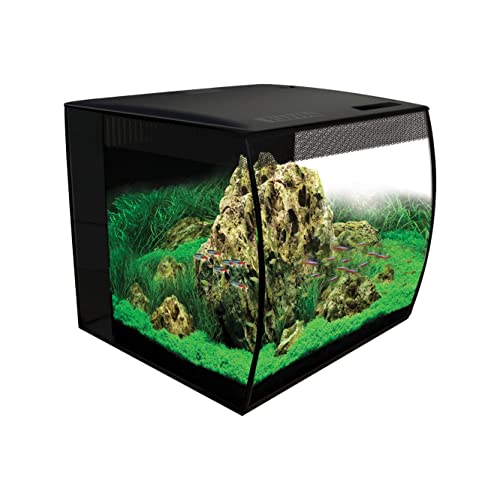
Fluval Flex 15 Gallon
Filtration sits in a rear chamber, giving three stages of media instead of the flimsy hang on filter most starter kits bundle. Curved front glass and remote controlled colour LEDs keep the look clean. Fifteen gallons stays stable enough for a small community while fitting on a sideboard.
Pros
- Rear chamber filtration outperforms bundled hang on units
- LED colour and intensity support low light plants
- Stable volume in a sideboard sized footprint
Cons
- Rear chamber eats into swimming space
- Stock pump hums until it breaks in

Aqueon Standard Glass Aquarium 20 Gallon
Silicone sealed glass with no electronics attached remains the cheapest route to real water volume. You pick the filter, heater and light yourself, which usually beats bundled gear on both quality and running cost. Owners report these seams last decades when the outside stays dry.
Pros
- Large forgiving volume for a low outlay
- Free choice of filter, heater and light
- Standard footprint fits common stands and hoods
Cons
- No filter, heater or light in the box
- Plain black frame styling

Coralife LED BioCube 32
Two things make a first reef workable: a rear sump chamber for equipment and lighting strong enough for soft corals. BioCube supplies both, plus a 24 hour timer that runs a dawn to dusk cycle. Thirty two gallons buffers the parameter swings that wreck nano reefs.
Pros
- Rear chamber hides skimmer, heater and media
- Stock LEDs keep soft corals without upgrades
- Volume buffers salinity and temperature swings
Cons
- Return pump is a common upgrade
- Very heavy once filled with rock and sand
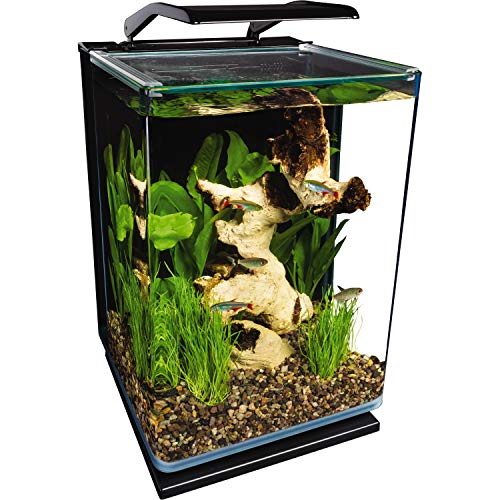
Marineland Portrait 5 Gallon
Portrait orientation fits a desk or shelf where a standard rectangle will not. Three stage filtration hides inside the back panel, which beats the exposed cartridge boxes on most nano kits. Five gallons limits stocking to a betta or a shrimp colony.
Pros
- Slots into shelf space larger tanks cannot use
- Filter and cabling stay out of sight
- Day and night LED modes on one rail
Cons
- Five gallons swings temperature and ammonia fast
- Stocking limited to one small species

LANDEN 36P Rimless Low Iron Aquarium Tank
Low iron glass strips out the green tint visible at the edge of ordinary aquarium panels. Polished seams and no plastic rim let a planted scape read as the only object on the shelf. Nothing else is included, so filtration, heating and lighting are your call.
Pros
- Clarity noticeably better than standard float glass
- Rimless edges keep a scape uninterrupted
- Precise, thin silicone seams
Cons
- No filter, heater or light supplied
- Unrimmed corners chip easily when knocked

Tetra 20 Gallon Complete Aquarium Kit
One box covers tank, hood, LED, hang on filter, heater and water conditioner. Quality is basic and many owners swap the filter within a year, but nothing else is needed on setup day. Twenty gallons keeps a beginner community tank forgiving.
Pros
- Single purchase covers the whole setup
- Twenty gallons forgives beginner mistakes
- Instructions aimed at first time keepers
Cons
- Cartridge refills are a recurring cost
- LED too weak for demanding plants

GloFish 10 Gallon Aquarium Kit
Blue LED lighting is the draw here, making fluorescent GloFish strains glow in a bedroom or playroom. Filter and hood come included, though tropical fish still need a heater bought separately. Ten gallons rewards light stocking and weekly water changes.
Pros
- Lowest outlay for a complete starting point
- Blue lighting appeals to younger keepers
- Bedroom sized footprint
Cons
- Heater must be bought separately
- Ten gallons is less forgiving than twenty
Compared at a glance
| # | Model | Volume | Best for | Score | Price |
|---|---|---|---|---|---|
| 1 | Fluval Flex 15 Gallon | 15 gallons | Best overall | 9.4 | Check price |
| 2 | Aqueon Standard Glass Aquarium 20 Gallon | 20 gallons | Best value | 9.2 | Check price |
| 3 | Coralife LED BioCube 32 | 32 gallons | Best for saltwater | 9.0 | Check price |
| 4 | Marineland Portrait 5 Gallon | 5 gallons | Best desktop tank | 8.8 | Check price |
| 5 | LANDEN 36P Rimless Low Iron Aquarium Tank | About 5.4 gallons | Best for aquascaping | 8.6 | Check price |
| 6 | Tetra 20 Gallon Complete Aquarium Kit | 20 gallons | Best all in one starter | 8.3 | Check price |
| 7 | GloFish 10 Gallon Aquarium Kit | 10 gallons | Best budget kit | 8.0 | Check price |
Common questions
What size aquarium is best for a beginner?
Twenty gallons suits most first time keepers. Chemistry and temperature stay steady in that volume, so an overfeeding slip or a missed water change rarely kills fish.
How long does it take to cycle a new tank?
Four to six weeks from scratch, or one to two weeks using filter media from a healthy established tank. Test until ammonia and nitrite read zero and nitrate registers.
Do I need a heater for a small aquarium?
Tropical species need one, and many kits ship without it. White cloud minnows and some shrimp tolerate room temperature, though stable heat still reduces stress.
How many fish can a 20 gallon tank hold?
Fewer than the old inch per gallon rule suggests. Check adult size, activity level and territory needs per species, then add stock in small groups over several months.
Is glass or acrylic better for an aquarium?
Glass resists scratches and stays clear for decades, which is why most tanks use it. Acrylic weighs less and survives impacts better, but algae scrapers mark it easily.
How often should aquarium water be changed?
Around twenty to thirty percent weekly for a stocked tank. Smaller volumes concentrate waste faster, so nano tanks often need changes twice a week.
Can an aquarium sit on a normal table?
Only if the furniture is rated for the load. A filled 20 gallon tank approaches 200 pounds across a small footprint, so use a purpose built stand and check the surface is level.
Which aquarium is best for saltwater beginners?
All in one cubes such as the Coralife LED BioCube 32 make the easiest start. Rear chamber filtration and coral capable LEDs remove two of the biggest setup hurdles.
Does an aquarium need a lid?
Almost always. Lids cut evaporation, hold heat and stop jumpers such as danios and killifish from ending up on the floor.
Are complete aquarium kits worth buying?
Kits save a research trip and work from day one. Bundled cartridge filters and dim LEDs are the usual weak points, so plan an upgrade if you want plants or heavier stocking.
The bottom line
Fluval Flex 15 Gallon gives most beginners the strongest start, since its rear chamber filtration and adjustable LEDs fix the two usual kit weaknesses. Buying a bare Aqueon 20 Gallon and choosing your own equipment produces a better tank for slightly more effort. Saltwater plans should begin at the Coralife LED BioCube 32 rather than a nano reef.
Olivia Hartley
Olivia spent several years working at an animal shelter and a pet-supply retailer before joining the editorial team. She researches pet gear with an emphasis on safety, comfort and the fine print that owners often miss.


