Action Cameras Compared for Stabilization and Battery Life
GoPro HERO13 Black leads on stabilisation and mount choice, and swappable lens mods stretch one body across several looks. DJI Osmo Action 5 Pro runs longer and shoots cleaner at night. Insta360 X4 captures everything around you for later reframing.
Want one camera for helmet, chest and handlebar duty? GoPro HERO13 Black covers all three with the deepest mount ecosystem. DJI Osmo Action 5 Pro runs longer per charge and handles dusk better. Insta360 X4 suits anyone filming alone who is happy editing afterwards.
Headline resolution numbers look nearly identical across brands, which hides where these cameras really differ. Stabilisation behaviour at speed, thermal throttling in still air and mount cost separate them. We compared published sensor sizes, battery capacities, stated waterproof depths and accessory compatibility, then weighed owner reports on heat, wind noise and mount security.
Our top picks
GoPro HERO13 Black
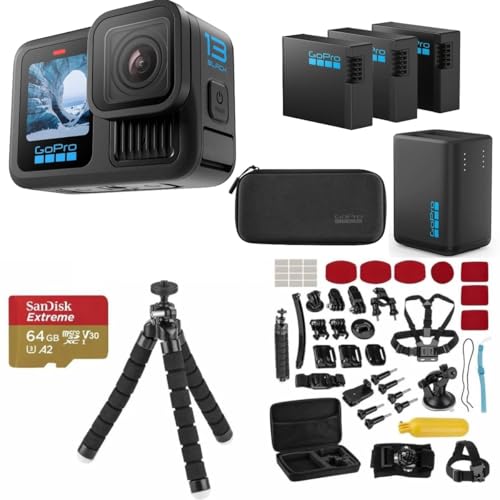
No rival matches the mount and accessory range built around this body over a decade of releases. Magnetic lens mods attach in seconds, so macro, ultra wide and anamorphic looks come from one camera. Riders report horizon lock stays convincing through rough trail sections where cheaper stabilisation drifts.
Pros
- Widest mount and accessory range available
- Magnetic lens mods change the look in seconds
- Horizon lock holds level through hard vibration
Cons
- Body runs warm on long 5.3K takes
- Front screen is small for framing yourself

DJI Osmo Action 5 Pro
DJI built this around a bigger cell and a larger 1/1.3 inch sensor, which is why it lasts a full riding day and holds detail after sunset. Both screens use OLED panels, so framing in bright sun stays readable. Night footage comes out noticeably cleaner than older action cameras manage.
Pros
- Longest stated runtime in this group
- Larger sensor cleans up dusk and night clips
- Two OLED screens stay visible in sunlight
Cons
- Accessory range trails GoPro considerably
- No modular lens attachments available

Insta360 X4
Two lenses record the full sphere, so aiming the camera stops being a decision you make while riding. Framing happens later at a desk instead. Invisible selfie stick shots remain the signature look, and removable lens guards protect the very exposed front elements.
Pros
- Reframe any angle after the ride is over
- Selfie stick disappears in the stitch
- Removable lens guards ship in the box
Cons
- Every clip needs reframing before it is usable
- 8K spherical files fill cards quickly
Insta360 Ace Pro 2
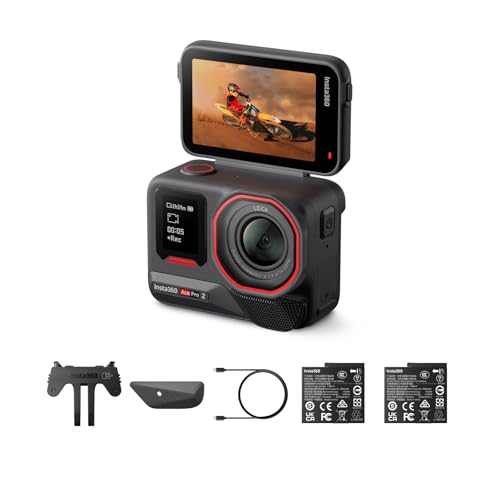
A flip up front screen turns this into a practical vlogging camera as well as a helmet mount. Dual chip processing and a Leica co engineered lens give it a distinct rendering in mixed lighting. Owners who switch back to a fixed screen model say the hinge is the feature they miss first.
Pros
- Flip screen makes self framing straightforward
- Holds detail in dim and mixed lighting
- Generates highlight clips in camera
Cons
- Bulkier than a standard action camera body
- Hinge needs cleaning after dusty rides
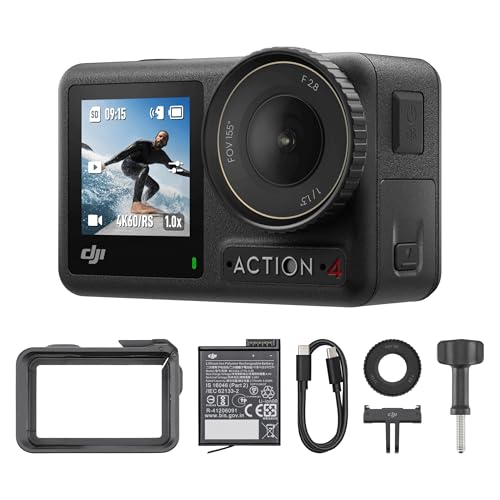
DJI Osmo Action 4
Sitting below the Action 5 Pro in the range makes this the sensible middle buy for riders who want solid stabilisation without the newest processor. Its magnetic quick release is still among the fastest ways to move a camera from helmet to chest. Colour straight out of camera needs little grading.
Pros
- Magnetic mount swaps positions in seconds
- Stabilisation holds up well for the class
- Battery copes better than most in cold air
Cons
- Processor is a generation behind the flagships
- Fewer creative shooting modes than newer bodies

GoPro HERO (2024)
At roughly 86 grams this is the lightest route into the GoPro mount system, which matters when clipping to a cap, a drone leg or a child sized helmet. Waterproofing and 4K capture survive the diet, while advanced modes do not. Menus are short enough that a beginner is filming within a minute.
Pros
- Light enough for caps and small helmets
- Works with every standard GoPro mount
- Short menus suit total beginners
Cons
- No high frame rate 4K for slow motion
- Smaller battery than the full size models
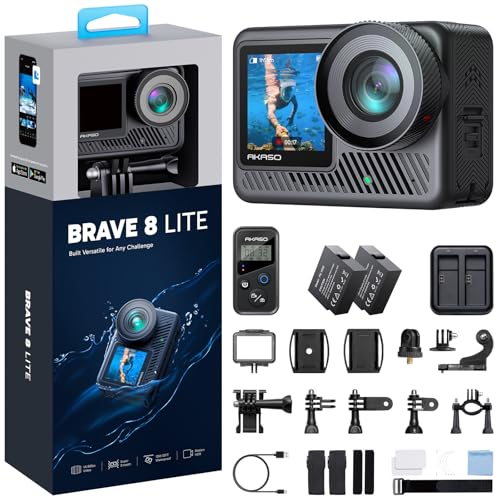
AKASO Brave 8 Lite
Everything needed to start filming ships in the box, including a waterproof case, two batteries and a spread of mounts. Front and rear touchscreens are unusual at this level. Stabilisation is where the savings show, particularly on rough ground at speed.
Pros
- Mount kit and spare battery included
- Dual touchscreens at an entry level cost
- Menus are simple for a first camera
Cons
- Stabilisation lags the leading bodies
- Low light footage picks up visible noise
What to look for
What matters more than resolution in an action camera? Every camera here records 4K, so resolution rarely decides anything. Stabilisation does. Watch how a body handles frame buzz from a bike, sudden rotation on a snowboard and the slow roll of a boat deck. Horizon lock, which keeps the frame level while the camera rolls, is the feature owners mention most once they have used it. Sensor size matters second, because it sets how usable dusk footage is.
How long do action camera batteries last in real use? Published runtimes assume moderate settings and mild temperature. Push to 4K at 120fps in warm still air and figures drop sharply, sometimes by half. Filming long continuous takes rather than short bursts favours a larger cell and a body that sheds heat. Cold cuts capacity too, so winter users keep a spare in an inside pocket. Plan on at least one spare battery whatever you buy.
Which mounting system should you buy into? A camera is only as usable as the mount holding it. GoPro compatible fingers became the de facto standard, and most brands now ship adapters into that system. Magnetic quick release, as on the DJI bodies, is much faster when swapping positions mid activity. Decide where the camera will actually live first, then confirm the clamp, adhesive pad or harness for that exact spot exists before ordering.
Do you need 360 capture or a standard lens? 360 wins when you cannot aim the camera, which covers riding, skiing and any solo filming. Every angle is recorded, and framing becomes an editing decision. Standard lenses win when you want finished clips straight off the card, since spherical footage must be reframed and exported before anyone can watch it. Storage differs too, because 360 files are considerably larger for the same run time.
The lineup, side by side
| # | Model | Max video | Best for | Score | Price |
|---|---|---|---|---|---|
| 1 | GoPro HERO13 Black | 5.3K at 60fps | Best overall | 9.4 | Check price |
| 2 | DJI Osmo Action 5 Pro | 4K at 120fps | Best for battery life | 9.2 | Check price |
| 3 | Insta360 X4 | 8K 360 at 30fps | Best for solo filming | 9.0 | Check price |
| 4 | Insta360 Ace Pro 2 | 8K at 30fps | Best for low light | 8.8 | Check price |
| 5 | DJI Osmo Action 4 | 4K at 120fps | Best value | 8.6 | Check price |
| 6 | GoPro HERO (2024) | 4K at 30fps | Best compact option | 8.3 | Check price |
| 7 | AKASO Brave 8 Lite | 4K at 60fps | Best budget pick | 8.0 | Check price |
Questions worth asking
Do I need a case to use an action camera underwater?
Most current models are waterproof on their own, typically between 5 and 20 metres. A case only helps for deeper diving or impact protection. Budget cameras are the exception and usually rely on the supplied housing.
Is a 360 camera better than a standard action camera?
It is better when you cannot aim, such as riding or filming yourself. It is worse when you want usable clips immediately, because every shot needs reframing before export.
How long do action camera batteries actually last?
Expect roughly 60 to 150 minutes depending on resolution, frame rate, screen use and air temperature. High frame rate 4K and cold weather both cut that noticeably, which is why spares are standard kit.
What memory card should I use in an action camera?
A microSD card rated V30 or higher covers standard 4K. V60 or better is safer for high bitrate and 360 modes. Slow cards cause dropped frames and recording errors mid ride.
Do action cameras overheat?
Sustained high resolution recording in warm still air triggers thermal limits on any compact body. Mounting in moving air, dropping the frame rate and removing the camera from an enclosed case all help.
Can I use an action camera as a webcam?
Several models support webcam mode over USB, and GoPro and DJI both publish desktop utilities. Support varies by firmware, so confirm your exact model before buying for that purpose.
Are third party action camera mounts safe?
Generic GoPro compatible mounts work fine for low risk positions. For high speed or overhead mounting, use reputable brands and add a tether, since a failed adhesive pad at speed usually means a lost camera.
Which action camera suits a complete beginner?
A straightforward 4K model with a rear screen and a bundled mount kit is the easiest start. Short menus and everything in the box beat a flagship you never configure properly.
How deep can an action camera go without a housing?
Stated depths run from 5 metres on compact bodies to 20 metres on the DJI Osmo Action 5 Pro. Those ratings assume clean seals and closed doors, so rinse salt and sand off after every session.
Are replaceable lens guards worth it?
Yes. A scratched front element ruins every subsequent shot, while a scratched guard costs little to swap. On 360 cameras the guards are close to essential given how exposed the lenses sit.
Final word
GoPro HERO13 Black stays the most flexible action camera, because the mount ecosystem and lens mods cover nearly every filming situation you will meet. Pick DJI Osmo Action 5 Pro when runtime and low light beat accessory choice. Insta360 X4 is the answer for solo riders willing to reframe in editing.
Marcus Chen
Marcus covered consumer electronics for enthusiast tech publications for six years before joining ChoiceCrest. He specializes in translating manufacturer spec sheets into plain-language buying advice, with a focus on audio, computing accessories and smart-home gear.