Graphing Calculators Compared for Students and Engineers
Most students should buy the Texas Instruments TI-84 Plus CE for its broad exam approval and color screen. Budget shoppers get nearly the same function set from the Casio fx-9750GIII. Calculus and engineering students needing symbolic algebra should look at the TI-Nspire CX II CAS instead.
Exam approval decides more of this purchase than any spec sheet. The TI-84 Plus CE covers nearly every standardized test and reads clearly under classroom lighting. Casio’s fx-9750GIII matches most of that function set for less money, while the TI-Nspire CX II CAS adds symbolic algebra for university-level calculus.
Picking wrong here has real consequences, since some exam boards ban CAS models outright regardless of how capable they are. We compared published specifications, exam-acceptance policies, and long-term owner reports on battery life and menu speed to rank these seven models.
What to look for
Check exam approval before you buy anything Test rules eliminate options faster than any spec comparison. CAS calculators like the TI-Nspire CX II CAS and TI-89 Titanium cannot enter an ACT testing room. Non-CAS units such as the TI-84 Plus CE and Casio fx-CG50 clear every major exam. Confirm your specific test’s policy first, since buying the wrong type wastes the money entirely.
Color screen or long battery life Color backlit displays make graphs and 3D surfaces easier to read, but most rely on a rechargeable battery you must remember to charge. Monochrome models often run for months on disposable AAAs with zero maintenance. Weigh screen readability against how reliably you actually charge devices.
Match the calculator to your current course Algebra and pre-calculus rarely call for a computer algebra system, so a mid-range model covers everything needed. University calculus, differential equations and engineering courses benefit from symbolic algebra tools. Paying for menus you will never open adds cost without adding value.
Best for coding-focused classes Python has become common in newer math and intro computer science curricula. The Casio fx-9750GIII, NumWorks and current TI-84 Plus CE editions all run it natively. Check with your instructor whether class assignments assume a specific brand’s Python implementation.
What we recommend

Texas Instruments TI-84 Plus CE
Teachers assume most students already own this model, so classroom instructions rarely need translating. A backlit color screen and rechargeable battery sit on top of the familiar TI-84 menu structure. It carries students from algebra through introductory college math without a learning-curve reset.
Pros
- Accepted on nearly every major exam
- Rechargeable so no constant battery swaps
- Huge library of school-ready programs
Cons
- No computer algebra system
- Slower processor than newer rivals

Casio fx-9750GIII
Graphing, statistics and spreadsheet tools cover what most students actually use, at a fraction of the flagship TI price. First-time users pick up the icon-based menu quickly, according to owner reports. Built-in Python support adds value for coding-focused classes.
Pros
- Strong feature set for the money
- Simple icon-based navigation
- Runs Python for coding classes
Cons
- Non-color display
- Fewer third-party programs than TI

Texas Instruments TI-Nspire CX II CAS
A full computer algebra system solves and simplifies symbolic expressions, which fits university calculus and engineering coursework well. Graphs, notes and data share a single document-style page. Complex multi-step problems stay organized in a way single-line calculators cannot match.
Pros
- Symbolic algebra handles tough problems
- Sharp color screen and layout
- Rechargeable battery
Cons
- CAS banned on the ACT
- Steeper learning curve
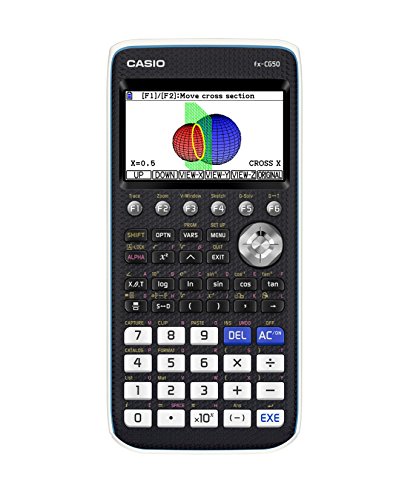
Casio fx-CG50 PRIZM
A high-resolution color screen pairs with 3D graphing, so students can visualize surfaces that flat models flatten into confusing lines. No CAS means it stays legal on every major standardized test. Visual learners benefit most from the added dimension.
Pros
- Bright high-resolution screen
- 3D graphing for visual learners
- No CAS restrictions on exams
Cons
- Uses disposable AAA batteries
- Menus differ from TI standard
Texas Instruments TI-84 Plus
Color is not a priority for every student, and this monochrome original still runs the core functions taught in class. It typically costs less than the CE edition, making it a practical hand-me-down. Battery life stretches for months on standard AAAs.
Pros
- Lower cost than the CE
- Long battery life
- Familiar TI-84 layout
Cons
- Small monochrome screen
- No rechargeable option

NumWorks Graphing Calculator
App-style menus and a lightweight body make this feel closer to a phone than a legacy calculator. Native Python support runs without extra setup. Newcomers report a shorter learning curve than traditional TI or Casio menus.
Pros
- Intuitive modern menus
- Very light and slim
- Native Python for coding
Cons
- Smaller program ecosystem
- Exam mode acceptance varies by board
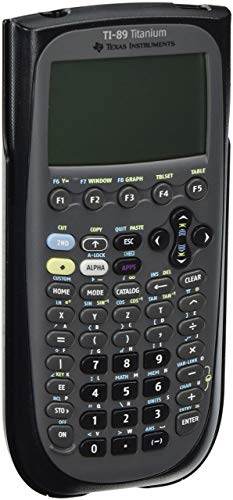
Texas Instruments TI-89 Titanium
Engineering students have relied on this model’s CAS and unit-handling functions for years. It graphs 3D surfaces and solves symbolically, tasks that stump non-CAS calculators. ACT testing rooms do not permit it, so pair it with a second calculator for that exam.
Pros
- Strong CAS and unit tools
- Handles advanced engineering math
- Proven long-term reliability
Cons
- Not allowed on the ACT
- Monochrome screen looks dated
How they stack up
| # | Model | Display | Best for | Score | Price |
|---|---|---|---|---|---|
| 1 | Texas Instruments TI-84 Plus CE | Color backlit 320×240 | Best overall | 9.4 | Check price |
| 2 | Casio fx-9750GIII | Monochrome 128×64 | Best value | 9.0 | Check price |
| 3 | Texas Instruments TI-Nspire CX II CAS | Color 320×240 | Best for advanced calculus | 9.2 | Check price |
| 4 | Casio fx-CG50 PRIZM | Color 384×216 | Best color display | 8.9 | Check price |
| 5 | Texas Instruments TI-84 Plus | Monochrome 96×64 | Best budget classic | 8.5 | Check price |
| 6 | NumWorks Graphing Calculator | Color 320×240 | Best modern interface | 8.6 | Check price |
| 7 | Texas Instruments TI-89 Titanium | Monochrome 160×100 | Best for engineering math | 8.3 | Check price |
Common questions
Which graphing calculator do most schools require?
Many math departments standardize on the TI-84 family so teachers can project one set of menus for the whole class. Without a specific school requirement, the TI-84 Plus CE is the safest default purchase.
Are CAS calculators allowed on standardized tests?
It depends on the exam. The SAT and AP tests permit CAS models, but the ACT bans them entirely. Non-CAS calculators such as the TI-84 Plus CE and Casio fx-9750GIII are accepted across all three.
Do I need a color screen for graphing calculus?
A color screen is not required, but it makes overlapping graphs and 3D surfaces far easier to read. Budget-conscious buyers can still cover core coursework with a monochrome model like the TI-84 Plus.
How long do graphing calculators typically last?
Owners commonly report a decade or more of use, since the underlying hardware changes rarely. A well-supported model can carry one student from high school through a full college degree.
Which graphing calculators can run Python?
The Casio fx-9750GIII, NumWorks and newer TI-84 Plus CE editions all support Python natively. That matters increasingly for classes blending math with introductory coding.
Is a rechargeable calculator better than one using AAA batteries?
Rechargeable models save money over time if you charge nightly without fail. AAA-powered models suit students who cannot guarantee charger access, since spare batteries are cheap and instant to swap in.
What is the difference between the TI-84 Plus and TI-84 Plus CE?
The CE adds a color backlit screen, a rechargeable battery and a noticeably slimmer body. The original TI-84 Plus stays monochrome and runs on disposable batteries, usually at a lower price.
Best graphing calculator for a phone-free exam room?
Phone graphing apps exist, but nearly every standardized test bans phones outright. A dedicated calculator remains the only device most testing rooms will actually allow.
TI-84 Plus CE vs Casio fx-9750GIII: which is the better first calculator?
The TI-84 CE wins on exam-board familiarity and color display, while the fx-9750GIII wins on price and Python support. Either covers algebra through pre-calculus without issue.
The bottom line
Buy the Texas Instruments TI-84 Plus CE for the widest classroom acceptance paired with an easy-to-read color screen. Choose the Casio fx-9750GIII to save money without losing exam eligibility. Step up to the TI-Nspire CX II CAS only once your coursework genuinely requires symbolic algebra.
Marcus Chen
Marcus covered consumer electronics for enthusiast tech publications for six years before joining ChoiceCrest. He specializes in translating manufacturer spec sheets into plain-language buying advice, with a focus on audio, computing accessories and smart-home gear.


