Why Does Tire Pressure Drop More in Cold Weather Than Warm?
Tire pressure drops in cold weather mainly because the air inside the tire is literally a gas obeying basic physics: as temperature falls, the air molecules inside move slower and exert less outward pressure on the tire’s walls, even though no air has actually leaked out. As a rough rule, tire pressure drops about one pound per square inch for every ten degree Fahrenheit drop in temperature, which is why a tire that reads perfectly fine in autumn can show a noticeably lower reading on the season’s first genuinely cold morning.
The physics behind the pressure drop
Gas pressure inside a sealed container is directly related to temperature, and a tire is essentially a sealed container of compressed air. When outside temperature drops, so does the temperature of the air inside the tire, and that cooler, slower moving air simply pushes outward with less force on the tire’s interior walls, lowering the pressure reading even though the actual amount of air inside has not changed.
Why this is not a leak, even though it looks like one
A tire that is losing pressure purely from cold weather will typically regain that lost pressure once temperatures warm back up, which is the clearest way to distinguish a temperature driven drop from an actual slow leak. A genuine leak continues losing pressure regardless of temperature and will not fully recover on a warmer day.
Why driving the car can temporarily mask a cold weather pressure drop
Friction between the tire and road generates heat as a car is driven, which warms the air inside the tire and temporarily raises the pressure reading closer to normal. This is why checking tire pressure after driving several miles gives a misleadingly higher number than the tire’s true resting pressure, and why pressure should always be checked when tires are cold, meaning the car has been parked for at least a few hours.
Why low tire pressure in cold weather is a real safety issue, not just a minor inconvenience
Underinflated tires flex more than they should, generating excess heat and wearing unevenly, and in cold or icy conditions they also reduce the contact patch’s effectiveness at maintaining grip, which matters more in winter driving conditions than almost any other seasonal factor affecting a tire.
Why nitrogen filled tires lose slightly less pressure in the cold than regular air
Nitrogen molecules are slightly larger and less prone to moisture content than the compressed air typically used to fill tires, which results in marginally more stable pressure across temperature swings, though the difference is modest enough that most everyday drivers do not need to seek out nitrogen specifically just for this reason.
Why some tire pressure monitoring systems seem to lag behind the actual drop
Many factory tire pressure monitoring systems only alert the driver once pressure falls below a set threshold, often around 25 percent under the recommended level, which means a tire can already be meaningfully underinflated from cold weather before any dashboard warning appears, making manual checks during cold snaps still worthwhile even with a monitoring system installed.

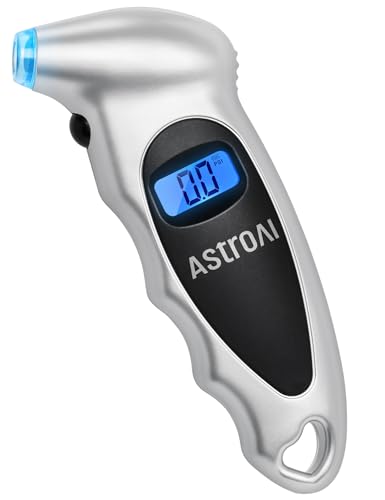
AstroAI Digital Tire Pressure Gauge
A simple digital gauge that gives a precise reading in seconds, useful for the manual checks that matter most during the first cold snaps of the season.

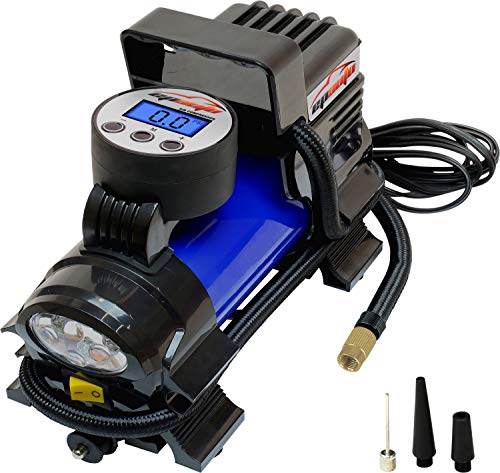
AstroAI Portable Air Compressor Tire Inflator
A plug in portable inflator that lets drivers top off pressure at home rather than driving to a gas station air pump, convenient for topping off several tires after a cold weather pressure drop.
Frequently asked questions
How much does tire pressure actually drop per degree of temperature change?
A commonly used rule of thumb is about one pound per square inch of pressure lost for every ten degree Fahrenheit drop in temperature, though the exact figure varies slightly depending on the starting pressure and tire volume.
Should you inflate tires to a higher pressure in winter to compensate?
No, tires should be inflated to the pressure listed on the vehicle’s door jamb sticker year round, not a higher winter specific number, since that recommended pressure already accounts for normal temperature variation across seasons.
Does driving on underinflated cold tires damage them permanently?
Driving for extended periods on significantly underinflated tires generates excess heat and uneven wear that can shorten tire life or, in severe cases, cause structural damage, so cold weather underinflation is worth correcting rather than just driving through.
Why do all four tires sometimes not drop the same amount in cold weather?
Tires exposed to more direct sun or positioned differently relative to wind and road heat can lose pressure at slightly different rates, and minor existing differences in each tire’s actual air volume or seal quality also contribute to uneven drops.
Does altitude change combined with cold weather affect tire pressure differently?
Yes, since both altitude and temperature affect gas pressure, a sudden drive from a warm low altitude area into cold high altitude conditions can compound the pressure drop more than either factor would on its own.
How soon after a cold front should tire pressure be rechecked?
Checking within a day or two after a significant temperature drop is reasonable, since the pressure change happens essentially as fast as the tire’s internal air temperature changes, which is fairly quickly once the outside temperature shifts.
Can a tire pressure warning light come on just from cold weather with no actual leak?
Yes, a tire pressure warning light is simply reporting that pressure fell below a threshold, and a purely temperature driven drop with no actual leak can absolutely trigger that light during a cold snap.
Does tire pressure recover on its own once the weather warms up again?
Yes, assuming there is no actual leak, pressure that dropped due to cold temperature will rise back toward its original reading once the tire warms back up, which is the key difference between a temperature effect and a real leak.
Is it normal for tire pressure to be different in the morning versus afternoon in winter?
Yes, this is normal and expected in winter, since overnight lows versus daytime highs can create a meaningful temperature swing within the same day, and tire pressure will reflect that swing even without anything being wrong.
Do spare tires lose pressure in cold weather the same way regular tires do?
Yes, a spare tire is subject to the same basic gas laws as any other tire, so a spare stored in a cold trunk or underbody compartment will also show lower pressure in cold weather, which is worth checking before relying on it in an emergency.
Can overinflating a tire to compensate for cold weather cause its own problems?
Yes, overinflating specifically to compensate for an anticipated cold weather drop can leave a tire overinflated once temperatures rise again, which reduces the tire’s contact patch and can accelerate wear in the center of the tread.
Does parking in a garage overnight meaningfully reduce the cold weather pressure drop?
Yes, a garage even modestly warmer than outside air reduces how far the tire’s internal temperature falls overnight, which in turn reduces how much pressure is lost compared to an identical tire parked outside in full cold exposure.
Why does tire pressure seem to drop faster in the first cold snap of the season than later in winter?
The first cold snap often produces a noticeable drop simply because tires were last properly checked or inflated during warmer weather, so the baseline reading going into that first cold stretch already had more room to fall before anyone adjusted for it.
Is checking tire pressure with a gas station gauge as accurate as a dedicated digital gauge?
A well maintained gas station gauge can be reasonably accurate, but these gauges see heavy public use and are prone to wear or calibration drift over time, so a dedicated digital gauge kept in the car tends to give a more consistently reliable reading.
Our take
The pressure drop in cold weather is physics, not a flaw in the tire, which is exactly why it gets overlooked: nothing is actually wrong, but the number on the gauge is real and worth acting on regardless of the explanation behind it.
Tony Russo
Tony trained as an automotive technician and spent years in service and parts retail before moving into writing. He focuses on garage tools, car care products and accessories from a hands-on maintenance perspective.