Why Do Tape Measures Have a Loose Hook on the End?
The hook at the end of a tape measure is intentionally designed to slide back and forth slightly, and that small amount of play is there to automatically compensate for the hook’s own thickness so the tape reads accurately whether you are measuring by hooking it over an edge or pushing it against a surface. It is a deliberate design detail, not a sign of a worn-out or defective tape measure.
The core problem the sliding hook solves
A tape measure’s hook has physical thickness, and if it were fixed rigidly in place, the measurement would be consistently off by the thickness of the hook depending on whether you were hooking it around the outside of an object or butting it against the inside of a corner. The hook’s designed movement, exactly equal to its own material thickness, automatically corrects for this difference between the two most common ways people use it.
How this plays out in outside versus inside measurements
When you hook the tape over the outside edge of a board, the hook slides outward to the end of its play, effectively adding its thickness to the starting point of the measurement. When you instead push the tape’s end flush against an inside corner or surface, the hook slides inward by that same thickness, compressing out of the way so the zero mark on the tape itself lines up correctly with the surface you are measuring from.
Why this is calibrated precisely rather than just a loose rivet
Manufacturers design the hook’s slot and its thickness together so the amount of play exactly matches the hook’s material thickness, not an arbitrary amount. This precision is why a quality tape measure stays accurate in both use cases without you needing to manually account for the hook at all, as long as the hook itself has not been bent or damaged.
What happens when the hook gets bent or damaged
If the end hook gets bent from repeated impacts, dropped onto concrete, or crushed in a toolbox, the compensating slide can become inconsistent or the hook’s effective thickness can change from its original calibrated value. This is a real source of measurement error, distinct from the hook’s intentional looseness, which is why a visibly bent hook is a legitimate reason to check a tape measure’s accuracy or replace it.
Why some tape measures have a hole in the hook as well
Many hooks include a small hole sized to fit over a nail head, letting you hook the tape onto a nail driven partway into a surface for one-person measuring over longer distances. This is a separate, intentional feature from the sliding compensation, aimed at solo use rather than measurement accuracy itself.
Does the sliding hook ever cause a bad reading on its own
Under normal use, no, since the design accounts for exactly this movement. Problems only arise if debris gets lodged in the hook’s slot preventing it from sliding freely, or if the hook has been physically deformed, both of which are maintenance or damage issues rather than flaws in the sliding design itself.

Stanley FatMax 25-Foot Tape Measure
A widely used tape measure with a standard sliding end hook, representative of the compensating hook design found across most quality tape measures.
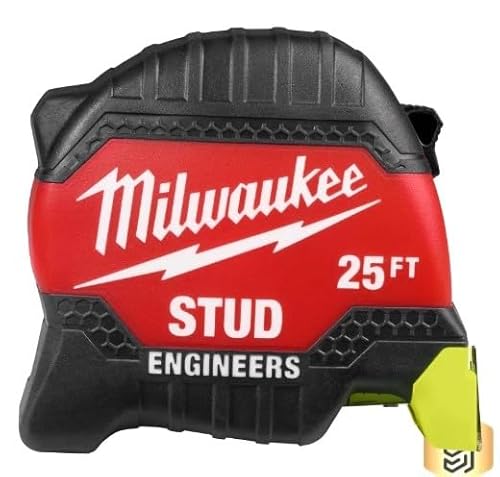
Milwaukee STUD 25-Foot Tape Measure
A tape measure with a reinforced end hook built to resist the kind of bending that can throw off the hook’s intended sliding compensation over heavy job site use.
Frequently asked questions
Is the wobble in my tape measure’s hook a sign it is broken?
No, a small amount of back-and-forth play in the end hook is intentional and present on essentially every quality tape measure, not an indication of damage or defect.
Can I measure accurately by hooking the tape measure over an edge?
Yes, this is one of the two intended uses the sliding hook is specifically designed to support, along with pushing the tape against an inside surface.
Does the sliding hook need to be oiled or maintained?
Generally no special maintenance is needed, though keeping the slot free of dirt, sawdust, or debris helps ensure the hook continues to slide freely as designed.
How can I tell if my tape measure’s hook is bent and causing inaccurate readings?
Comparing a measurement using the hook against the same measurement made by holding the tape’s zero mark flush to a known accurate edge can reveal a discrepancy if the hook has been bent.
Does every brand of tape measure use the same amount of hook play?
The exact amount of play corresponds to that specific hook’s thickness, which can vary slightly between manufacturers, though the underlying compensating principle is consistent across quality tape measures.
Can a tape measure still be accurate if the hook is completely missing?
Not reliably for hook-based measurements, since without the hook you would need to align the tape’s actual zero mark manually, though the tape body’s printed markings themselves remain accurate.
Why does my tape measure read slightly different when I flip it to measure overhead versus along the floor?
This is usually not related to the hook’s sliding mechanism, but can result from how the tape naturally sags or flexes over longer unsupported spans rather than a hook issue.
Is it normal for cheaper tape measures to have more hook play than expensive ones?
The amount of play should still match the hook’s thickness regardless of price, though manufacturing tolerances on budget models can sometimes be less precise, leading to a tiny but potentially noticeable calibration difference.
Does the hook’s hole for hanging on a nail affect measurement accuracy?
No, the hole is a separate feature for one-person use over long distances and does not interfere with the hook’s sliding compensation for standard measurements.
Can I fix a bent tape measure hook myself?
Carefully bending it back by hand is sometimes possible for minor bends, though a significantly deformed hook often cannot be restored to its original precise thickness and alignment, making replacement the more reliable fix.
Why do some tape measures have a wider hook than others?
Hook width can relate to durability and design preference, but the key factor for accuracy is that the hook’s slide distance matches its own thickness, regardless of how wide it is.
Does the sliding hook work the same way on a tape measure’s metric and imperial sides?
Yes, the hook’s physical compensation applies to the tape’s zero point regardless of which unit scale you are reading, since it is a mechanical adjustment rather than something tied to the printed markings.
Can temperature affect how the end hook slides on a tape measure?
Extreme cold can occasionally make the hook’s movement feel stiffer due to minor material contraction, though this is a minor effect compared to actual damage or debris buildup.
Is it better to measure from the hook or from the tape’s body against a wall?
Both methods are accurate as intended by design, with the choice mainly coming down to which is more physically convenient for the specific measurement you are taking at that moment.
Does a tape measure’s hook design differ between standard and long tape reels?
The sliding compensation principle stays the same, though long reel tapes used for larger distances sometimes use a simpler ring or loop end rather than the wider hook found on standard pocket tape measures, since their typical use case differs.
Will a tape measure give a wrong reading if the hook slides to only one side during use?
As long as the hook can still move freely within its designed range, resting on one side briefly during handling does not cause an error, since the hook naturally settles into the correct position once it contacts the measuring surface.
Final word
That bit of wobble people sometimes worry is a defect is actually the one feature making the tape measure work correctly in two different situations at once. As long as the hook has not been bent or jammed with debris, the looseness is doing its job quietly in the background every time you measure.
Jake Monroe
Jake worked as a residential contractor for over a decade before shifting to full-time writing. He evaluates power tools, hand tools and workshop gear through the lens of someone who has actually used them on job sites, not just read the box.


