9 Bead Types Every Jewelry Maker Should Have on Hand
Miyuki Delica Seed Beads 11/0 lead on cylinder geometry and tight size tolerance, which keeps loom charts square. TOHO Round Seed Beads 11/0 take over when a stitch needs three or four thread passes. Preciosa Czech Seed Beads cover fringe, stringing and bulk colour.
Miyuki Delica Seed Beads 11/0 are the pick for charted work, where every row has to line up. TOHO Round Seed Beads 11/0 win any stitch that sends thread through the same bead repeatedly. Preciosa Czech Seed Beads remain the choice for fringe, stringing and larger volumes.
Two tubes labelled the same size can still differ enough to throw a loom pattern off by several rows. Finishes complicate it further, since dyed and galvanised coatings behave very differently against skin. We compared published sizing tolerances, hole diameters, finish types and packaging formats. Owner feedback on culling rates and finish wear settled the close calls.
Our top picks

Miyuki Delica Seed Beads 11/0
Flat cylinder walls sit flush against each other, so Delicas build the tile like surface that loom, peyote and brick stitch charts assume. Size tolerance stays tight inside a tube, which stops long rows creeping off pattern. Owners report culling far fewer misshapen beads here than from generic seed stock.
Pros
- Tight size tolerance keeps charted rows square
- Flat walls produce a smooth woven surface
- Very large finish and colour catalogue
Cons
- Cylinder profile drapes stiffly in fringe
- Sold mostly in small tubes rather than hanks

TOHO Round Seed Beads 11/0
Hole diameter is the whole argument for these. Right angle weave and cabochon bezels can push thread through one bead four times, and TOHO rounds swallow those passes. Wall thickness runs thinner than most competing rounds as a direct result of that wide bore.
Pros
- Wide holes accept four thread passes
- Rounds stay uniform with few misshapes
- Broad permanent finish range for worn pieces
Cons
- Thin walls chip if a needle is forced
- Less uniform than cylinder beads on charts
Preciosa Czech Seed Beads
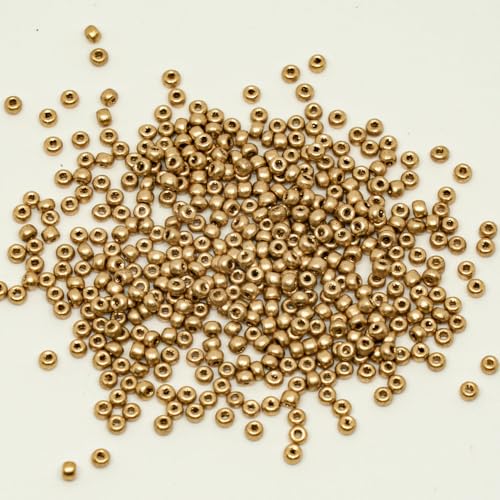
Czech rounds carry a softly irregular profile that reads antique next to Japanese uniformity. Hanks and tubes ship in generous quantities, so gram cost drops fast across a large project. Expect to cull a small share of every batch, which owners treat as normal for this style.
Pros
- Bulk hanks stretch a large project further
- Warm traditional palette for vintage designs
- Rounded shape drapes well in fringe
Cons
- Batch variation shows up on precise charts
- Culling time adds up on detailed patterns

PandaHall Elite Glass Seed Beads
Compartment boxes spread many colours across one purchase, which is how most beginners want to buy their first stock. Glass quality sits below the Japanese lines yet handles stringing, charms and mixed media without complaint. Half the value is organisational, since the case doubles as bead storage from day one.
Pros
- Wide colour spread in a single purchase
- Storage case included and ready to sort
- Low commitment way to try new techniques
Cons
- Sizing drifts between colours in one box
- Some finishes wear under heavy handling

Mandala Crafts Glass Seed Beads
Single colour bags replace assortments here, which suits a repeated design or a class all making the same piece. Resealable packaging keeps leftovers off the floor between sessions. Sizing runs slightly larger than the label in some colours, based on the listed measurements.
Pros
- One bag covers an entire repeated design
- Practical quantity for classes and workshops
- Resealable bags reduce spills between sessions
Cons
- Less consistent than Japanese seed beads
- Few specialist or permanent finishes offered

Redtwo Clay Beads Kit
Flat polymer clay heishi discs carry the stacked bracelet look, and this kit adds letter beads, elastic cord and findings alongside them. Six millimetre discs lie light and flat against the wrist. Sorting the mixed colours before you start saves far more time than it costs.
Pros
- Everything for a first bracelet arrives together
- Flat discs sit comfortably against skin
- Colour range matches current layered stacks
Cons
- Clay discs crack under sharp plier tips
- Mixed packs need sorting before any project

Incraftables Alphabet Letter Beads
Letter beads turn a plain strand into a name, a date or a word. Incraftables balances the letter distribution, so common vowels do not run dry three bracelets in. Holes take elastic cord and thin stringing wire, and printed faces last longer with a sealant on daily wear pieces.
Pros
- Vowel counts match real word building
- Pairs cleanly with clay and glass beads
- Large holes suit children stringing on elastic
Cons
- Printed letters fade with constant wear
- Acrylic reads less refined beside glass
What matters most
What do seed bead sizes like 11/0 actually mean? Seed bead numbering runs backwards. A 15/0 bead is tiny, while 6/0 is chunky enough to string on cord without a needle. Most published patterns assume 11/0, small enough for detail yet workable without magnification. Sizes are nominal rather than measured, and Japanese and Czech makers land in slightly different places. Sticking to one brand for a whole project sidesteps the mismatch completely.
Which bead shape suits which stitch? Cylinder beads tile into a flat surface, which is exactly what loom, peyote and brick stitch charts are drawn for. Rounds curve, so herringbone, netting and fringe hang more softly with them. Step up to 6/0 or 8/0 for stringing, kumihimo accents and projects with children. Clay heishi and acrylic letters belong on elastic cord, not on a beading needle. Buy to the technique and the pattern stops fighting back.
How many thread passes will your stitch need? Hole capacity narrows your options long before colour does. Right angle weave and cabochon bezels can send thread through a single bead four times. A tight bore then means split beads and snapped needles twenty rows in. TOHO rounds and Miyuki Delicas both carry unusually wide holes for their body size. Pressed glass and gemstone beads often allow one pass only, so check the stitch before the strand.
Which bead finishes hold up against skin? Galvanised and dyed coatings look brilliant in the tube and can dull after weeks of skin contact, perfume or sunlight. Permanent finishes, listed as Duracoat or permanent galvanised, are formulated to survive that exposure. Earrings and hair pieces sit away from skin, so the finish range stays wide open there. Bracelets and rings are where a non permanent coating disappoints months later. For anything worn daily, stay with permanent, plated or colour lined beads.
How they compare
| # | Model | Shape | Best for | Score | Price |
|---|---|---|---|---|---|
| 1 | Miyuki Delica Seed Beads 11/0 | Cylinder | Best overall | 9.4 | Check price |
| 2 | TOHO Round Seed Beads 11/0 | Round | Best for multi pass stitching | 9.2 | Check price |
| 3 | Preciosa Czech Seed Beads | Rounded, slightly irregular | Best value | 9.0 | Check price |
| 4 | PandaHall Elite Glass Seed Beads | Multi colour compartment box | Best for beginner assortments | 8.8 | Check price |
| 5 | Mandala Crafts Glass Seed Beads | Large single colour bags | Best for single colour bulk | 8.6 | Check price |
| 6 | Redtwo Clay Beads Kit | Polymer clay heishi | Best for polymer clay bracelets | 8.3 | Check price |
| 7 | Incraftables Alphabet Letter Beads | Acrylic | Best for personalised pieces | 8.0 | Check price |
Common questions
What size seed bead should a beginner start with?
Start at 8/0 or 11/0. Larger 8/0 beads are easy to see and thread, which builds confidence quickly. Published patterns then assume 11/0, so that becomes the size worth stocking properly.
What is the difference between Delica and round seed beads?
Delicas are cylinders with flat walls and very even sizing, so they lock together into a smooth sheet. Round seed beads have a curved profile that gives a softer, more textured fabric and better drape in fringe.
Are Japanese seed beads better than Czech seed beads?
For charted work, yes, since tighter tolerances mean far less culling and fewer crooked rows. For fringe, stringing and organic designs, Czech beads bring a warmer traditional look and stretch a bulk purchase further.
Which thread works best with glass seed beads?
Braided beading thread handles the abrasion of glass hole edges best. Nylon thread feels softer and drapes nicely but wears through sooner. Conditioning with beeswax or a synthetic conditioner reduces fraying either way.
Do bead finishes rub off on skin?
Some do. Dyed coatings and non permanent galvanised finishes are the usual offenders on bracelets and rings. Listings describing a finish as permanent or Duracoat are the safer buy for pieces worn against skin.
How many grams of beads does one bracelet need?
A single row loom bracelet in 11/0 beads usually takes five to ten grams, depending on width and length. Order a little extra of any key colour, because dye lots shift between batches.
Can clay heishi bead bracelets get wet?
Splashes are fine. Repeated soaking loosens the elastic cord well before it harms the clay discs. Owners report that removing them before swimming or showering roughly doubles how long a stack survives.
Should I sort a mixed bead pack before starting?
Yes for assortment boxes and multi colour bags. Sorting shows how much of each colour you really have and pulls misshapen beads before they land mid pattern.
Which beads are best for kids making jewelry?
Larger sizes with wide holes work best, so 6/0 and 8/0 glass, acrylic letters and clay heishi on elastic cord. Skip 11/0 seed beads and needles until fine motor control catches up.
Our pick
Miyuki Delica Seed Beads 11/0 earn the recommendation for anyone working from a chart, since even sizing removes the main cause of a crooked pattern. TOHO Round Seed Beads 11/0 answer the stitches that demand repeated thread passes. Preciosa Czech Seed Beads stay the sensible pick for fringe, stringing and high volume colour work.
Jake Monroe
Jake worked as a residential contractor for over a decade before shifting to full-time writing. He evaluates power tools, hand tools and workshop gear through the lens of someone who has actually used them on job sites, not just read the box.