Why Does a String Trimmer Line Keep Breaking on Thick Weeds?
Line breaks most often because it is too thin for the weeds being cut, has dried out and gotten brittle from age or sun exposure, or is being spun at high speed directly into thick, woody stalks that are really a job for a brush cutter blade rather than flexible line.
Line diameter has to match the job
Thinner line, roughly .065 to .080 inch, handles grass and light weeds fine but snaps quickly against thick or woody growth, while heavier line in the .095 to .155 inch range, depending on what the trimmer motor can handle, holds up far better against denser material.
Line degrades even sitting unused
Trimmer line is a nylon based plastic that becomes brittle with age, UV exposure, and especially drying out, which is why line that sat in a shed over winter often snaps far more than fresh line even at the exact same diameter.
Hitting hard material snaps line instantly
Rocks, fence wire, tree trunks, and concrete edging all shock load the line well beyond anything grass or weeds would produce, and repeated contact with hard edges is one of the most common real world causes of frequent breaks.
Shape of the line matters too
Round line is the most common profile and generally the most durable for mixed use, while twisted, serrated, or square profile lines cut more aggressively through thicker weeds but tend to wear or snap faster than round line of the same diameter.
Spool loading and feed mechanism issues
Line wound too tightly, overlapping on the spool, or fed out too short can bind and snap right at the trimmer head rather than failing from actual cutting wear, which looks like a line problem but is really a loading problem.
When the real fix is a different tool, not thicker line
Woody brush, saplings, and heavy overgrowth are genuinely outside what trimmer line is designed for no matter the diameter chosen, and a brush cutter blade attachment handles that kind of material far more reliably than any line will.
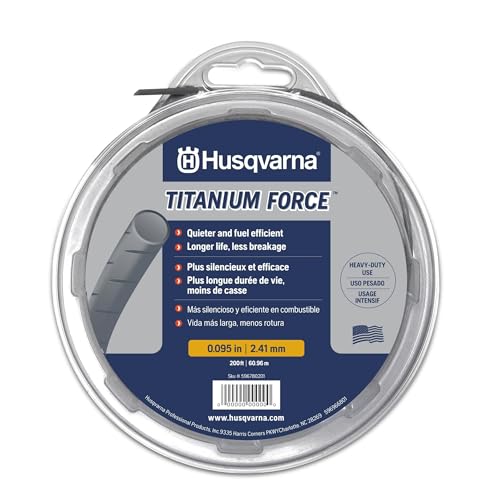
Husqvarna Titanium Force .095 Inch Trimmer Line
A heavier gauge round trimmer line built to resist breaking against denser weeds and light brush.

Oregon Magnum Gatorline .095 Inch Trimmer Line
A durable round profile line commonly used as a step up from standard thin line for tougher yard conditions.
Good to know
What trimmer line thickness should I use for thick weeds?
Stepping up to around .095 inch or heavier, if your trimmer’s motor and head can handle it, generally holds up much better against thick weeds than standard thin line.
Does old trimmer line actually go bad if it’s never used?
Yes, nylon line becomes brittle over time from age, heat, and UV exposure even sitting in storage, which is why line that performed fine last season can snap easily the following year.
Why does my trimmer line keep snapping at the head instead of the tip?
Breaks right at the head usually point to a loading or feed problem, such as line wound too tightly or overlapping on the spool, rather than wear from actual cutting contact.
Is thicker line always better, or can it overload the motor?
Thicker line cuts tougher material but demands more power to spin, so a lightweight trimmer not designed for heavy line can bog down or overheat if you size up too aggressively.
Can hitting a fence or edging really be the cause of frequent breaks?
Yes, repeated contact with hard, rigid surfaces like fencing or concrete edging shock loads the line well beyond normal cutting resistance and is one of the most common causes of unexplained snapping.
Does round line last longer than square or twisted line?
Generally yes for all around durability, though square and twisted profiles cut more aggressively through dense growth, trading some line life for cutting power.
How should trimmer line be stored to prevent it drying out?
Keeping line in a sealed bag or container away from direct sunlight and extreme temperature swings slows the brittleness that develops from UV and heat exposure over time.
Why does new line sometimes break faster than old line?
This is usually a loading issue rather than a line defect, since line wound too tightly or crossed over itself on the spool can bind and snap even when the line itself is fresh.
Can overloading the spool cause line to snap early?
Yes, cramming too much line onto a spool or winding it unevenly creates pressure points that can cause premature breaks during feeding or cutting.
Is it normal for line to wear down faster on concrete edges than grass?
Yes, concrete and other hard edging surfaces are abrasive and shock the line far more than soft vegetation, so faster wear in those specific spots is expected.
Does trimmer speed setting affect how often line breaks?
Higher spin speeds increase impact force when the line contacts something hard, so running at maximum speed through debris heavy areas can increase breakage compared to a moderate setting.
When should I switch from line to a brush cutter blade?
Once you are regularly cutting woody stems, saplings, or heavy brush rather than grass and soft weeds, a blade attachment handles that material more reliably than any trimmer line.
Can soaking trimmer line in water make it more flexible and durable?
Some users soak line briefly before use to add temporary flexibility, which can reduce snapping slightly, though it is a short term fix rather than a permanent solution to brittle line.
Does humidity or heat affect how brittle trimmer line becomes?
Yes, prolonged heat exposure accelerates the drying and brittleness process, which is part of why line stored in a hot shed or garage degrades faster than line kept in a cooler spot.
Does line color indicate a different material or durability?
Color is mostly a manufacturer branding choice rather than an indicator of durability, so diameter and line shape matter far more than color when judging how well a line will hold up.
Can using the wrong line diameter damage the trimmer head?
Yes, forcing line that is too thick into a head designed for thinner line can strain the feed mechanism and cause premature wear or jamming at the head itself.
Is pre-cut line less prone to breaking than line wound from a bulk spool?
The line material itself performs the same either way, though pre-cut pieces avoid some of the winding related binding issues that can cause early breaks when line is wound unevenly on a bulk spool.
Does a bump-feed head wear line differently than an automatic feed head?
Bump feed heads release line only when manually triggered, which can mean slightly more consistent line length, while automatic feed heads release line continuously as it wears, sometimes feeding out more than needed.
Can extreme cold make trimmer line more likely to snap?
Yes, cold temperatures make nylon line stiffer and more brittle temporarily, which is part of why early season trimming in cool weather sometimes sees more breakage than midsummer use.
Is dual-line cutting harder on the line than single-line?
Dual line heads cut more efficiently by covering more area per rotation, but each individual strand still experiences similar wear forces as a comparable single line setup under the same conditions.
Does trimmer head RPM vary enough between models to matter for line life?
Yes, higher RPM trimmers increase impact force when line contacts hard objects, which can mean more frequent breaks on the same material compared to a lower RPM model.
Can residual fuel vapor or chemicals in a shed degrade trimmer line?
Some solvents and fuel vapors can interact with certain plastics over long exposure, so storing line away from strong chemical fumes is a reasonable precaution even though normal garage storage is usually fine.
Where this leaves you
Most breakage traces back to one of three things: line that is too thin for the job, line that has quietly dried out in storage, or hard material the line was never meant to cut in the first place. Matching diameter to the actual weeds, and swapping to a blade when growth gets woody, solves most of the frustration.
Sierra Daniels
Sierra's background is in landscape design and nursery retail. She focuses on lawn and garden equipment, outdoor furniture and gear durability, weighing published specs against how materials actually hold up outside.
You might also need

Cordless String Trimmers That Keep Up With Landscaping Work

Why Does a Pop-Up Canopy Need Guy Lines Even on a Calm Day?
Compact Commercial String Trimmers That Pull Their Weight
