Why Does a Pop-Up Canopy Need Guy Lines Even on a Calm Day?
Guy lines are not just there for obvious wind, they counteract the lift a canopy’s own fabric roof generates as air moves across and under it, which happens even in a light breeze most people would call calm. They also add lateral tension that keeps the frame’s hinge joints locked, since a pop-up frame relies on tension to stay rigid in the first place. Skipping them removes both of those jobs at once.
The sail effect most people don’t notice
A flat canopy roof behaves like an airfoil once air moves across its top surface, creating upward lift the same way a sail or an awning does. Legs alone resist a downward load like rain pooling or someone leaning on the frame, but they do very little against upward force trying to lift the whole roof off the ground. That upward force is what tips canopies over or launches them into the air, not a sideways push.
Why stakes in the legs aren’t enough on their own
Stakes driven through the leg feet anchor the legs to the ground, but they don’t control what the roof does. A fully staked canopy can still have its canopy top catch a gust and flip the entire frame like a parachute, snapping leg joints in the process because the force traveled through the frame instead of being redirected into the ground. Guy lines run from the roof truss down to a separate, more distant ground anchor, which controls the roof independently from the legs.
Frame flex is the real failure mode, not just tipping
Accordion-style pop-up frames hold their shape through tension across every hinge and joint. When wind pushes unevenly on one side, the frame can rack, meaning the joints twist slightly out of alignment, and repeated racking is what actually cracks the fittings over a season of use, even in events that never come close to tipping the canopy over. Guy lines add outward tension that keeps those joints seated correctly under load.
What ‘calm’ actually hides from a quick glance outside
Thermal gusts near pavement, convective wind funneling between buildings, and the wake from a passing vehicle can all produce a brief 10 to 15 mph gust that feels like nothing to a person standing nearby but is more than enough to catch a 10 by 10 foot fabric roof. Weather apps reporting a calm average wind speed don’t capture these short, localized spikes, which is why tip-overs regularly happen on days that were described as calm beforehand.
Weight bags help, but they solve a different problem
Sandbags or leg weight bags add mass at the base of each leg, which resists the canopy sliding or being dragged sideways across the ground. They do very little against the rotational, twisting force a gust applies to the roof structure, because that force acts well above where the weight sits. Guy lines staked at an angle away from the frame resist that rotational torque directly, which is why manufacturers specify both weights and guy lines together for any setup expected to see wind, rather than treating either as a substitute for the other.

Eurmax USA 10×10 Pop-Up Canopy Tent
A commonly used commercial-grade pop-up frame that ships with reflective guy lines included as standard equipment rather than a separate purchase.
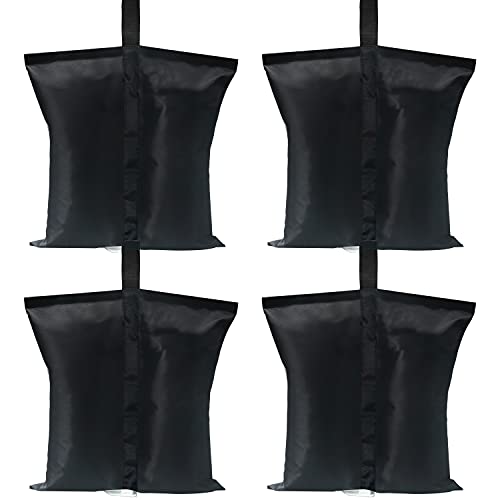
ABCCANOPY Leg Weight Bags (4-Pack)
Fillable weight bags that strap to each leg to add base mass, meant to be used alongside guy lines and stakes rather than instead of them.
Questions worth asking
Can I skip guy lines if I use heavy weight bags instead?
Weight bags resist sliding and dragging but do very little against the twisting, lifting force wind applies to the roof itself, so skipping guy lines still leaves the frame vulnerable to the failure mode that actually causes most tip-overs and joint damage.
How tight should guy lines be set?
Snug enough to remove slack without bending the frame inward, since over-tightening can actually stress the truss in the opposite direction; most manufacturers recommend a firm but not rigid tension you can still see flex slightly under a hand push.
Do indoor or covered events still need guy lines?
No, guy lines are specifically a response to wind and uplift, so a fully enclosed or indoor setup has no practical use for them since there is no airflow across the roof to create lift.
What angle should the stakes go in at for guy lines?
A roughly 45 degree outward angle away from the frame gives the best resistance to both downward pull and sideways tipping force, compared to a stake driven straight down which can work loose more easily under repeated tension.
Why do some canopies tip even with all four legs staked?
Because leg stakes control the legs, not the roof. If the roof catches wind without separate guy line tension running from the truss to the ground, the lifting force still transfers into the frame joints and can flip the canopy despite staked legs.
Is it safe to leave a pop-up canopy set up overnight unattended?
Only with guy lines, stakes, and weight bags all in place, and even then most manufacturers recommend lowering or removing the canopy top overnight if any wind is forecast, since unattended setups can’t be adjusted if conditions change.
Do heavier-duty commercial canopies need guy lines less than cheaper ones?
No, heavier frames resist less flex but still generate the same lift from their roof fabric, so commercial-grade canopies at trade shows and markets use guy lines just as routinely as lighter consumer models.
Can rope substitute for the guy lines that came with the canopy?
Yes, as long as it is low-stretch cord rated for outdoor use, though the reflective cord included by most manufacturers is specifically chosen to stay visible underfoot at dusk and reduce trip hazards around the setup area.
Why does my canopy flutter loudly even with guy lines attached?
Fluttering usually means the lines have some slack rather than true tension, since a taut line transfers force into the stake instead of letting the fabric flap; retightening each line individually usually resolves the noise.
Does canopy size change how necessary guy lines are?
Yes, larger canopies have more roof surface area to catch wind, which means more lift force at the same wind speed, so guy lines become more important as canopy footprint increases, not less.
Can I use guy lines on a canopy that didn’t come with any?
Yes, aftermarket guy line kits attach to the same truss points most pop-up frames already have, and adding them to an older canopy that lacked them is a common and worthwhile upgrade.
What ground surface makes guy lines least effective?
Pavement and hard-packed surfaces where stakes can’t bite in make guy lines much less effective, which is why canopies set up on concrete or asphalt often rely more heavily on weight bags and sometimes specialized concrete anchors instead.
How many guy lines does a typical 10×10 canopy need?
Most 10×10 frames use one guy line per corner, for four total, though some manufacturers add a fifth center line on the roof peak for extra stability in higher-wind-rated models.
Is it ever okay to use just stakes without guy lines for a quick low-wind setup?
For a brief setup in genuinely still air with someone staying right next to the canopy the whole time, some vendors tolerate skipping guy lines temporarily, but any unattended period or even a short gust risk makes relying on stakes alone a real gamble rather than a recommended practice.
Our take
Guy lines aren’t really a wind accessory, they’re a structural part of how a pop-up frame stays a frame instead of a sail. A canopy that looks perfectly stable sitting still on a quiet morning can still catch the kind of brief gust that no forecast mentions, and by the time that happens there’s no time to improvise an anchor. Staking the legs and weighting the base solves a different problem than guy lines do, which is exactly why skipping either one leaves a real gap most owners only discover the hard way.
Sierra Daniels
Sierra's background is in landscape design and nursery retail. She focuses on lawn and garden equipment, outdoor furniture and gear durability, weighing published specs against how materials actually hold up outside.

