Why Does a Spare Tire’s Air Pressure Need Checking Even If Never Used?
A spare tire’s pressure needs checking even when it is never used because tires lose air gradually over time through the rubber itself, a process called permeation, regardless of whether the tire is rolling on the road or sitting in a wheel well. A spare that was properly inflated when the car was new can be significantly underinflated years later, which matters a lot in the one moment a spare actually gets used, during an emergency where a flat, soft spare just creates a second problem.
Why tires lose air even without a puncture
Tire rubber is slightly porous at a molecular level, so air molecules slowly migrate through the tire wall over weeks and months even with a perfect seal and no leak. A typical tire loses roughly one to two PSI per month from this alone, which adds up significantly over a year or more of sitting unused.
Compact spares often run at unusually high pressure
Many compact spares are rated for a much higher pressure than a full-size tire, often 60 PSI or more, specifically because the smaller tire needs higher pressure to support the vehicle’s weight. Most drivers do not know this number and never check it, which means a slow leak from normal permeation drops it from an already unusual baseline that is easy to misjudge by eye.
Why a full-size spare degrades differently than a compact one
A full-size matching spare generally runs at the same pressure as the other four tires and loses air at the same gradual rate, but because it is not in the rotation with the other tires, nobody notices or corrects for it the way a dashboard tire pressure warning would catch a tire that is actually mounted and rolling.
What actually happens if you need the spare and it’s low
A significantly underinflated spare cannot properly support the vehicle’s weight, risks damage to the wheel or tire itself if driven on while soft, and on a compact spare specifically, running it underinflated also means it cannot meet the lower speed and distance limits, typically around 50 mph and under 70 miles, that it is designed around.
Spare tires age out even if pressure is maintained
Rubber compound in a spare still degrades chemically with age and heat cycling from sitting under a hot trunk or underbody mount, regardless of pressure, so most manufacturers suggest replacing a spare around six to ten years from its manufacture date, which is stamped on the sidewall the same way it is on regular tires, even if it is never touched the road.
Where to actually find the correct spare tire pressure
The correct PSI for a specific spare, which is often different from the main tires, is listed on the tire pressure placard inside the driver’s door jamb or in the owner’s manual, not on the spare tire’s sidewall maximum rating, which is a common point of confusion.
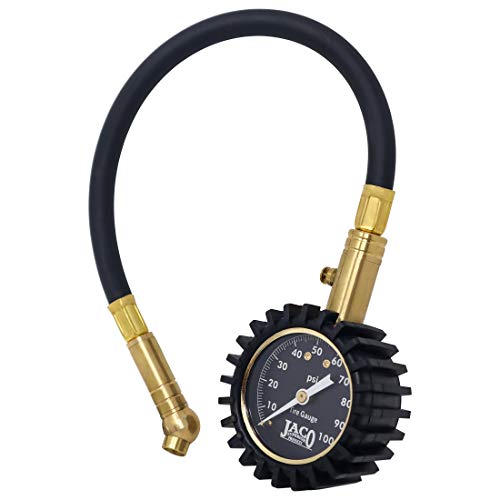
JACO ElitePro Tire Pressure Gauge
An accurate handheld gauge commonly kept in the glovebox for checking a spare tire’s often higher, easy-to-forget pressure.

VIAIR 400P-RV Portable Tire Inflator
A portable 12-volt air compressor suited to topping off a low spare tire at home or on the road without a trip to a gas station.
Questions worth asking
How often should I check my spare tire’s pressure?
Roughly every few months, or at the same time as a routine tire rotation or oil change, is a reasonable interval.
Why is my compact spare tire’s recommended pressure so much higher than my regular tires?
Compact spares are smaller and need higher pressure to carry the same vehicle weight safely, often rated near 60 PSI.
Can a spare tire go flat just from sitting unused for years?
Yes, through gradual air permeation through the rubber itself, even with no puncture or leak.
Where do I find the correct PSI for my specific spare tire?
The door jamb placard or owner’s manual, not the maximum pressure number molded into the tire’s sidewall.
Do run-flat tires eliminate the need to check a spare?
Many vehicles with run-flat tires do not include a spare at all, so this specific concern does not apply, though run-flats have their own pressure monitoring needs.
How long does a compact spare tire actually last before it needs replacing due to age?
Most manufacturers suggest six to ten years from the manufacture date found on the sidewall, regardless of mileage since it is barely used.
Can I use a regular tire pressure gauge on a spare tire?
Yes, the same gauge works on any tire’s valve stem.
Is it dangerous to drive on an underinflated spare tire?
Yes, it risks wheel damage, poor handling, and on a compact spare specifically, exceeding its safe limits even faster than usual.
Do tire pressure monitoring systems include the spare tire?
Generally no, most factory TPMS systems do not monitor a stored spare, which is exactly why manual checks matter.
What’s the speed limit for driving on a compact spare tire?
Typically around 50 mph, and manufacturers usually also recommend limiting the distance driven to around 70 miles before getting the flat tire repaired.
Can a spare tire be damaged just from sitting in a hot trunk or underbody mount for years?
Yes, heat cycling and age degrade the rubber compound over time even without road use.
Should I check the spare tire pressure before a long road trip?
Yes, specifically before a trip is a reasonable time to confirm it since that is when a flat is most likely to become urgent.
Does a full-size spare need checking as often as a compact one?
Yes, both lose air at a similar gradual rate, and the difference is mainly in the pressure number itself, not the frequency needed.
Can I inflate a spare tire with a portable air compressor at home?
Yes, a basic 12-volt portable inflator or a shop air compressor works fine for topping off a spare.
What’s the easiest way to remember to check the spare tire?
Pairing it with an existing routine, like checking it every time the car goes in for an oil change or tire rotation, is the most reliable method most people actually stick to.
Does a spare tire need a different valve stem than regular tires?
No, spare tires typically use the same style valve stem as the other tires on the vehicle, so standard inflation tools work without modification.
Can a spare tire be stored outside the vehicle to save interior space?
It is possible but not ideal, since a spare stored outside is more exposed to weather, theft, and road debris, and may not be accessible during an actual emergency the way an onboard spare is.
Does a spare tire’s storage position, underbody versus trunk, affect how often it should be checked?
An underbody-mounted spare is exposed to more road grime, moisture, and temperature swings, which can make periodic checks and occasional cleaning slightly more important than for a trunk-mounted spare.
Can a spare tire be worked into regular use if one of the main tires fails permanently?
A full-size matching spare can often be worked into the regular rotation temporarily, while a compact spare is only meant for short-term emergency use and should not replace a full tire long-term.
Does a new car come with the spare tire already at the correct pressure?
Usually yes at the time of delivery, but since no one monitors it afterward, it still loses pressure gradually like any other tire over the years that follow.
Can I check my spare tire pressure using a smart sensor instead of a manual gauge?
Standalone smart tire sensors exist that can be attached to a spare to monitor pressure remotely, though a simple manual gauge check remains the most common and reliable method.
Should a spare tire be inflated slightly above the recommended pressure as a buffer against slow leaks?
Most manufacturers do not recommend deliberately overinflating a spare, since the listed pressure already accounts for the tire’s intended load, and checking it periodically is a better solution than overinflating.
Does a compact spare tire wear out from use the same way a regular tire does?
Yes, though because it is meant for very limited use, tread wear is rarely the limiting factor; age and pressure maintenance matter more over the life of a spare that is rarely driven on.
Final word
A spare tire’s whole purpose is to work on the one day it is actually needed, and a slow pressure leak that nobody is watching defeats that purpose quietly over years. Checking it a couple of times a year, against the number on the door jamb rather than guessing, is the only way to know it will actually do its job.
Tony Russo
Tony trained as an automotive technician and spent years in service and parts retail before moving into writing. He focuses on garage tools, car care products and accessories from a hands-on maintenance perspective.