Why Does a Label Maker Need a Specific Tape Width for Each Model?
A label maker’s print head, feed rollers and cassette slot are all built to one fixed width, so tape has to match both that specific width and the particular cassette design of that brand’s tape family or it simply won’t feed, seat correctly, or print aligned text across the label. Width also directly limits how much text, how many lines, or how much barcode detail can actually fit onto a single printed label run.
How the physical cassette constrains width
The cassette housing, feed rollers and cutting blade built into any given label maker are all engineered around one specific tape width range from the factory, so a cassette sized for a different width simply won’t physically seat into the slot correctly or feed properly past the print head once it’s been loaded into the machine.
Why brand tape families aren’t interchangeable even at the same width
Brother’s TZe tape and Dymo’s D1 tape are both commonly available in similar widths when you look at the packaging, but the cassette shape, adhesive backing formula, and in some cases an embedded memory chip the machine specifically reads are all genuinely different between the two brands, so a same-width tape from one brand generally won’t work correctly inside the other brand’s machine.
How width relates to how much actually fits on a label
Narrower tape limits you to one single line of smaller text or a fairly basic barcode at best, while wider tape opens up multi-line labels, noticeably larger font sizes, or considerably more detailed barcodes, which is exactly why width is really as much a text-capacity decision as it is a simple physical fit decision.
Common width sizes and what they’re typically used for
Narrower tapes around a quarter inch wide suit small item labels and cable tags particularly well, while wider tapes closer to three quarters of an inch or beyond are far more common for file folder labels, shipping labels and signage that needs to stay legible from a greater distance away.
What happens if you force the wrong width in
At best, it simply won’t feed through the machine at all. At worst, forcing a mismatched cassette into the slot by hand can jam the feed rollers, misalign the cutting blade, or in some unfortunate cases damage the print head or cassette door itself, since none of those internal parts were ever designed to accommodate that particular width.
Generic or compatible tape, when it works and when it causes problems
Third-party tape made to closely match a specific brand’s cassette dimensions and width often works perfectly fine and costs noticeably less at checkout, but quality does genuinely vary between different sellers, and some newer machines specifically check for a brand’s embedded chip and will simply refuse to print at all on tape that lacks it.
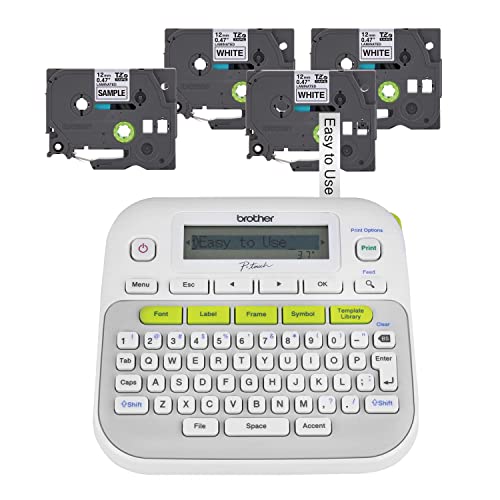
Brother P-touch PT-D210 Label Maker
Uses Brother’s TZe tape family, which comes in several widths but only fits this machine’s specific cassette shape, not a competing brand’s same-width tape.

DYMO LabelManager 160
Uses Dymo’s D1 tape family, a different cassette standard from Brother’s TZe line even where the printed widths happen to overlap.
Common questions
Can I use Brother tape in a Dymo label maker?
Generally no, the cassette shapes and internal feed mechanisms are built quite differently between these two specific brands even in cases where the printed tape width on the box happens to look similar at a glance.
Why does my label maker say the tape isn’t recognized?
Some newer machines read a small embedded chip inside the brand’s own cassette to automatically confirm both tape type and width on insertion, and third-party tape lacking that chip can trigger this exact error message on the display.
Does wider tape always mean a better label?
Not necessarily at all, wider tape just allows more text or finer detail to physically fit on the printed line. For a small item tag, a narrower tape is often genuinely the more practical and appropriate choice overall.
Can one label maker take multiple tape widths?
Many models do support a small range of widths through different interchangeable cassettes, as long as each individual cassette is correctly sized to fit that specific machine’s slot and feed mechanism without forcing anything.
Why does text look stretched or cut off on narrow tape?
The machine is essentially trying to squeeze your chosen font size and line count into less physical height than that particular text setting actually requires in order to print cleanly without clipping any characters.
Is generic third-party label tape reliable?
Quality genuinely varies by seller, but tape made to the correct brand’s width and cassette dimensions generally performs quite close to the original name-brand tape, aside from possible chip-recognition issues on certain newer machine models.
Does tape width affect how strong the adhesive is?
Not directly in most cases, adhesive strength is more about the tape’s specific backing formula than its width alone, though wider tape does naturally have more total adhesive surface area actually contacting the item being labeled.
Can you resize text to fit a narrower tape instead of buying wider tape?
Yes, most label makers let you shrink the font size down or switch to a single line of text to fit narrower tape, though resulting very small text becomes genuinely harder to read at any real distance away.
Why do some tape cassettes have a visible chip inside them?
That embedded chip tells the machine the tape’s width, color and type automatically the moment it’s inserted, which is also exactly what some machines rely on to reject non-brand or otherwise unrecognized tape cassettes.
Does laminated tape come in different widths than standard tape?
Laminated and non-laminated tape are generally offered across the same overall width range for any given machine, with laminated tape simply adding extra durability rather than changing the available width options in any way.
Is there a universal width standard across all label maker brands?
No, each individual brand maintains its own entirely separate cassette and width lineup, so a width that happens to fit one brand’s machine isn’t any guarantee at all that it will fit another brand’s machine too.
Does tape width affect whether a barcode will scan properly?
Yes, a barcode needs sufficient physical width to maintain correct bar spacing at a given print resolution, so squeezing a detailed barcode onto very narrow tape can genuinely make it unreadable to handheld scanners.
Why didn’t my new tape cassette click into place?
That’s usually a width or overall cassette shape mismatch for that specific machine model, not a defective cassette itself, since cassettes are manufactured precisely to one particular machine family’s slot dimensions and tolerances.
Does the available tape width change between generations of the same label maker line?
Occasionally yes, as manufacturers update their cassette designs across product generations over time, so it’s worth double-checking the specific model number rather than assuming every machine in a product line shares the exact same tape system.
Can you cut standard paper labels down to fit a narrower label maker slot?
No, label maker cassettes rely on precise feed and cutting mechanisms matched specifically to one tape thickness and width, so loose cut paper simply won’t feed or print correctly no matter how carefully it’s trimmed by hand.
The bottom line
Tape width isn’t an arbitrary spec someone picked at random, it’s dictated directly by the physical cassette slot, feed rollers and cutting mechanism built into that specific machine, and brand compatibility narrows things down even further on top of width alone. Matching both is what decides whether a cassette clicks in and prints cleanly or jams the moment you try to feed it through.
Dana Whitfield
Dana spent eight years buying and merchandising for a regional kitchenware retailer before moving into editorial work. She has handled thousands of SKUs across cookware, small appliances and kitchen organization, and focuses on the practical differences that matter once a product is actually in daily use.


