Why Do Flannel Shirts Pill After Washing?
Flannel pills because the fabric is brushed during manufacturing to raise short fibers to the surface, which is exactly what gives it that soft, fuzzy warmth. Washing, especially in a machine where the shirt rubs against other fabrics and against itself, loosens those raised fibers further and tangles them into small balls on the surface. It is not usually a sign of a defective shirt, though cheaper flannel made from shorter fibers pills faster and more visibly than well-made flannel does.
What pilling actually is at the fiber level
Pilling happens when short, loose fiber ends on a fabric’s surface rub against something, break free a little further, and then tangle together with neighboring fibers into a small ball. Those balls sit on top of the fabric, held on by whatever fiber length is still anchored underneath, until they eventually fall off or get picked off. Any fabric can pill given enough friction, but fabrics with shorter, looser surface fibers pill faster and more visibly.
Why flannel specifically is prone to pilling
Flannel starts as a plain woven fabric that then goes through a brushing process, where rotating wire brushes raise and separate thousands of tiny fiber ends to create that soft, fuzzy nap. That nap is the entire point of flannel, giving it warmth and softness, but it also means flannel starts life with far more loose fiber ends sitting on the surface than a smooth fabric like poplin or twill ever has, which gives pilling a head start before the shirt is even washed once.
How washing machine friction speeds the process up
A washing machine agitates clothing against itself and against everything else in the load, and that repeated rubbing is exactly the kind of friction that tangles loose surface fibers into pills. Washing a flannel shirt with rougher fabrics like denim, towels, or anything with zippers and buttons speeds up pilling noticeably compared to washing it alone or with other soft items.
Fiber type changes how much a flannel shirt will pill
100% cotton flannel tends to pill less over the long run than a cotton-polyester blend, because polyester fibers are stronger and do not break off as easily, which sounds like an advantage but actually means the broken fiber ends stay attached and keep re-forming pills instead of eventually shedding away like a worn cotton fiber does. Higher quality, longer-staple cotton flannel also pills less than cheap short-staple cotton, simply because the fibers are less prone to breaking loose in the first place.
Washing and drying habits that genuinely reduce pilling
Turning a flannel shirt inside out before washing protects the brushed outer surface from direct friction against other items. A gentler wash cycle with cold or warm water instead of hot, a lower spin speed, and air drying or using a lower heat dryer setting all reduce the mechanical stress that creates pills. Washing flannel separately from zippers, jeans, and rough textured fabrics also helps noticeably.
When pilling means the shirt is wearing out versus just needing maintenance
Light pilling that shows up after a few washes is normal and can usually be managed with a fabric shaver or a simple sweater comb without shortening the shirt’s life. Heavy, constant pilling that keeps returning within days of removing it, especially combined with thinning fabric or visible wear at the elbows and collar, usually signals the fabric itself is reaching the end of its useful life rather than just needing a cleanup.
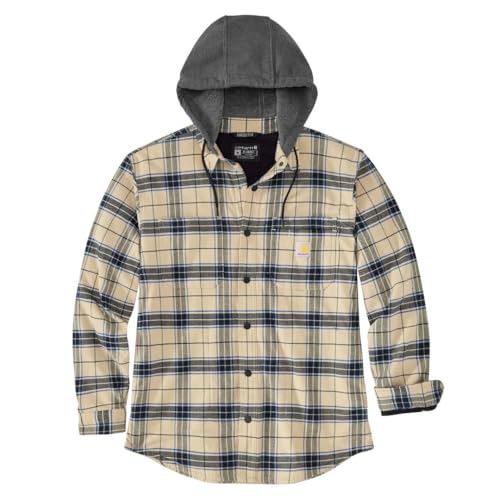
Carhartt Men’s Rugged Flex Flannel Shirt
A heavier weight, longer-staple cotton flannel built for repeated washing and work use, which tends to pill less aggressively than thinner fashion flannel.

Gleener Ultimate Fuzz Remover and Fabric Shaver
A handheld fabric shaver designed to lift and remove pills from flannel and knitwear without damaging the weave underneath.
Good to know
Does pilling mean a flannel shirt is low quality?
Not necessarily. All flannel pills to some degree because of how it is brushed during manufacturing. Quality affects how fast and how severely it pills, with longer-staple cotton and tighter weaves pilling slower, but even expensive flannel will show some pilling over time.
Will washing a flannel shirt by hand stop it from pilling?
Hand washing reduces the mechanical friction that causes pilling compared to a machine, so it does slow the process, though it does not eliminate pilling entirely since even gentle rubbing against itself while washing and wearing still loosens surface fibers.
Does drying flannel on high heat make pilling worse?
Yes, high heat combined with tumbling increases friction and can also make fibers more brittle over repeated cycles, both of which contribute to faster pilling. A lower heat setting or air drying is gentler on the brushed surface.
Is it safe to use a fabric shaver on flannel without ruining it?
Yes, when used carefully on a flat, lightly stretched section of fabric and not held in one spot too long. Most fabric shavers are designed specifically for brushed fabrics like flannel without cutting into the weave underneath.
Why does flannel pill more under the arms and at the sides?
Those areas get the most repeated friction from arm movement and from rubbing against other clothing or a bag strap throughout the day, so the fibers there loosen and tangle faster than on a flat, less contacted area like the back.
Does a cotton-polyester flannel blend pill more than 100% cotton flannel?
Often it pills just as much or more over time, because the stronger polyester fibers do not break off and shed the way cotton does, so the same pills tend to stick around and regrow instead of eventually wearing away.
Can washing flannel inside a mesh laundry bag reduce pilling?
Yes, a mesh bag reduces direct contact and friction with other items in the load, which is one of the simplest ways to cut down on pilling without changing your normal wash routine.
Does fabric softener help prevent flannel from pilling?
It can help slightly by reducing fiber friction and static, though the effect is modest compared to washing on a gentler cycle or turning the shirt inside out, and some fabric softeners can reduce the fabric’s loft over many uses.
Is pilling permanent once it starts on a flannel shirt?
No, pills can be removed with a fabric shaver, a sweater comb, or even careful hand-picking, and new pilling slows down naturally over time as the shortest, loosest surface fibers wear away and are not replaced.
Does a new flannel shirt pill more than one that has been washed many times?
Often yes, at first. New flannel typically has more loose, unanchored surface fibers from the brushing process, so the first few washes can produce more noticeable pilling than later washes once those loose fibers have shed or settled.
Why do cheap flannel shirts seem to pill almost immediately?
Cheaper flannel is usually made from shorter-staple cotton fibers that break and tangle more easily under friction, and it is often brushed more aggressively to fake a softer hand feel, both of which accelerate pilling from the very first wash.
Does washing flannel with like colors only affect pilling at all?
Not directly, sorting by color protects against dye transfer rather than pilling, but washing flannel with similarly soft items of any color, rather than rougher fabrics, does help reduce the friction that causes pills.
Can ironing a flannel shirt reduce or prevent pilling?
Ironing does not meaningfully prevent pilling since it affects wrinkles rather than surface fiber friction, though pressing can temporarily flatten existing light pills and make the surface look smoother.
Is it true that washing flannel less often reduces pilling?
Washing less often does reduce the total friction cycles the fabric goes through, which slows pilling, but it is a tradeoff against hygiene and odor, so most people are better off washing normally but choosing a gentler cycle instead.
Does pilling affect how warm a flannel shirt keeps you?
Minimal pilling has almost no effect on warmth since the fabric’s weave and weight are what trap heat. Heavy, widespread pilling combined with thinning fabric can eventually reduce insulation slightly as the fabric’s structure wears down.
Why does a flannel shirt pill less after the first year of regular wear?
Once the shortest, loosest fibers from the original brushing process have worked their way out through earlier pilling and washing, what remains is more firmly anchored in the weave, so new pill formation naturally slows down.
Does buying a heavier weight flannel reduce pilling compared to a lightweight one?
Generally yes, heavier flannel is woven more densely and often uses longer fibers to support that weight, both of which resist the fiber loosening that leads to pilling better than thin, lightweight flannel does.
Final word
Pilling on a flannel shirt is a byproduct of the exact brushing process that makes flannel soft and warm in the first place, not proof of a bad purchase. Washing habits can slow it down noticeably, a fabric shaver can clean up what already formed, and heavier, longer-fiber flannel simply resists it better from the start.
Priya Nathan
Priya spent years in apparel buying and merchandising for a multi-brand retailer before moving into editorial work. She focuses on fit, fabric and construction quality across everyday wear, activewear and accessories, reading past marketing copy to the details that affect how a garment actually wears and holds up.


