Why Does a Chisel Edge Roll Over With Use?
A chisel edge rolls over, meaning the extremely thin cutting edge folds or curls sideways under lateral stress, when the steel at that edge is softer or thinner than the forces being applied to it, most often from prying, twisting, or striking at an angle instead of driving straight through the cut. Even a well-sharpened, properly hardened chisel can roll if it’s used to lever out a chip rather than sliced or driven cleanly.
What rolling actually looks like at the edge
Under magnification, a rolled edge shows the very tip of the bevel folded over to one side rather than chipped or worn flat, because the edge geometry at the cutting line is only a few microns thick and has almost no mass to resist sideways force on its own.
Steel hardness and the rolling tradeoff
Softer steel, lower on the Rockwell hardness scale, rolls more easily but chips less, while harder steel resists rolling but is more prone to chipping or microfracturing instead. Chisel steel choice is really a tradeoff between these two failure modes rather than an escape from both of them.
Technique that causes rolling
Using the chisel as a pry bar to lever out a stubborn chip, applying force at an angle across the edge instead of straight into the cut, or striking it unevenly with a mallet all put sideways load on an edge that’s really only designed for straight-through cutting force.
Bevel angle’s role in edge durability
A lower bevel angle, steeper and more acute, cuts more easily but rolls and chips faster, while a slightly higher angle sacrifices some cutting ease for a noticeably more durable edge under repeated heavy use.
Wood density and grain direction effects
Cutting into dense hardwood or across difficult grain increases resistance at the edge, and pushing through that resistance rather than easing the chisel through raises the odds of rolling, especially on a thinner Western-pattern chisel versus a thicker Japanese-style one.
Fixing a rolled edge without full resharpening
A mildly rolled edge can often be corrected with a few strokes on a fine stone to realign the edge geometry, while a heavily rolled or folded edge usually needs to be reground back past the damaged section entirely to restore a clean cutting line.
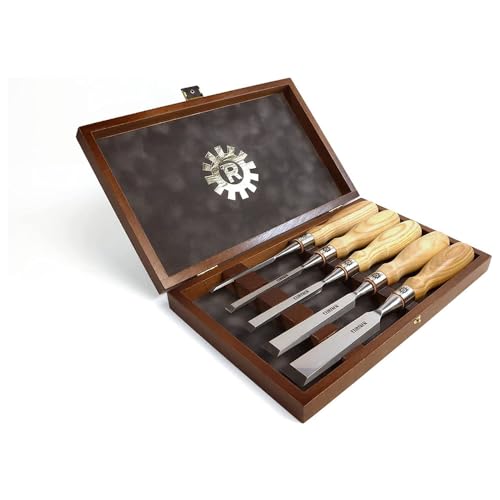
Narex Richter Bevel Edge Chisel Set
A set of Czech-made chisels using a tool steel formulation known among woodworkers for holding an edge well while still being resistant to chipping under normal use.
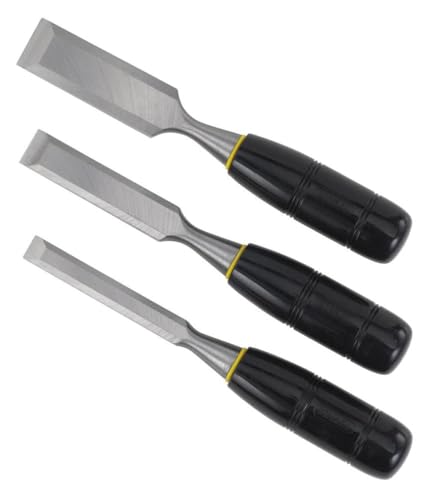
Stanley 16-150 Sweetheart Chisel Set
A long-running socket chisel line known for a durable edge geometry suited to everyday joinery and general woodworking tasks.
Good to know
Can a rolled chisel edge be fixed with sharpening alone?
A light roll can usually be corrected with a few passes on a fine sharpening stone, while a heavier roll often requires grinding back past the damaged section before resharpening.
Is a rolled edge the same thing as a chipped edge?
No, rolling is the edge folding or curling sideways while staying intact, chipping is a small piece of the edge actually breaking off, and they come from different failure mechanisms.
Does chisel steel hardness tell you how likely it is to roll?
Yes, softer steel rolls more readily under lateral force, while harder steel resists rolling but becomes more prone to chipping instead under the same stress.
Why do cheaper chisels seem to roll more often than premium ones?
Budget chisels often use softer, less carefully heat-treated steel to keep manufacturing costs down, which trades edge durability for lower price.
Can prying with a chisel always cause rolling, even gently?
Even gentle prying puts sideways load on an edge built for straight cutting, so while a very light pry might not cause visible rolling, repeated prying significantly raises the risk.
Does striking a chisel with a metal hammer instead of a wooden mallet cause more rolling?
Metal hammers deliver a harder, less controlled impact than a wooden or rubber mallet, which can transmit more shock to the edge and increase both rolling and chipping risk.
Is a lower bevel angle always better for sharpness even if it rolls faster?
Not always, a lower angle cuts more easily but sacrifices edge durability, so matching the angle to the actual task, delicate paring versus heavy chopping, matters more than defaulting to the sharpest possible angle.
Can rolling happen on a brand new, freshly sharpened chisel?
Yes, a freshly sharpened edge is actually thinnest and most vulnerable right after sharpening, so rough technique on a brand new edge can cause rolling just as easily as on a worn one.
Does wood species affect how likely an edge is to roll?
Yes, dense hardwoods and difficult grain patterns increase resistance at the cutting edge, which raises rolling risk compared to working softer, more cooperative wood.
Is a rolled edge a sign the chisel was tempered incorrectly at the factory?
Not necessarily, occasional rolling from technique is normal even on a properly tempered chisel, frequent rolling under normal use, though, can suggest the steel is softer than it should be.
Can honing the edge regularly prevent rolling before it starts?
Regular honing keeps the edge geometry clean and sharp, which reduces the force needed to cut and indirectly lowers rolling risk, though it doesn’t eliminate rolling caused by poor technique.
Does a wider chisel roll less easily than a narrow one at the same hardness?
Generally yes, a wider edge distributes lateral force across more material, making it somewhat more resistant to rolling than an equally hard but narrower chisel under the same sideways stress.
Can you tell a chisel is about to roll before it actually happens?
Not reliably in the moment, rolling tends to happen suddenly under stress rather than gradually announcing itself, which is why avoiding prying technique matters more than watching for warning signs.
Is Japanese laminated steel more resistant to rolling than Western chisel steel?
Japanese laminated chisels pair a very hard cutting layer with a softer backing steel, which can resist rolling well at the edge itself while still having some flexibility in the body, a different approach than typical Western mono-steel chisels.
Does using a chisel for tasks other than wood, like scraping metal, cause rolling?
Yes, using a wood chisel on harder materials it wasn’t designed for puts far more stress on the edge than it was built to handle, making rolling and chipping both much more likely.
How often should a chisel edge be checked for rolling during a project?
Checking periodically during heavy use, especially after any awkward cut or accidental twist, catches rolling early before a damaged edge starts tearing the wood instead of cutting it cleanly.
Does chisel size affect how noticeable rolling is during use?
Smaller, narrower chisels often show rolling more quickly and visibly than wider ones, since the same amount of lateral force concentrates over less material right at the cutting edge.
Can improper storage contribute to edge rolling over time?
Indirectly yes, a chisel edge banging against other tools in a drawer or toolbox can nick or slightly deform the edge before it’s even used on wood, making it more prone to rolling on the next cut.
Is there a way to practice technique that specifically avoids rolling?
Practicing controlled paring cuts with the bevel riding along the wood surface, rather than prying or twisting mid-cut, builds the muscle memory that keeps force directed straight through the edge instead of sideways across it.
Can a rolled edge on a cheap chisel be improved by simply re-hardening the steel at home?
Not practically, re-hardening steel requires controlled heating and quenching equipment most home shops don’t have, so upgrading to a better steel chisel is usually more realistic than trying to re-temper an existing soft one.
Our take
A rolled edge is usually a technique problem running into a hardness tradeoff, not a bad tool. Easing force into a cut instead of levering with the blade, and matching bevel angle to the wood being worked, prevents most of the rolling that regular honing alone can’t.
Jake Monroe
Jake worked as a residential contractor for over a decade before shifting to full-time writing. He evaluates power tools, hand tools and workshop gear through the lens of someone who has actually used them on job sites, not just read the box.
You might also need

Why Does a Drill Bit Walk Before It Starts Cutting Straight?

Why Does a Pocket Level Read Differently Than a Longer Level on the Same Surface?
