Why Do Cats Scratch Furniture Even With a Scratching Post Available?
Cats scratch to maintain claw health, mark territory with scent glands in their paws, and stretch their back and shoulder muscles, and a scratching post only replaces furniture if it matches what the cat actually prefers in material, angle, height, and location. A post that is the wrong texture, too short to fully stretch against, or placed somewhere the cat does not pass through regularly often gets ignored in favor of a couch or chair that happens to satisfy those preferences better.
Scratching is a biological need, not a behavior to eliminate
Scratching sheds the outer layer of a cat’s claw sheath, keeps claws from overgrowing, and lets a cat stretch its back, shoulders, and front legs in a way few other normal movements replicate. It also deposits scent from glands in the paw pads, which is a form of territory marking separate from urine marking. A cat that is prevented from scratching anything at all is being denied a normal behavior, not corrected out of a bad habit.
Why material and texture matter more than most owners expect
Cats show strong individual preferences between materials like sisal rope, cardboard, carpet, and wood, and a post using the wrong texture for that particular cat’s preference often gets ignored entirely in favor of upholstered furniture, which offers a texture and resistance many cats find satisfying to dig claws into and pull against.
Why height and stability change whether a post gets used
A full stretch-scratch requires a stable surface a cat can pull against with its full body weight without the post wobbling or tipping, which is why a tall, heavily weighted post often gets used far more than a short, lightweight one even if the material is identical, and a wobbly post can actively discourage use after one bad experience.
Location inside the home matters as much as the post itself
Cats tend to scratch near sleeping areas, entry points to a room, or spots they pass frequently throughout the day, which is often tied to territory marking at boundaries. A scratching post tucked away in a rarely used room gets passed over in favor of furniture sitting in a high-traffic hallway or living room corner that the cat actually walks by multiple times a day.
Scent and prior marking on furniture can reinforce the habit
Once a cat has scratched a specific piece of furniture, the scent left behind from its paw glands can reinforce a preference to return to that same spot, which is part of why furniture scratching that has already started tends to persist at the same location even after a scratching post is introduced nearby.
What actually gets a cat to switch over to the post
Placing a post directly next to or in front of the furniture being scratched, matching the texture to whatever the cat already shows a clear preference for, and making the furniture itself temporarily less appealing with a double-sided tape or a slick cover tend to work together far better than any single change made alone.
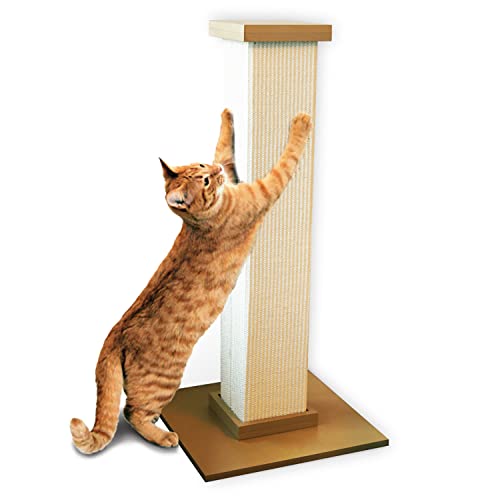
SmartCat Ultimate Scratching Post
A tall, heavily weighted sisal rope post frequently recommended specifically because its height and stability support a full body stretch-scratch that shorter posts cannot accommodate.
Frequently asked questions
Does declawing stop the furniture scratching problem permanently?
It removes the physical ability to scratch but is widely considered an unnecessary and painful procedure by most veterinary organizations today, with far gentler alternatives like proper post placement and regular nail trims addressing the same underlying issue.
How many scratching posts does a multi-cat household actually need?
A reasonable guideline is at least one post per cat plus one extra, placed in different areas of the home, since cats can be territorial about preferred scratching spots just as they are about resting spots.
Why does my cat scratch the post but still occasionally scratch furniture too?
This is common and not a failure of the post, since cats often have more than one preferred scratching spot, and gradually making the furniture less appealing alongside continued post use usually reduces the furniture scratching over time.
Can nail caps reduce the damage from furniture scratching while retraining a cat?
Yes, soft nail caps glued over the claws can prevent damage during a transition period, though they need regular reapplication as claws grow and do not address the underlying need to scratch itself.
Does scratching mean a cat is marking territory against another cat in the home?
It can be part of it in multi-cat households, though scratching also happens in single-cat homes purely for claw maintenance and stretching, so territorial marking is one possible motivation rather than the only one.
Is cardboard or sisal rope generally preferred by more cats?
There is no universal answer since preference varies by individual cat, though sisal rope is commonly favored for its texture and durability under repeated heavy use, while cardboard is often cheaper and easier to replace.
Should a scratching post be vertical, horizontal, or angled?
Offering more than one orientation, since cats vary in preference, and some clearly favor a horizontal cardboard scratcher for low stretches while others prefer a tall vertical post for a full upright stretch.
Can regular nail trims reduce how much a cat needs to scratch?
Trims reduce the length and sharpness of claws but do not eliminate the behavioral need to scratch, since scratching serves stretching and scent-marking purposes beyond just claw length management.
Does punishing a cat for scratching furniture actually work?
It generally does not address the underlying need and can increase stress or damage trust with the owner, while redirecting to an appealing, well-placed post tends to be more effective long term.
Why does my cat ignore a brand new scratching post completely?
This usually points to a texture, height, stability, or placement mismatch rather than the cat disliking scratching posts in general, and testing a different material or relocating it closer to where the cat already scratches often solves it.
Can catnip or silvervine make a scratching post more appealing?
Yes, rubbing a small amount into the post’s surface attracts many cats and can encourage initial investigation and use, though it is not effective for every individual cat since sensitivity to these plants varies.
Is it normal for a kitten to need training to use a scratching post?
Yes, gently guiding a kitten’s paws against the post and rewarding use with praise or a treat helps establish the habit early, though most kittens take to an appealing post fairly naturally once they discover it.
Do cats scratch more when they are stressed or anxious?
Scratching frequency can increase during stress since it is partly a self-soothing and scent-marking behavior, so a sudden increase in furniture scratching is sometimes worth considering alongside other signs of stress in the home.
Can double-sided tape on furniture actually stop a cat from scratching it?
Many cats dislike the sticky texture against their paws and will avoid a taped area, making it a commonly used temporary deterrent while a nearby scratching post gets established as the preferred alternative.
Does a scratching post ever wear out and need replacing?
Yes, sisal rope and cardboard both fray and flatten with heavy use over time, and a worn-out post that no longer offers good resistance can lose its appeal just as a wrong texture would from the start.
Our take
A scratching post competing with furniture is usually a matching problem, not a training problem. Get the texture, height, stability, and location right for that specific cat, and furniture scratching typically drops off on its own without needing punishment or deterrents to do the heavy lifting.
Olivia Hartley
Olivia spent several years working at an animal shelter and a pet-supply retailer before joining the editorial team. She researches pet gear with an emphasis on safety, comfort and the fine print that owners often miss.

