Why Does a Car’s AC Compressor Cycle On and Off Instead of Running Constantly?
An AC compressor cycling on and off is normal behavior controlled by a pressure or temperature switch, not a sign of failure by itself. The system is designed to shut the compressor off once the evaporator gets cold enough to avoid icing over, then turn it back on once the air warms slightly, keeping the cabin at a steady temperature without running the compressor constantly. Rapid, short cycling every few seconds, though, usually does point to a real problem like low refrigerant or a failing clutch.
The cycling switch is there on purpose
A pressure switch mounted on the AC lines, or a thermistor near the evaporator, tells the compressor clutch to disengage once the evaporator reaches a set low temperature, protecting it from frosting over, which would block airflow. Once the evaporator warms a few degrees, the switch re-engages the clutch. Normal cycling happens roughly every 10 to 30 seconds depending on conditions.
What short, rapid cycling actually signals
When the compressor clicks on and off every few seconds rather than every ten or more seconds, that usually points to a low refrigerant charge, since a low charge means the low-pressure switch trips almost immediately after the compressor starts building pressure.
The clutch itself can also be the cause
The compressor clutch is an electromagnetic coupling that engages the pulley to the compressor shaft. A worn clutch coil, a bad relay, or a failing clutch bearing can cause erratic engagement that looks like cycling but is actually an electrical or mechanical fault rather than a refrigerant pressure issue.
Why ambient temperature changes the cycling rate
On a very hot day the system works harder and the compressor runs longer between off cycles. On a cooler day, or with low cabin heat load, the compressor satisfies the pressure switch faster and cycles more frequently, which is still normal, not a leak.
How a refrigerant leak differs from a system that simply needs a recharge
If a system is cycling rapidly because of low refrigerant, the right fix is finding and repairing the leak first, since adding more refrigerant to a leaking system is a temporary fix that will need repeating. In a sealed system, any refrigerant loss is by definition coming from a leak somewhere.
When cycling is a clutch relay problem instead of refrigerant
On some vehicles the compressor clutch relay itself can stick or chatter due to a bad connection or failing relay contacts, producing a rapid clicking under the hood that has nothing to do with refrigerant level. A mechanic can tell the difference with a pressure gauge reading.
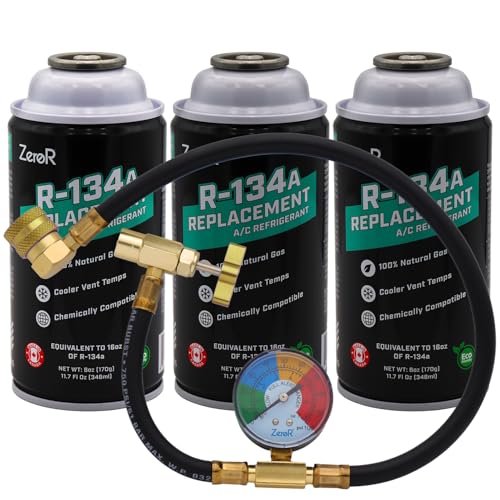
A/C PRO 134A Refrigerant Recharge Kit
A widely sold do-it-yourself recharge kit with a built-in gauge, used to top off a system with a confirmed minor refrigerant shortage.

Mastercool 89661 Manifold Gauge Set
A professional-style gauge set used to read system pressures accurately, which is how a leak gets distinguished from a clutch or relay problem.
Questions worth asking
Is it normal to hear a clicking sound when the AC compressor engages?
Yes, a soft click is just the clutch engaging as the pressure switch calls for cooling.
Does AC compressor cycling waste more fuel than running constantly?
No, cycling is actually more efficient than running continuously at full load once the cabin is already cool.
Can low refrigerant damage the compressor over time?
Yes, refrigerant also carries the compressor’s lubricant, so running low can starve it of oil and cause premature wear.
Why does my AC compressor seem to run longer when idling in traffic?
Lower airflow over the condenser reduces heat rejection, so the system needs to run longer to pull the same heat out of the cabin.
Should I recharge my own AC system with a store-bought kit?
It can work for a known minor low charge on an otherwise healthy system, but repeated low charge points to a leak that a DIY kit will not actually fix.
Can a bad serpentine belt affect AC compressor cycling?
Yes, since the compressor is belt driven, a slipping belt can cause inconsistent engagement that mimics an electrical cycling problem.
Does the AC compressor run even when the fan is on but the AC button is off?
No, the compressor only engages when AC is actively selected, regardless of fan speed.
Is a compressor that never cycles off a problem?
Potentially, since it could mean the cycling switch has failed in the closed position, risking the evaporator icing over.
Can extreme heat cause the compressor to shut off completely as a protection measure?
Yes, many systems include a high-pressure cutoff that disables the compressor if head pressure gets dangerously high, often from a failing condenser fan or an overcharged system.
Does AC compressor cycling affect cabin temperature stability?
Slightly, but the cycling is fast enough and the evaporator retains enough cold that most people never notice a temperature swing.
Can a dirty cabin air filter affect how the compressor cycles?
Indirectly, since restricted airflow over the evaporator can cause it to read colder locally and cycle off sooner than it should.
Is rapid cycling always refrigerant related, or can it be electrical?
It can be either, which is why a mechanic uses a manifold gauge check before assuming low refrigerant is the cause.
Does AC compressor cycling change when the AC is used for defrost in cooler weather?
No, the same cycling logic applies whenever the compressor is engaged, including in defrost mode.
How long should a compressor normally stay off between cycles?
Roughly 10 to 30 seconds under moderate conditions, though this varies by vehicle and ambient temperature.
Can a refrigerant leak be fixed without replacing the whole AC system?
Often yes, many leaks occur at a hose fitting, O-ring, or condenser and can be repaired individually without replacing the compressor or evaporator.
Can a compressor clutch be replaced without replacing the whole compressor?
On many vehicles yes, the clutch assembly can be replaced separately, though on some compressor designs it is more practical to replace the whole unit.
Does AC compressor cycling sound different when the system is low on refrigerant versus normal cycling?
Often yes, low refrigerant cycling tends to sound noticeably quicker and more frequent, while normal cycling has a longer, steadier rhythm.
Can a failing condenser fan cause compressor cycling problems?
Yes, a weak or failed condenser fan reduces heat rejection, which can cause the high-pressure cutoff to trip and cycle the compressor off more than normal, especially at idle.
Is it safe to keep driving with a rapidly cycling AC compressor?
It will not damage the engine, but continuing to run a low-refrigerant system can accelerate compressor wear from reduced lubrication, so getting it checked sooner rather than later is the safer choice.
Does AC compressor cycling behavior differ between manual and automatic climate control systems?
The underlying pressure switch logic is similar, though automatic climate control systems sometimes manage compressor cycling more actively to maintain a precise set temperature.
Can a refrigerant leak be detected with a UV dye kit?
Yes, a UV dye added to the system circulates with the refrigerant and oil, and a leak point will glow under a UV light, which is a common way shops pinpoint a leak visually.
Does recharging an AC system require evacuating it first?
For a proper professional service, yes, evacuating removes air and moisture before recharging; a basic top-off through a DIY kit does not evacuate first, which is one reason it is only a partial fix.
Can a compressor clutch relay be tested without special tools?
A multimeter and basic electrical testing knowledge can check relay function, though confirming the full diagnosis usually benefits from a shop’s pressure gauge equipment as well.
Does AC compressor cycling use noticeably more engine power than running constantly would?
The engine load from the compressor engaging is roughly the same each time it cycles on; frequent cycling does not meaningfully increase total engine load compared to steady operation.
Can hot weather make rapid compressor cycling worse?
Yes, higher ambient heat raises system pressures overall, which can make an already low or marginal refrigerant charge trip the pressure switch even more frequently.
Where this leaves you
A compressor that clicks on and off every so often while the AC is running is doing exactly what it is designed to do. The pattern worth paying attention to is a rapid, short cycle every few seconds, since that is the system signaling something, usually low refrigerant or a clutch problem, rather than simply managing cabin temperature.
Tony Russo
Tony trained as an automotive technician and spent years in service and parts retail before moving into writing. He focuses on garage tools, car care products and accessories from a hands-on maintenance perspective.