How Does a Car Alarm System Actually Detect an Intrusion Attempt?
A car alarm detects intrusion through a combination of sensors wired into the vehicle’s doors, trunk, hood, and sometimes the glass and interior cabin space, each watching for a specific type of disturbance. Door and trunk sensors detect an unauthorized opening, shock or tilt sensors detect impact or towing, and glass-break or ultrasonic sensors detect someone breaking in without opening a door at all, with the alarm’s control module deciding which combination triggers the siren.
Door, hood, and trunk switches are the baseline
Nearly every alarm system wires into the factory courtesy light switches on doors, hood, and trunk. Opening any of these while armed completes a circuit the alarm module reads as unauthorized entry, the same switches that turn on interior lights.
Shock and tilt sensors catch impact and towing attempts
A shock sensor is a small piezoelectric sensor that detects vibration above a set threshold, catching someone trying to pry a door or break a window. A tilt sensor detects the car being lifted or towed away, which door and trunk switches alone would miss entirely.
Glass break and ultrasonic sensors catch entry without opening anything
A glass-break sensor listens for the specific acoustic frequency of breaking glass, while an ultrasonic or microwave motion sensor fills the cabin with an invisible field and detects disturbance if someone reaches an arm through a broken window without opening a door. Both are common on aftermarket systems, less common on factory ones.
Why sensitivity adjustment matters
Shock sensors in particular are usually adjustable, since too sensitive a setting trips the alarm from a nearby truck passing or a hard rainstorm, while too insensitive a setting misses a real break-in attempt. Most aftermarket installs are tuned during installation to the owner’s parking environment.
What actually happens once a sensor trips
The alarm’s control module, not the sensor itself, decides the response. It can sound the siren immediately, flash the lights, send a signal to a connected phone app or key fob pager, and on some systems cut the starter circuit to prevent the car from being driven even if entry is gained.
Factory alarms versus aftermarket systems
Factory-installed alarms typically rely on door, trunk, and hood switches plus sometimes an interior motion sensor, while aftermarket systems often add more sensor types and smartphone connectivity, which is why owners sometimes install an aftermarket system even on a car that already has a basic factory alarm.
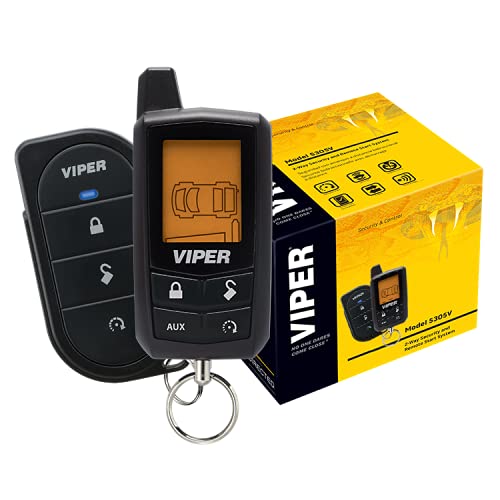
Viper 5305V 2-Way Security and Remote Start System
A widely installed aftermarket alarm with a two-way remote that confirms arming and disarming, plus optional sensor add-ons.

Scytek Astra A777 Car Alarm System
A budget aftermarket alarm system with door, shock, and ignition kill functions commonly installed on older vehicles without a factory alarm.
Common questions
Can a car alarm go off from a nearby car’s alarm or loud noise?
Rarely with modern systems, though a poorly tuned shock sensor can occasionally be triggered by very loud nearby sound or vibration.
Does a car alarm drain the battery while armed?
Minimally, since the system draws very little current in standby or armed mode, far less than running accessories.
Can thieves bypass a car alarm’s door sensors?
Skilled thieves can sometimes defeat basic door switch only systems, which is part of why added sensor types like shock and glass break exist.
Do all car alarms include a motion or ultrasonic sensor?
No, many factory systems rely only on door, trunk, and hood switches, while ultrasonic and motion sensors are more common on upgraded factory trims or aftermarket installs.
What triggers a car alarm if a window is smashed but no door opens?
A glass-break sensor listening for the sound frequency, or an ultrasonic or motion sensor detecting the disturbance, depending on what the system includes.
Can rain or temperature changes falsely trigger a car alarm?
Occasionally, with an overly sensitive shock sensor, which is why installers calibrate sensitivity during setup.
Does the alarm need the key fob nearby to detect intrusion?
No, the sensors work independently once armed; the fob is only needed to arm, disarm, or receive alerts.
Can a car alarm detect someone trying to tow the vehicle?
Yes, through a tilt sensor that detects the car being lifted or angled abnormally.
Do aftermarket alarms connect to a smartphone app?
Many modern ones do, sending a push notification when a sensor trips rather than relying solely on the siren.
Can a car alarm immobilize the engine, not just make noise?
Some systems include a relay that interrupts the starter or fuel pump circuit when armed, preventing the car from starting even if someone gets inside.
Does an alarm still work if the car battery is disconnected?
No, standard alarms need vehicle power; a backup siren with its own battery is a separate upgrade some systems include specifically to defeat battery disconnection.
Why do some alarms chirp once when armed and others stay silent?
That is a setting choice made during installation, since silent arming avoids alerting a nearby thief that the system is active.
Can hail or severe weather set off a shock sensor?
Yes, if sensitivity is set too high for the conditions, which is a common complaint during hailstorms.
Is a factory alarm as effective as an aftermarket one?
Factory systems are generally more limited in sensor variety, though they integrate more seamlessly with the vehicle’s existing electronics.
Do car alarms detect catalytic converter theft attempts?
Not directly through standard sensors, since that theft often happens from underneath without triggering door, shock, or glass sensors, which is why some owners add a dedicated vibration sensor near the exhaust for that specific risk.
Can a car alarm be paired with a dash cam for additional evidence?
Yes, many owners combine the two, since a dash cam in parking mode can capture visual evidence of whatever triggered the alarm.
Does arming a car alarm automatically lock the doors?
On most systems yes, arming the alarm and locking the doors are tied together, though some aftermarket installs allow them to be set independently.
Can a car alarm be triggered accidentally by the owner?
Yes, forgetting to fully close a door or trunk before arming, or brushing against the car while it is armed, are common accidental triggers.
Do car alarms work differently on electric vehicles than gasoline vehicles?
The sensor types and detection logic are largely the same, though the alarm’s power draw is a smaller consideration on an electric vehicle’s much larger battery compared to a standard car battery.
Can a car alarm detect a key fob being cloned or intercepted?
No, standard alarm sensors detect physical intrusion, not electronic signal interception, which is a separate vulnerability some owners address with a signal-blocking pouch for the fob instead.
Does a louder siren mean a more effective alarm?
Not necessarily, siren volume mainly affects how much attention a triggered alarm draws; detection reliability depends on the sensors and control module, not the siren’s loudness.
Can weather like strong wind trigger a car alarm?
Strong wind can occasionally rock a vehicle enough to trigger an overly sensitive shock or tilt sensor, which is part of why sensitivity tuning matters in windy regions.
Is it possible to arm only some sensors on a car alarm and not others?
Some advanced aftermarket systems allow disabling specific sensors, like shock detection, temporarily, which some owners use in situations where false triggers are likely, such as a car wash.
Do car alarms interfere with remote start systems?
No, remote start and alarm functions are commonly integrated into the same aftermarket unit and designed to work together without conflict.
Can a car alarm system’s remote signal be hacked or intercepted?
Older alarm systems using simple fixed codes are more vulnerable to signal replication than modern systems using rolling codes, which change the signal each time to prevent simple interception and reuse.
Does a car alarm protect against theft of items left visible inside the car?
Only indirectly, since breaking a window to grab a visible item would typically trigger a glass-break or motion sensor if the system includes one, though a door-switch-only system would not catch this specific scenario.
Our take
A car alarm is really several different sensors working together, each covering a type of intrusion the others would miss, from a simple door switch to a shock sensor tuned to catch a crowbar. The sensor mix, not the siren volume, is what actually determines whether a given break-in attempt gets detected at all.
Tony Russo
Tony trained as an automotive technician and spent years in service and parts retail before moving into writing. He focuses on garage tools, car care products and accessories from a hands-on maintenance perspective.