Why Do Bread Proofing Baskets Have a Coiled Pattern?
The coiled pattern on a bread proofing basket, usually made from rattan or cane, is functional rather than decorative, the ridges help wick moisture away from the dough’s surface as it rises, which dries the exterior slightly so it releases cleanly from the basket and scores more easily. That same ridged texture also presses into the dough during its final rise, leaving the recognizable spiral pattern baked into the finished crust.
What the coiled pattern physically does to the dough
As dough rests in a rattan proofing basket, its surface presses lightly into the raised ridges of the coiled weave, and that contact shapes the dough’s outer layer while it rises rather than only after baking. This is why a loaf proofed in a traditional coiled basket comes out of the oven with a visible spiral pattern on its crust, the basket is quite literally stamping its shape into the dough during the proof.
Why the ridges help prevent sticking
Unlined rattan is a breathable, somewhat porous material, and the raised ridges reduce the total surface area of dough actually in contact with the basket at any point, both factors work together to wick a small amount of surface moisture away from the dough and reduce sticking. A dough that stays too wet against a fully smooth, non-breathable surface is far more likely to stick and tear when it is time to turn it out onto the baking surface.
Why the pattern also helps the dough hold its shape
Beyond moisture, the texture of the coiled ridges gives the dough’s surface something to grip against as it rises, which provides a small amount of structural support to higher-hydration or more slack doughs that might otherwise spread outward rather than rising upward. This matters most with wetter sourdough-style doughs that do not hold a tight shape as well as a firmer, lower-hydration dough would on its own.
Why rattan specifically, rather than plastic or metal
Rattan’s natural breathability is the key property a solid plastic or metal bowl does not have, a non-breathable surface traps moisture against the dough rather than wicking any of it away, which increases sticking risk and can leave the dough’s surface wetter and harder to score cleanly before baking.
Do you actually need to line the basket with cloth
It depends on the dough and the desired result, a thin cotton or linen liner, sometimes called a couche, is commonly used with stickier or rye-heavy doughs to prevent sticking without needing much added flour, but lining the basket also prevents the dough from taking on the ridged pattern at all. Leaving the basket unlined and dusting it with flour or rice flour instead is the standard approach when the goal is specifically to get that spiral pattern on the finished crust.
Why baskets come in round and oval shapes
A round basket, often called a banneton, is shaped for a round loaf known as a boule, while an oval basket is shaped for a longer, more elongated loaf called a batard, matching the basket shape to the intended loaf shape is simply about giving the dough a mold that supports its final form rather than any difference in how the coiled texture itself functions.
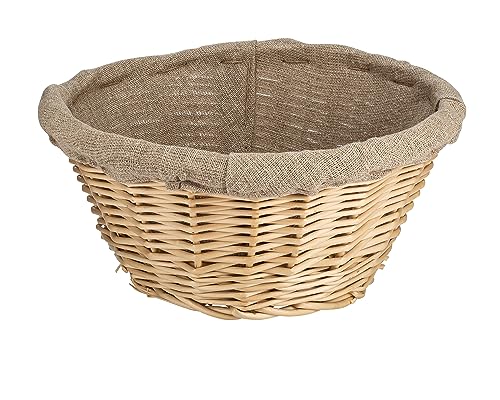
Matfer Bourgeat Round Rattan Banneton Proofing Basket
A traditional round rattan proofing basket used unlined to transfer the classic coiled spiral pattern onto the crust of a round boule-style loaf.

Mia Bakery Supply Oval Banneton Bread Proofing Basket
An oval rattan proofing basket shaped for longer batard-style loaves, commonly used with a light dusting of flour instead of a cloth liner to preserve the ridged pattern on the crust.
Questions worth asking
Does the coiled pattern on a proofing basket affect the taste of the bread?
No, the pattern is a surface texture and moisture-wicking effect only, it has no meaningful impact on flavor, which comes from the ingredients, fermentation, and baking process rather than the proofing vessel.
Can I use a regular bowl instead of a rattan proofing basket?
You can, lined with a well-floured cloth, though a smooth bowl will not wick moisture the way breathable rattan does and will not leave any ridged pattern on the crust, dough proofed this way is more prone to sticking without careful flouring.
Why does my loaf not show the spiral pattern even though I used a rattan basket?
This usually happens if the basket was lined with cloth, which blocks the dough from direct contact with the ridges, or if the dough was heavily floured enough to prevent the ridges from pressing in noticeably.
Do I need to season or treat a new rattan proofing basket before using it?
Many bakers recommend a light dusting of flour on a brand new basket for the first several uses to help build up a natural non-stick surface, after which it typically needs less flour over time.
How do I clean a rattan proofing basket without damaging it?
Rattan proofing baskets generally should not be soaked or washed with soap, a dry brush to remove flour residue and occasional airing out to fully dry is the standard care approach to avoid mold or warping.
Is it true that proofing baskets help prevent dough from over-spreading during the final rise?
Yes, the basket’s walls and ridged texture provide physical support that helps contain the dough’s shape, which matters most for wetter, higher-hydration doughs that are more prone to spreading on a flat surface.
Why do some proofing baskets come with a cloth liner included, while others are sold plain?
It depends on the intended use, some brands include a liner aimed at stickier dough types or beginners wanting less mess, while plain rattan baskets are aimed at bakers who want the pattern effect on the finished crust.
Can a proofing basket be used for doughs other than bread, like rolls or buns?
It is primarily designed for a single larger loaf that benefits from the basket’s shape and support, smaller individual rolls are more commonly proofed on a flat tray rather than in a single large basket.
Does the size of a proofing basket need to match the amount of dough being proofed?
Yes, a basket too large for the dough will not provide the shaping support the dough needs to hold its structure, while one too small can cause the dough to rise over the rim unevenly.
Why do some proofing baskets use a different material like wood pulp instead of rattan?
Wood pulp or cane pulp baskets aim to replicate similar breathability and texture to rattan at a different price point or durability profile, the underlying moisture-wicking and shaping principle remains largely the same.
Does flouring a proofing basket before each use matter as much as the basket material itself?
Flouring technique matters a great deal for preventing sticking regardless of basket material, even a good rattan basket can have dough stick to it if it was not floured adequately before the dough was placed in it.
Can a proofing basket be reused indefinitely, or does it wear out?
A well cared for rattan basket can last for years of regular use, though it can eventually develop mold if not dried properly after cleaning, or lose some shape if repeatedly soaked in water.
Is there a difference between a banneton and a brotform?
The terms are generally used interchangeably for the same type of coiled proofing basket, brotform is simply an alternate, often German-origin name for the same traditional vessel.
Does a proofing basket need to be refrigerated along with the dough during a cold retard?
Yes, the basket holding the dough goes into the refrigerator along with it during a cold proof, rattan handles refrigeration without any issue since it is simply holding the dough’s shape rather than reacting to temperature.
Why does my dough sometimes stick to a well-floured rattan basket anyway?
This can happen with very wet, high-hydration dough that releases enough surface moisture to dissolve the flour barrier over a long proof, using rice flour instead of wheat flour is a common fix since it absorbs less moisture and resists clumping.
Our take
The coiled texture is doing real functional work the whole time the dough sits in it, drawing moisture off the surface and gently shaping the loaf, the pretty spiral on the crust afterward is really just a visible side effect of that process rather than the main point of the design.
Dana Whitfield
Dana spent eight years buying and merchandising for a regional kitchenware retailer before moving into editorial work. She has handled thousands of SKUs across cookware, small appliances and kitchen organization, and focuses on the practical differences that matter once a product is actually in daily use.