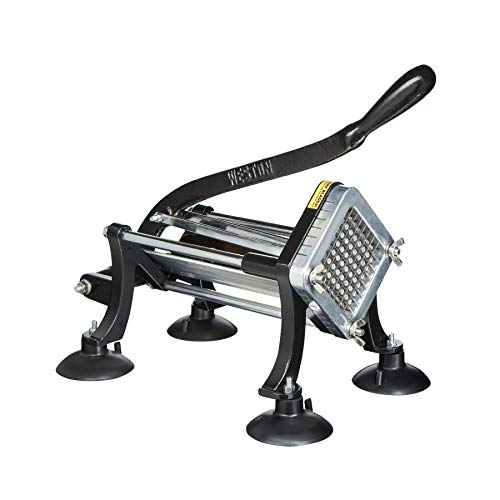
Which Food Slicer Handles Meat, Cheese and Bread?
The BESWOOD 250 leads for belt driven power that slices semi hard cheese without stalling. The Chef’sChoice 615A is the value pick for everyday home slicing, and the OXO Good Grips Chef’s Mandoline Slicer 2.0 handles vegetables no electric slicer manages as well.
Dense product like semi hard cheese stalls smaller machines, which is why the belt driven BESWOOD 250 leads this list. Occasional home slicing is well served by the compact Chef’sChoice 615A. Vegetables belong on a mandoline, and the OXO Good Grips Chef’s Mandoline Slicer 2.0 covers that ground better than any electric model.
Slicer listings sell wattage, but drive type and disassembly ease decide whether a machine actually gets used. Direct drive motors lose torque and stall on cold cheese, while awkward cleanup turns any slicer into a drawer item. We compared blade sizes, drive design, thickness ranges and guard construction, then checked what owners report about overheating and residue trapped behind the blade.
The top picks, ranked
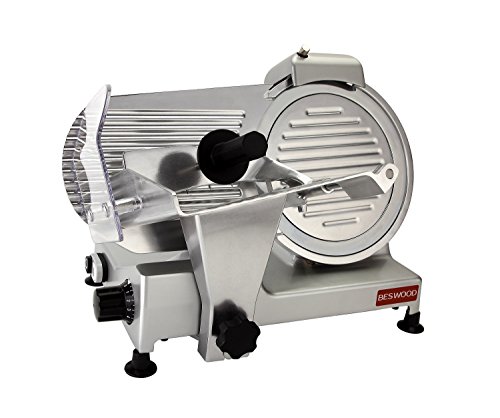
BESWOOD 250 Premium Electric Deli Meat Slicer
A ten inch chromium plated carbon steel blade runs on a belt rather than direct gearing, which keeps torque high and noise low on dense cuts. The carriage glides smoothly enough for consistent, thin prosciutto slices. Owners report it handles semi hard cheese, a point where smaller home machines typically stall.
Pros
- Belt drive holds torque on dense cuts
- Large blade handles bigger cuts of meat
- Runs quieter than direct drive machines
Cons
- Heavy and takes real counter space
- Cleaning takes longer than compact slicers

Chef’sChoice 615A Electric Meat Slicer
A seven inch stainless blade sits in a cast aluminium body sized for a home kitchen rather than a deli counter. The tilted carriage uses gravity to help feed food through, reducing how hard you need to push. Parts remove without tools, which matters more than any spec on a machine used weekly.
Pros
- Tool free disassembly for cleaning
- Tilted carriage eases feeding
- Compact enough for a home counter
Cons
- Struggles with cold hard cheese
- Smaller blade limits large roasts

OXO Good Grips Chef’s Mandoline Slicer 2.0
A dial sets thickness precisely, and julienne and crinkle blades cover vegetable work no electric slicer handles well. The runway is wide enough for large potatoes, and the frame folds flat for storage. Use the hand guard every time, since mandolines cause more kitchen injuries than any other slicing tool.
Pros
- Precise thickness dial for even slices
- Julienne and crinkle cuts included
- Folds flat for drawer storage
Cons
- Serious injury risk without the hand guard
- Not suitable for meat
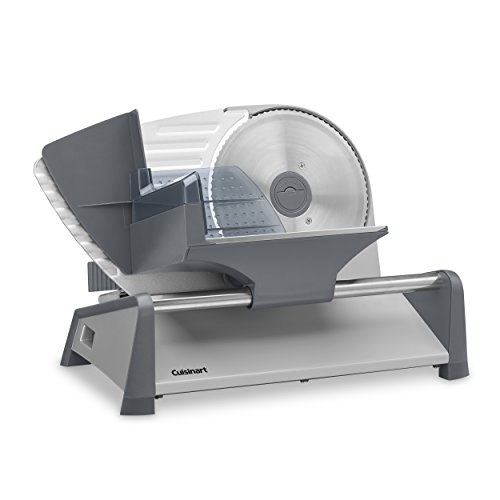
Cuisinart FS-75 Kitchen Pro Food Slicer
A seven and a half inch stainless blade pairs with a removable carriage and a wide thickness range, built for households slicing bread, meat and firm vegetables on one machine. The die cast body stays planted during use. Based on specifications, it sits between compact home units and commercial machines.
Pros
- Handles bread, meat and firm vegetables
- Stable die cast body during use
- Carriage and blade both remove for washing
Cons
- Noisier than belt driven machines
- Guard limits how small a piece can be sliced
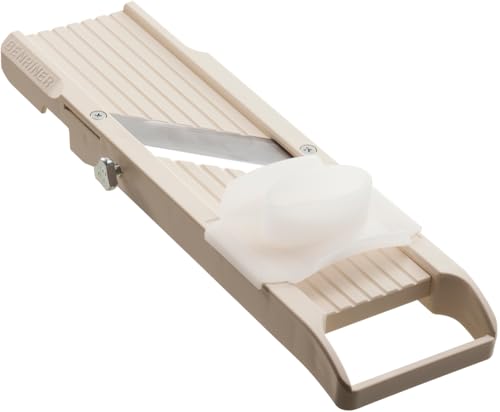
Benriner Mandoline Slicer
Many professional kitchens keep this Japanese mandoline in a drawer for its extremely sharp blade, which produces translucent slices most home mandolines cannot match. It stays compact and simple, with three interchangeable comb blades for julienne cuts. The safety guard is basic, so a cut resistant glove is a sensible addition.
Pros
- Produces genuinely translucent slices
- Compact and quick to rinse clean
- Interchangeable comb blades for julienne
Cons
- Guard is minimal, gloves recommended
- Narrow runway limits large produce
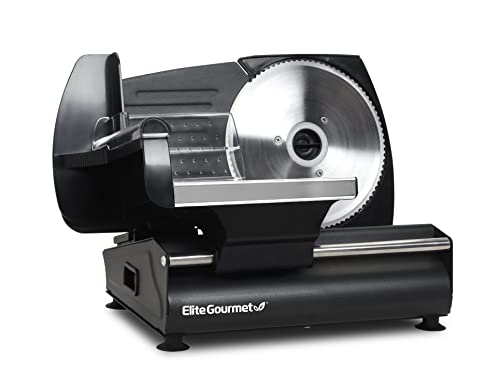
Elite Gourmet EMT-625B Electric Food Slicer
A compact electric slicer with a stainless blade suits occasional use rather than batch prep. Its small footprint means it can live in a cupboard between uses. Long sessions need breaks, since the motor is not built for continuous running.
Pros
- Small enough to store away
- Straightforward controls
- Blade removes for cleaning
Cons
- Motor needs rest during long sessions
- Stalls on cold cheese and frozen product

Nesco FS-250 Food Slicer
An eight and a half inch serrated stainless blade suits bread and cooked roasts, where a serrated edge cuts more cleanly than a smooth one. Die cast aluminium housing keeps the machine stable during use. Owners report it works best for household batch slicing rather than continuous deli work.
Pros
- Serrated blade suits bread and roasts
- Large blade for a home machine
- Stable housing during slicing
Cons
- Serrated edge is harder to resharpen
- Less precise on very thin deli slices
What to look for
What are you actually planning to slice? This decision shapes everything else. Deli meat and cheese need an electric slicer with a large, smooth blade and enough torque to avoid stalling. Bread and cooked roasts favor a serrated blade instead. Vegetables are better handled by a mandoline, which gives finer thickness control with no motor to bog down.
Why does drive type matter more than wattage? Direct drive motors connect the shaft straight to the blade and lose torque quickly under load, which is why they stall on cold cheese. Belt driven machines hold speed better and run quieter, at the cost of size and an occasional belt replacement. Anyone slicing cheese regularly should look for belt drive or plan to chill and cut smaller pieces first.
How much does cleaning access really matter? A slicer that needs tools to remove the blade and carriage tends to get wiped rather than properly cleaned. Residue behind the blade guard is a genuine food safety concern with raw meat. Look for tool free removal of the blade, carriage and deflector, and never put a slicing blade in a dishwasher unless the manufacturer allows it.
How do you avoid injury on a slicer or mandoline? Electric slicers include guards and a thumb rest for a reason, and the final piece of any product should meet the pusher, not fingers. Mandolines cause more serious kitchen injuries than almost any other tool, and the guard becomes awkward exactly when the remaining piece gets small. Unplug electric slicers before cleaning or removing the blade.
How they stack up
| # | Model | Blade | Best for | Score | Price |
|---|---|---|---|---|---|
| 1 | BESWOOD 250 Premium Electric Deli Meat Slicer | 10 inch chromium plated carbon steel | Best overall | 9.4 | Check price |
| 2 | Chef’sChoice 615A Electric Meat Slicer | 7 inch stainless steel | Best value | 9.2 | Check price |
| 3 | OXO Good Grips Chef’s Mandoline Slicer 2.0 | Hand mandoline | Best for vegetables | 9.0 | Check price |
| 4 | Cuisinart FS-75 Kitchen Pro Food Slicer | 7.5 inch stainless steel | Best for mixed foods | 8.8 | Check price |
| 5 | Benriner Mandoline Slicer | Japanese hand mandoline | Best for very thin slices | 8.6 | Check price |
| 6 | Elite Gourmet EMT-625B Electric Food Slicer | 7.5 inch stainless steel | Best budget electric | 8.3 | Check price |
| 7 | Nesco FS-250 Food Slicer | 8.5 inch serrated stainless | Best for bread and roasts | 8.0 | Check price |
Questions worth asking
What blade size do I need in a food slicer?
Seven to eight inches suits home slicing of meat and bread. Ten inches and above handles larger cuts and thick cheese blocks, but takes considerably more counter space.
Can a food slicer cut cheese?
Semi hard cheese slices fine on a belt driven machine with a large blade. Soft cheese gums up any blade, and very cold hard cheese stalls direct drive motors.
Is a mandoline safer than an electric slicer?
No. Mandolines cause a large share of serious home kitchen cuts because the blade stays exposed and the guard grows awkward on small pieces. Electric slicers offer more built in guarding.
How do I clean a food slicer properly?
Unplug it, remove the blade, carriage and deflector, then wash them by hand and dry immediately. Wipe the body and the area behind the blade with a sanitizing solution, since residue there is where problems build up.
Can I slice frozen meat on a food slicer?
Not unless the manufacturer states it directly, since frozen product damages blades and overloads motors. Partially frozen meat, firm but not solid, actually slices more cleanly than fully thawed meat.
How do I get consistently thin slices?
Chill the product first so it holds firm, set the thickness before starting, and use steady pressure on the carriage. A dull blade also causes tearing that can look like a thickness problem.
Do slicer blades need sharpening?
Yes, eventually. Some electric slicers include a built in sharpener, while others take a removable blade for professional sharpening. Serrated blades are harder to sharpen and usually get replaced instead.
Is an electric slicer worth buying for a home kitchen?
If you buy whole roasts, bake bread or eat deli meat often, yes, since slicing your own controls thickness and freshness. Occasional slicers get by with a sharp knife and a mandoline for vegetables.
The bottom line
The BESWOOD 250 suits anyone slicing meat and cheese regularly, since belt drive solves the stalling that limits home machines. The Chef’sChoice 615A fits occasional use in a normal kitchen, and no electric slicer replaces the OXO Good Grips Chef’s Mandoline Slicer 2.0 for vegetables.
Dana Whitfield
Dana spent eight years buying and merchandising for a regional kitchenware retailer before moving into editorial work. She has handled thousands of SKUs across cookware, small appliances and kitchen organization, and focuses on the practical differences that matter once a product is actually in daily use.