Why Do Brake Rotors Warp From Heat?
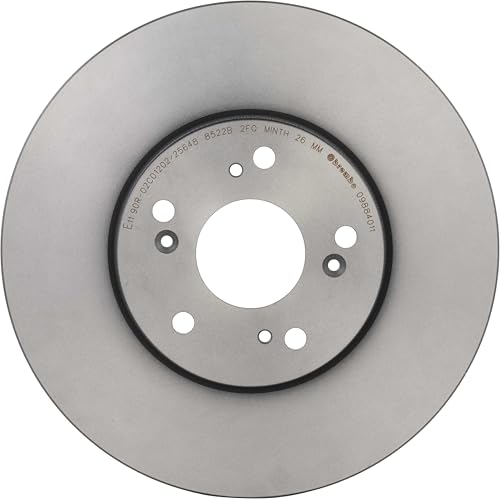
What drivers commonly call a warped rotor is usually not the metal physically bending out of shape, but uneven heat distribution and uneven buildup of friction material deposits across the rotor’s surface, which creates thickness variation that feels like a wobble or pulsation under braking. True physical warping does happen under extreme heat, but the more common cause of a pulsating brake pedal is this thickness variation rather than an actual bent disc.
What’s actually happening during a hard braking event
Braking converts the car’s motion into heat almost entirely at the contact point between pad and rotor, and that heat spikes very quickly during hard or prolonged braking, like descending a long hill. If that heat is not distributed evenly across the rotor’s surface, often because the pad is not sitting perfectly flat, certain spots get hotter than others.
Why uneven heat leads to a pulsating pedal
Spots on the rotor that repeatedly get hotter than the rest can undergo a localized metallurgical change, hardening slightly in those areas, and that hardened spot interacts differently with the brake pad than the surrounding rotor surface. The result is uneven material transfer and thickness variation that the driver feels as a rhythmic pulsation through the pedal or steering wheel.
What causes uneven heating in the first place
A sticking caliper slide pin, a slightly bent or poorly seated pad, or leaving the parking brake partially engaged while driving can all cause one section of the rotor to experience more friction and heat than the rest. Even something as simple as parking with hot brakes and letting them cool unevenly, like a rotor cooling faster on one side due to airflow, can contribute over time.
Why this is more common on certain rotor types
Thinner, lighter rotors designed for fuel efficiency have less mass to absorb and spread heat compared to older, heavier rotor designs, which makes them somewhat more prone to developing hot spots and thickness variation under hard or repeated braking. This is part of the tradeoff automakers accept for weight savings on modern vehicles.
What actually fixes it, and what does not
Rotors with genuine thickness variation from hot spots usually need resurfacing if there is enough material left, or full replacement if not, since the hardened spots do not go away with normal driving. Simply bleeding the brakes or replacing pads without addressing the rotor surface itself typically leaves the same pulsation, since the rotor’s uneven surface is the actual source of the problem. A proper diagnosis before any rotor work also checks wheel bearings and hub runout, since those can produce a similar pulsating sensation and would make a rotor replacement alone a wasted repair.

Power Stop Z23 Evolution Brake Rotors
A drilled and slotted rotor design marketed for better heat dissipation, commonly installed as a pair when replacing rotors showing thickness variation.

ACDelco Advantage Brake Rotors
A standard OE-style replacement rotor, a straightforward option for a factory-matching rotor swap.
Common questions
Is “warped rotor” the correct technical term for what’s happening?
Not usually; most pedal pulsation comes from uneven thickness caused by hot spots and deposit buildup rather than the rotor physically bending, though the colloquial term warped has stuck regardless.
Can a warped or thickness-varied rotor be fixed without replacing it?
Sometimes, if enough rotor material remains above the minimum thickness specification, a machine shop or brake shop can resurface it flat again, though if the rotor is already thin, replacement is the only safe option.
How quickly can hard braking cause rotor thickness variation to develop?
It can develop within a single extreme braking event, like a long mountain descent with heavy braking, though it more commonly builds up gradually over months of repeated moderate overheating.
Does towing a heavy trailer make rotor warping more likely?
Yes, towing significantly increases the heat generated during braking due to the added mass, which raises the risk of uneven heat buildup and resulting thickness variation compared to unloaded driving.
Can new brake pads fix a pulsating brake pedal on their own?
Usually not if the rotor already has thickness variation, since the uneven surface itself is what causes the pulsation, so new pads alone typically leave the same symptom until the rotor is addressed.
Is it normal for new rotors to develop the same problem again quickly?
If the underlying cause, like a sticking caliper or improper break-in, is not corrected, new rotors can develop the same uneven wear pattern relatively quickly, since the root cause rather than the rotor itself was the problem.
Does rotor material quality affect how prone it is to heat-related warping?
Yes, higher-quality cast iron with better heat tolerance and more consistent metallurgy resists developing hot spots better than lower-grade budget rotor material under the same braking conditions.
Can aggressive driving alone cause rotor warping even with good components?
Yes, consistently hard, repeated braking generates enough heat on its own to eventually create hot spots and thickness variation even on quality components, especially without adequate cooling time between hard stops.
Is a pulsating brake pedal always a rotor issue?
No, similar symptoms can come from a warped wheel hub, loose wheel bearing, or even tire issues, so a pulsation should be properly diagnosed rather than assumed to always be the rotor.
Does leaving the parking brake on while driving cause rotor warping?
Yes, this creates sustained, uneven friction and heat on whichever rotor the parking brake acts on, which is a known and fairly common cause of localized hot spots and resulting pulsation.
Can rotors be “bedded in” properly to prevent future warping?
Yes, a proper break-in procedure with several moderate stops rather than one hard stop right after installation helps transfer pad material evenly across the new rotor surface, reducing the chance of early hot spots.
Does rotor thickness variation always get worse over time if ignored?
Generally yes, since the existing uneven surface continues to interact unevenly with the pad during every subsequent stop, which tends to deepen the thickness variation rather than let it self-correct.
Can a sticking caliper slide pin really cause rotor warping on its own?
Yes, a caliper that does not release fully keeps the pad in partial contact with the rotor even when braking is not intended, generating localized heat that is a common and often overlooked cause.
Is it worth replacing rotors in pairs rather than one at a time?
Yes, most brake specialists recommend replacing rotors on the same axle together, since mismatched thickness or wear between the two sides can cause uneven braking performance.
Does driving style after a long highway trip affect rotor temperature management?
Yes, coming off sustained highway speeds directly into hard city braking without any gradual cooldown can concentrate heat quickly, which is part of why mountain-descent driving in particular is associated with rotor issues.
Can resurfacing a rotor restore it to like-new condition?
Resurfacing restores a flat, even surface and can resolve pulsation if enough material remains, but it also reduces the rotor’s total remaining thickness, so a rotor can only be resurfaced a limited number of times before needing replacement.
Does driving through water right after hard braking affect rotor heat damage?
Yes, sudden thermal shock from cold water hitting an extremely hot rotor can worsen uneven cooling and contribute to the same hot-spot and thickness-variation problems as uneven heating during braking itself.
Can rotor warping happen on an otherwise brand-new vehicle?
It can, usually if the factory pads were not broken in properly or an early installation issue caused uneven contact, though this is less common than warping developing gradually over normal use.
The bottom line
Calling it warping sells the wrong mental picture, since the rotor is rarely bent, it is unevenly worn and unevenly heat-treated across its face. Fixing the actual cause, whether that is a sticking caliper or just sustained hard braking, matters more than any specific rotor brand chosen for the replacement.
Tony Russo
Tony trained as an automotive technician and spent years in service and parts retail before moving into writing. He focuses on garage tools, car care products and accessories from a hands-on maintenance perspective.