Drilled, Slotted or Blank: Comparing Top Brake Rotors
Brembo UV Coated rotors top this list for daily driving, since the coating blocks rust on the hat and edges. Power Stop Evolution drilled and slotted rotors suit towing and hilly routes. Bosch QuietCast rotors deliver a quiet, low fuss replacement at good value.
Most cars do best with the Brembo UV Coated rotor, since its coating stops rust bloom on the hat and edges while the casting stays true over years of use. Power Stop Evolution drilled and slotted rotors work well for towing or long descents. Bosch QuietCast rotors handle ordinary replacement jobs for less money.
Choosing a rotor is trickier than it looks, because a drilled face that appears purposeful can add stress risers a daily driver never needs. We compared casting and balancing quality, corrosion coatings, vane design and cooling, plus whether faces are plain, slotted or drilled, then ranked seven options against their stated use. Brakes are a safety system, so verify the correct part number for your vehicle and have fitting done or checked by a qualified mechanic.
The best picks, ranked
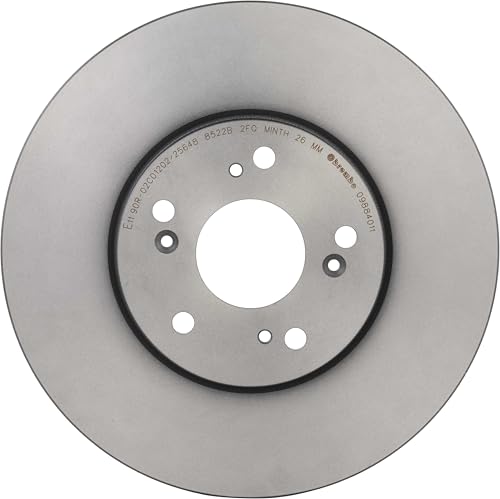
Brembo UV Coated Disc Brake Rotor
Brembo coats the whole rotor, hat and vanes included, so the parts visible through the wheel stay clean instead of turning orange after one wet week. Balanced castings keep steering wheel vibration away during braking. This is a straight replacement built for road cars, not a performance upgrade.
Pros
- Coating keeps the visible faces clean
- Smooth, vibration free braking
- Wide vehicle coverage
Cons
- No performance gain over a good stock rotor
- Costs more than budget replacements

Power Stop Evolution Drilled and Slotted Rotors
Cross drilled holes and slots clear gas and dust from the pad face during repeated heavy stops, exactly what towing demands. Zinc plating resists corrosion on areas the pads never touch. Power Stop sells these as a kit with matching pads, which removes the guesswork of pairing compounds yourself.
Pros
- Handles repeated heavy braking well
- Zinc plating resists surface rust
- Sold as a matched pad and rotor kit
Cons
- Drilled faces can be noisier
- Not necessary for gentle city driving

Bosch QuietCast Premium Disc Brake Rotor
QuietCast rotors target quiet, smooth braking rather than performance numbers. An aluminium zinc coating protects the hat and edges from corrosion. Owners report the matching QuietCast pads pair naturally with these rotors for a complete refresh at a sensible outlay.
Pros
- Quiet and vibration free in normal use
- Coating on hat and edges
- Pairs with matching Bosch pads
Cons
- Plain face only, no slotting options
- Not intended for towing duty
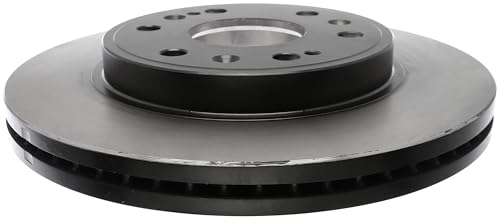
ACDelco Professional Disc Brake Rotor
These rotors match the original specification, which suits owners who liked how their car braked when new. Coverage runs strongest across General Motors vehicles but reaches well beyond them. Nothing here chases excitement, and for a family car that restraint is the point.
Pros
- Predictable original equipment character
- Consistent casting quality
- Easy to source part numbers
Cons
- No upgrade over the stock component
- Fewer options for European vehicles

Centric Premium Brake Rotor
Centric emphasizes machining accuracy and balancing, which is what actually stops the pulsing pedal that bothers owners most. A plain face suits any pad compound you choose to fit. Corrosion protection exists but covers less surface than the fully coated premium options.
Pros
- Excellent balance and runout control
- Works with any pad compound
- Good value in the premium tier
Cons
- Coating coverage is less complete
- Plain face only

EBC Brakes GD Sport Slotted and Dimpled Rotors
EBC uses dimples instead of full cross drilling, keeping the gas clearing benefit while avoiding the crack risk that drilled holes introduce. Slots keep the pad face clean under hard use. Expect more warmth and noise than a plain rotor produces during normal driving.
Pros
- Dimples avoid the crack risk of drilling
- Slots keep pad faces clean
- Attractive look through open wheels
Cons
- More brake noise than plain rotors
- Can accelerate pad wear

DuraGo Vented Disc Brake Rotor
DuraGo covers the basic replacement job at the lowest outlay in this roundup. For an older vehicle where working brakes matter more than coatings and slots, this is a sensible pick. Surface rust tends to show on the hat sooner than it does on coated premium rotors.
Pros
- Lowest cost replacement here
- Wide application coverage
- Adequate for gentle driving
Cons
- Surface rust appears quickly
- Shorter service life under hard use
How to choose
Plain, slotted or drilled: which face do you need? Plain rotors stay quiet, cost less and suit the vast majority of road cars without compromise. Slots clear gas and dust from the pad face during repeated hard stops, which helps towing and hilly driving. Cross drilling looks purposeful but adds stress risers around every hole, so save it for situations where heat management genuinely matters.
How to match rotors to your driving and towing needs A driver who tows or descends long grades needs a rotor built to shed heat quickly, while a commuter rarely stresses a plain rotor at all. Weekend track or spirited driving benefits from slotted or dimpled faces that keep the pad surface clean under repeated hard braking. Match the rotor category to how the car is actually driven, not to how it looks.
Pick a pad compound that suits the rotor Rotors and pads work as a system, so a track oriented pad on a soft rotor wears fast, while a mild pad on an aggressive rotor never reaches working temperature. Buying a matched kit removes that guesswork, which is why several ranges here sell as pad and rotor sets. Mixing brands still works, provided both parts share the same intended use category.
Check thickness, runout and bedding before you trust new rotors Every rotor has a minimum thickness stamped on the hat, and machining one below that figure invites warping and cracking under heat. Measure with a micrometer at several points, and check runout with a dial gauge if pedal pulsation shows up. After fitting, follow the maker’s bedding procedure with moderate stops, then avoid parking with hot brakes, since a stationary hot pad can leave a deposit that mimics a warp.
How they stack up
| # | Model | Face | Best for | Score | Price |
|---|---|---|---|---|---|
| 1 | Brembo UV Coated Disc Brake Rotor | Plain, non directional finish | Best overall | 9.4 | Check price |
| 2 | Power Stop Evolution Drilled and Slotted Rotors | Cross drilled and slotted | Best for towing | 9.2 | Check price |
| 3 | Bosch QuietCast Premium Disc Brake Rotor | Plain vented or solid by application | Best value | 9.0 | Check price |
| 4 | ACDelco Professional Disc Brake Rotor | Plain, original equipment style | Best for factory feel | 8.7 | Check price |
| 5 | Centric Premium Brake Rotor | Plain finish | Best for balance | 8.5 | Check price |
| 6 | EBC Brakes GD Sport Slotted and Dimpled Rotors | Slotted and dimpled | Best for spirited driving | 8.2 | Check price |
| 7 | DuraGo Vented Disc Brake Rotor | Plain vented | Best budget | 8.0 | Check price |
Common questions
How do I know when brake rotors need replacing?
Check the thickness against the minimum figure stamped on the rotor hat, and look for deep scoring, cracks, heat discolouration or a lip at the outer edge. Pedal pulsation under braking is another common sign of uneven thickness.
Do rotors have to be replaced with pads?
Not automatically. Rotors well above minimum thickness, smooth and true, can keep running with fresh pads alone. Many rotors sit near the limit by the second pad change, which is why shops often replace both together.
Are drilled rotors better than slotted rotors?
For road use, slotted or dimpled designs are generally the safer choice, since drilling creates stress concentrations that can crack under repeated heat cycling. Drilled rotors do clear gas well and look distinctive, but the real world benefit on a normal road car stays small.
Can rotors be resurfaced instead of replaced?
Sometimes, provided the finished thickness stays above the stamped minimum. Given how modern rotors are priced against machining labour, replacement is often the more practical route, and it restores the full heat capacity of a fresh casting.
Why do my brakes pulse when I brake?
Usually uneven pad deposits or thickness variation across the rotor face, rather than a physically bent disc. Improper bedding, parking with hot brakes, and rotors machined too thin all contribute to the problem.
Should I replace both rotors on an axle together?
Yes, always replace both rotors on the same axle at the same time. Mismatched friction surfaces cause uneven braking side to side, which affects stability under heavy stops.
Does rust on rotors matter?
Light surface rust on the swept face wipes off within a few stops and is normal after rain. Coatings on premium rotors target the hat, edges and vanes, areas pads never touch, so rust there is cosmetic. Deep pitting or flaking is different and calls for replacement.
Which brake rotors are best for towing?
Drilled and slotted designs like the Power Stop Evolution shed heat faster during repeated heavy stops, which matters most on grades and with a loaded trailer. Zinc or aluminium zinc coatings also help resist corrosion on rotors that see heavy use followed by long idle periods.
Can I fit brake rotors myself?
Some owners do, but the job involves caliper handling, torque specifications, hub cleaning and a bedding procedure. Braking is safety critical, so have any doubtful work performed or inspected by a qualified mechanic.
The bottom line
Brembo UV Coated rotors suit most drivers, pairing accurate castings with a coating that keeps visible faces from rusting. Choose Power Stop Evolution drilled and slotted rotors if towing or long descents are routine, and Bosch QuietCast rotors for a quiet, competent everyday replacement. Confirm the right part number for your vehicle and have fitting checked by a qualified mechanic.
Tony Russo
Tony trained as an automotive technician and spent years in service and parts retail before moving into writing. He focuses on garage tools, car care products and accessories from a hands-on maintenance perspective.