Why Do Blackout Curtains Still Let Light in Around the Edges?
Blackout curtains block light passing directly through the fabric itself, but they can’t block light that sneaks around the sides, top or bottom of the window frame unless the panel is noticeably wider than the window and hung close enough to the wall to actually cover those gaps completely. Even a genuinely opaque fabric will still show a bright, visible edge of light leaking around that uncovered perimeter area no matter how dense the weave is. This is why two people can buy the exact same curtain and end up with very different results in their own bedrooms.
How blackout fabric actually works
A tight weave combined with a foam or acrylic backing layer blocks light from passing directly through the material itself, which is the specific part most blackout marketing focuses heavily on, but that only solves light coming through the fabric, not light sneaking around its physical edges entirely on a different path. Manufacturers test and advertise that through-fabric performance almost exclusively, which is part of why the edge-leak problem catches so many buyers by surprise after installation.
Why panel width matters more than people expect
A common sizing rule of thumb recommends choosing panels roughly 1.5 to 2 times the width of the actual window and mounting the rod so it extends well past the frame on both sides, since a panel sized to just barely cover the window opening will almost always leave light leaking in noticeably at the sides regardless of fabric quality.
The gap at the top and bottom
Rod height and curtain length both create very real potential leak points, a rod mounted too low leaves an open gap above the curtain panel, and a panel that doesn’t reach all the way to the floor or windowsill leaves light coming in underneath, regardless of how genuinely opaque the fabric itself happens to be higher up.
Why wrap-around and side-sealing hardware exists
L-brackets, wrap-around curtain rods, and velcro or magnetic edge strips are all specifically designed to pull the curtain’s sides closer against the wall surface, directly addressing the exact side-gap leak that fabric opacity alone can simply never fully fix on its own, no matter how dense the material is. These accessories are usually sold separately from the curtains themselves, which is part of why so many buyers never discover them until the edge-leak problem is already bothering them.
Layering a blackout liner behind existing curtains
Adding a separate blackout liner behind a curtain you already own and genuinely like can meaningfully improve light blocking through the fabric itself, though it still won’t close the perimeter gaps without also separately addressing panel width and mounting height at the same time. Most liners attach with simple hook and loop tape along the top, which makes them one of the easier upgrades to add to curtains already hanging on the wall.
Why a fully light-sealed room usually needs more than curtains alone
Rooms that need near-total darkness, like recording studios or for genuinely light-sensitive sleepers, typically rely on frame-mounted blackout shades or shutters instead of curtains alone, since a shade sealing directly against the window frame closes the edge gaps that even a well-sized curtain panel can still struggle to fully eliminate completely.
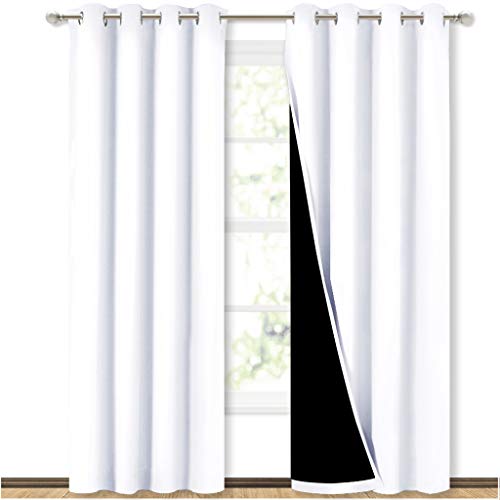
NICETOWN Thermal Insulated Blackout Curtains
A widely used blackout curtain line that performs best when sized to extend well past the window frame rather than just covering the glass itself.

Eclipse Blackout Curtain Liner
A separate liner meant to be hung behind an existing curtain to add blackout-level light blocking through the fabric without replacing curtains you already have.
Frequently asked questions
Do wider curtains really block more edge light?
Yes, extending the panel width well beyond the window frame on both sides directly reduces the total amount of side-gap light that’s able to actually reach into the room from outside.
Does curtain rod placement affect light leak?
Yes, mounting the rod both higher and wider than the window frame reduces both the top gap and the side gaps that would otherwise let light through around the panel’s edges.
Can I add a liner to curtains I already own?
Yes, blackout liners are made specifically to hang behind an existing curtain panel to meaningfully improve how much light the fabric itself actually blocks from passing through.
Do wrap-around rods or L-brackets actually help?
Yes, they pull the curtain’s sides noticeably closer against the wall surface, directly closing the side gap that’s responsible for most of the edge light leak in the first place.
Is a darker colored fabric automatically more blackout?
Not necessarily, color mainly affects how light appears to reflect off the surface, but the actual weave tightness and backing layer are what truly determine how much light passes straight through the fabric.
Does window height affect how much light leaks at the bottom?
Yes, a panel that doesn’t reach all the way to the floor or windowsill leaves an open gap at the bottom regardless of how opaque the fabric happens to be further up the panel.
Can blackout curtains fully replace blackout blinds or shades?
For most ordinary bedrooms, yes with proper sizing and careful mounting, but for genuinely near-total darkness needs, frame-mounted shades usually seal the window’s perimeter more completely overall than curtains alone can.
Why does light still show through a curtain labeled 100 percent blackout?
That particular label usually refers specifically to light blocked through the fabric itself, not light that leaks around an undersized panel or one that was simply mounted poorly to begin with.
Does fabric weight alone determine blackout performance?
No, a heavy but loosely woven fabric without any blackout backing layer can still let a surprising amount of light through despite feeling thick and substantial to the touch when you handle it.
Can magnetic strips seal curtain edges to the wall?
Yes, magnetic or velcro edge strips are a common and genuinely effective fix specifically aimed at closing the side gap between the curtain panel’s edge and the surrounding wall.
Do blackout curtains block noise as well as light?
Many blackout fabrics do add some modest sound dampening thanks to their added thickness and backing layer, though they aren’t actually designed or formally rated as dedicated soundproofing products.
Is doubling up two blackout curtain layers worth it?
It can modestly improve light blocking through the fabric itself, though it genuinely won’t fix perimeter gaps that come from an undersized panel width or poor mounting height to begin with.
Does blackout curtain color affect heat as well as light?
Yes, darker colors tend to absorb noticeably more heat from direct sunlight hitting the fabric surface, which is a separate effect entirely from how much light actually passes all the way through to the room.
Can you test how much edge light a window will leak before buying curtains?
Roughly yes, by measuring your window width against the standard rule of thumb for panel width and checking how far past the frame your intended rod placement will actually end up extending.
Does the type of window frame itself affect how much edge light leaks through?
Yes, deeper-set windows with more wall recess around them naturally shade some of that gap, while flush-mounted windows tend to show more visible edge leak for the exact same curtain setup installed.
The bottom line
The fabric itself is only half the equation here. A genuinely opaque blackout panel that’s too narrow or mounted too close to the frame will still leak light around every single edge, while proper width and careful mounting can make even a moderately good fabric perform close to fully dark on its own. If a current setup is still letting in noticeable light, checking width and mounting first is usually a faster fix than buying an entirely new, more expensive curtain.
Dana Whitfield
Dana spent eight years buying and merchandising for a regional kitchenware retailer before moving into editorial work. She has handled thousands of SKUs across cookware, small appliances and kitchen organization, and focuses on the practical differences that matter once a product is actually in daily use.