Why Does a Slow Cooker Take So Much Longer Than an Instant Pot?
A slow cooker and an Instant Pot take different amounts of time because they rely on fundamentally different physics to break down food. A slow cooker holds food at a low, steady temperature for hours to slowly tenderize it, while an Instant Pot seals the pot and uses built-up steam pressure to raise the boiling point of water well above 212 degrees Fahrenheit, cooking food far faster at that higher internal temperature.
The temperature difference is the whole story
A slow cooker’s low setting runs around 190 degrees Fahrenheit and its high setting gets close to 200 degrees, both staying just under a full simmer. A sealed pressure cooker builds internal pressure that pushes water’s boiling point up to roughly 250 degrees, and that higher temperature speeds up the chemical processes that tenderize food dramatically, which is the core reason for the time gap.
Why pressure cooking does not just skip steps, it changes the chemistry speed
The collagen in tough connective tissue converts into gelatin faster as temperature rises, which is why a cut like brisket or short rib that needs roughly eight hours in a slow cooker can reach a similar tender result in under an hour under pressure. The higher heat is not cutting corners, it is accelerating the same breakdown process that happens more slowly at lower temperatures.
What slow cooking does that pressure cooking struggles to replicate
Hours at low heat let flavors gradually meld and liquids slowly reduce and concentrate in a way a fast pressurized cook does not fully replicate. Slow cooking is also genuinely safe to leave running completely unattended for a full workday, since there is no sealed pressure involved, which is a real practical advantage beyond flavor.
Why you cannot just convert a recipe’s time one to one between the two
Pressure cooking needs a minimum amount of liquid to generate enough steam to build and hold pressure, while a slow cooker loses very little liquid to evaporation over its longer cook. Simply dividing a slow cooker recipe’s time by some rough factor without adjusting the liquid amount often leaves a pressure-cooked dish either undercooked or improperly pressurized.
Texture differences buyers notice between the two methods
Pressure cooked meat reaches tender quickly but some cooks find it slightly less silky than an all-day slow braise for certain cuts, and soups or stews can taste a bit flatter straight out of a pressure cooker unless finished with an extra sauté or reduction step afterward to rebuild some of that concentrated flavor.
Why some people use both appliances for different meals rather than picking one
A pressure cooker fits weekday meals where time is the limiting factor, while a slow cooker fits weekend or hands-off days where the slow process itself improves the final dish. Many households keep both since the sauté function on a pressure cooker and the set-and-forget nature of a slow cooker solve different problems.
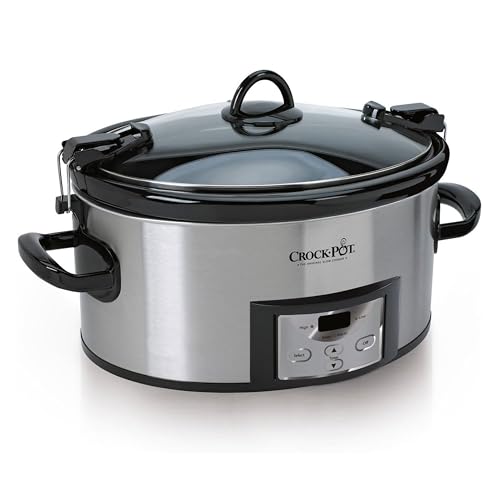
Crock-Pot 6-Quart Cook & Carry Programmable Slow Cooker
A programmable slow cooker with low, high, and warm settings and a locking lid, representative of the standard household slow cooker.

Instant Pot Duo 7-in-1 Electric Pressure Cooker
A widely used multi-function pressure cooker that also includes a slow cook setting and a separate sauté function.
Frequently asked questions
Can you get a slow cooker’s exact flavor from an Instant Pot by using the slow cook function?
Many Instant Pot models include a slow cook setting that approximates the low, steady heat of a dedicated slow cooker, though the heating element design and pot shape are different enough that results can vary slightly from a true slow cooker.
Why do tough cuts of meat get tender faster under pressure than on the stovetop simmering?
A sealed pressure cooker raises the boiling point of water well above its normal level, which lets the connective tissue in tough cuts convert to gelatin at a meaningfully faster rate than an open pot simmering at standard boiling temperature.
Does cooking faster in an Instant Pot mean the food is less flavorful?
Not inherently, though some dishes that rely on long slow reduction for flavor concentration can taste slightly flatter straight out of a pressure cooker unless finished with an extra sauté or reduction step afterward.
Is it safe to convert a slow cooker recipe directly to Instant Pot time by just shortening it proportionally?
No, pressure cooking usually needs specific conversion guidance and a minimum liquid amount to generate steam, so a straight proportional time cut without adjusting liquid can produce an undercooked or improperly pressurized result.
Why does an Instant Pot need a minimum amount of liquid to work at all?
The appliance builds pressure from steam generated by boiling liquid inside the sealed pot, so too little liquid means not enough steam forms to reach and hold proper pressure.
Can you leave an Instant Pot unattended the way you can a slow cooker?
Pressure cooking is generally considered safe to leave running briefly, but most manufacturers and many users still prefer being nearby given the sealed pressure involved, whereas a slow cooker’s low, open-pot heat is widely considered safe for a full unattended workday.
Does a slow cooker ever actually reach boiling temperature?
The high setting on most slow cookers gets close to a gentle simmer but typically stays just below a full rolling boil, which is part of why slow cooked dishes rely on time rather than heat intensity to break down food.
Why do some recipes specifically call for a slow cooker instead of a faster method even when time isn’t a concern?
Certain dishes benefit from the slow, gradual flavor melding and gentle moisture retention that comes from hours at low heat, a texture and depth of flavor that a fast high-heat method does not fully replicate even with more time added.
Does the size of the cut of meat change how much time difference there is between the two methods?
Yes, larger or tougher cuts show the biggest time gap since they have more connective tissue to break down, while smaller or already tender cuts show a much smaller difference between slow cooking and pressure cooking.
Can you brown meat in an Instant Pot the same way you can in a slow cooker?
An Instant Pot’s sauté function can brown meat directly in the same pot before pressure cooking, which most slow cookers cannot do without a separate skillet, since a slow cooker’s heating element is not designed for high-heat searing.
Why does soup sometimes taste better the next day regardless of which appliance made it?
Flavors continue to meld and redistribute as the dish cools and sits, which is a separate effect from the cooking method itself and applies to both slow cooked and pressure cooked dishes equally.
Is an Instant Pot’s pressure release step the main reason it still takes some extra time beyond the listed cook time?
Yes, both the time to build pressure before cooking starts and the time to release pressure afterward, either naturally over several minutes or manually, add meaningful total time that is easy to overlook when comparing a quick listed cook time to a slow cooker’s set-and-forget hours.
Does altitude affect slow cooker or Instant Pot cooking times differently?
Pressure cooking is generally more consistent across altitude since it creates its own elevated internal pressure environment, while slow cooking at high altitude, where water boils at a lower temperature, can need slightly longer times to reach the same doneness.
Why do some people say pressure cooked rice or beans taste different from stovetop versions?
The faster, higher-heat environment changes starch gelatinization timing slightly, which some people notice as a subtly different texture, though most describe the difference as minor rather than a flavor change.
Can a slow cooker’s low setting run for too long and overcook food?
Yes, though the margin for error is much wider than with faster methods, since most dishes can run an extra hour or two past the recommended time on low without ruining the result, unlike a pressure cooker where even small timing errors matter more.
Where this leaves you
The Instant Pot is not a faster version of the same process a slow cooker runs, it is a different process entirely built around elevated pressure and temperature. Picking between them comes down to whether a meal needs to be ready in under an hour or whether the slow, hands-off hours actually improve the result, not which appliance is objectively better.
Dana Whitfield
Dana spent eight years buying and merchandising for a regional kitchenware retailer before moving into editorial work. She has handled thousands of SKUs across cookware, small appliances and kitchen organization, and focuses on the practical differences that matter once a product is actually in daily use.
You might also need

Simax 20 Oz Glass Teapot Review: Does Stovetop-Safe Borosilicate Earn the $31 Price?

Do Egg Cookers Actually Peel Easier Than Stovetop Boiled Eggs?

Top Instant Pots for Every Kitchen Style