Why Do Birds Need a Specific Cage Bar Spacing for Safety?
Bar spacing matters most because a gap that is wrong for a bird’s size can let the head fit through while the shoulders and body cannot, which traps the bird in a panic that often causes serious injury or death. The safe spacing range changes dramatically with bird size, which is why there is no single correct gap that works for every species.
The real danger is entrapment, not just escape
The most serious risk from mismatched bar spacing is not a bird getting loose, it is a bird pushing its head through a gap that is slightly too wide and then being unable to pull its body back through. A panicking bird struggling against bars it cannot fit through can suffer a broken neck, severe bruising, or strangulation, which is why spacing is treated as a core safety spec rather than a minor sizing detail.
Why the smallest birds need the tightest spacing
Finches, canaries and lovebirds have narrow skulls relative to their bodies and can fit their heads through surprisingly tight gaps. Cages for these species generally need bar spacing under about half an inch to prevent head entrapment, which is noticeably tighter than what a budgie or cockatiel cage typically uses.
Why mid-size birds use a different range
Budgies and cockatiels are commonly kept safely in cages with roughly half inch to five-eighths inch spacing. Spacing tighter than that is not a safety problem for these birds, just an unnecessary cost and weight increase in the cage, but spacing wider than that range starts to reintroduce head entrapment risk.
Why larger parrots actually flip the logic
Macaws, large cockatoos and similarly sized birds are too big-bodied to squeeze their heads through typical bar gaps, so the main concern for them shifts away from head entrapment and toward beak or tongue injury against bars, plus the structural need for thicker gauge wire these powerful beaks cannot bend or chew through. This is why large parrot cages can safely use wider spacing, often in the one inch to one and a half inch range, without the same entrapment risk smaller birds face.
Common real-world mismatches worth watching for
A secondhand cage bought without checking its listed bar spacing against the specific bird it will house is one of the most common mistakes, especially when a slightly larger bird than the cage was designed for ends up living in it. Bar spacing should be checked against the individual species in the cage, not assumed safe just because the cage is marketed broadly as a bird cage.
Bar orientation matters alongside spacing
Climbing species like parrots and conures benefit from horizontal bars on at least some cage sides, since they use the bars to climb and grip. Smaller finches and canaries that fly more than they climb generally do fine with vertical-only bar designs, which is a separate consideration from spacing but often comes up in the same cage-selection decision.
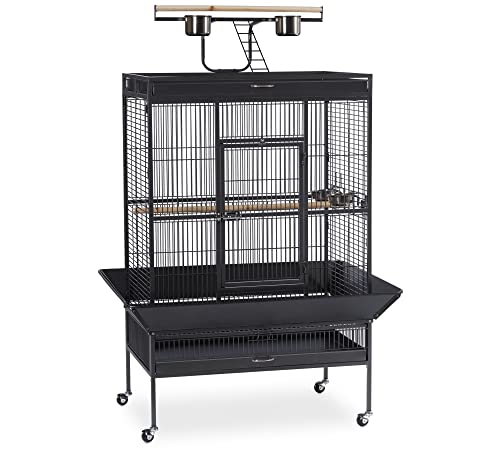
Prevue Pet Products Wrought Iron Select Bird Cage
A cage line sold in multiple sizes with bar spacing specified per model, commonly used for small to mid-size birds like budgies, canaries and cockatiels.
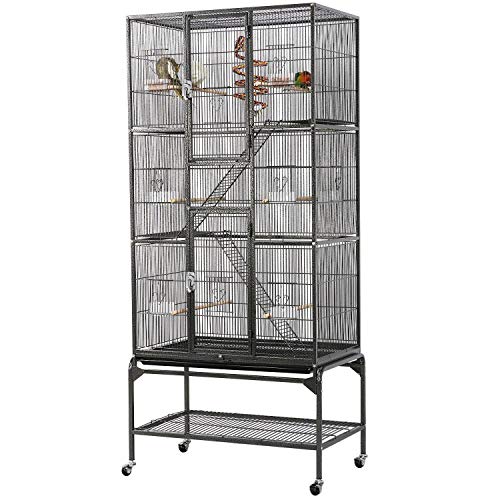
Yaheetech Bird Cage
A widely sold cage brand offered across several bar spacing options, which makes checking the listed spacing against the intended bird species especially important before buying.
Frequently asked questions
What bar spacing is safe for a budgie?
Roughly half inch to five-eighths inch spacing is commonly recommended for budgies, tight enough to prevent head entrapment while still keeping the cage reasonably lightweight.
Can bar spacing that is too tight ever be a problem?
For most birds, spacing tighter than necessary is not a safety issue, just extra material cost and weight. The more serious risk is spacing that is too wide for the bird’s head size.
Why do large parrot cages have wider bar spacing than small bird cages?
Larger parrots are too big-bodied to fit their heads through wide gaps the way small birds can, so the entrapment risk that drives tight spacing in small bird cages does not apply the same way to large parrots.
Is bar spacing the same thing as escape prevention?
They overlap but are not identical. Spacing that is too wide risks entrapment, which is a safety issue, while escape prevention is more about secure doors and latches, not spacing alone.
What bar spacing is recommended for finches and canaries?
Generally under about half an inch, since these birds have especially narrow skulls relative to their body size and can fit their heads through gaps that would be safe for a slightly larger species.
Can a bird actually die from getting its head stuck in cage bars?
Yes, a trapped bird can suffer a broken neck or strangulation while struggling to free itself, which is why entrapment is treated as a serious safety concern rather than a minor inconvenience.
Does bar thickness matter as much as bar spacing?
For large, powerful-beaked parrots, bar thickness matters a great deal since a thin bar can be bent or chewed through, while for small birds spacing itself is usually the more pressing safety factor.
How do I find the correct bar spacing for my specific bird species?
Most cage listings specify exact bar spacing in the product details, and that number should be checked against general size guidelines for the specific species before buying.
Is it safe to use a cockatiel cage for a slightly larger conure?
Not necessarily. Even a modest size difference between species can change what spacing is safe, so a cage should be matched to the actual bird rather than assumed interchangeable between similarly sized species.
Do horizontal bars matter for bird safety the same way spacing does?
Horizontal bars are more about enabling natural climbing behavior in species like parrots than about safety in the same direct way spacing is, though a comfortable, climbable cage can reduce stress-related issues.
Can secondhand bird cages be unsafe due to bar spacing?
Yes, a secondhand cage may have been built or marketed for a different species than the one it will now house, so checking its actual spacing is important rather than assuming any bird cage works for any bird.
Why do some large parrot cages still need narrow spacing in certain sections?
Breeding or nursery sections of some large bird cages use tighter spacing specifically to protect chicks, which have much smaller heads than the adult birds the main cage is designed around.
Does bar spacing change as a bird grows from a chick to an adult?
It can matter during the transition, since a young bird’s head may be small enough to fit through gaps that would be unsafe at that size even though the same spacing is fine once the bird reaches adult size.
Does bar spacing need to be different near the floor of a cage?
Some cages use tighter spacing on lower sections specifically to prevent a bird’s head or feet from slipping through near the floor, where droppings trays and lower perches often sit.
Can a bird injure its beak on bars that are spaced correctly but made of the wrong material?
Yes, overly soft or thin wire can still cause beak damage for powerful chewers even if the spacing itself is appropriate for that bird’s head size.
Do outdoor aviaries need different bar spacing than indoor cages?
Outdoor aviaries generally follow the same size-based spacing logic as indoor cages, though they may also need to consider keeping out small wild animals or pests through the same gaps.
Is powder coating or galvanized wire safer than plain metal bars?
Coating type matters mainly for toxicity and durability rather than entrapment risk, since a bird can still chew through or get stuck on a coated bar if the spacing or thickness is wrong for its size.
How do I measure bar spacing if a cage listing does not specify it?
Measuring the gap between two adjacent bars directly with a ruler, rather than relying on a general description like small or large, gives the most reliable number to compare against size guidelines.
Our take
Bar spacing is one of the few cage specs where getting it wrong is not just a quality issue, it is a direct safety risk tied specifically to the bird’s size, not a general bird cage feature. Checking spacing against the actual species living in the cage matters more than almost any other feature on the listing.
Olivia Hartley
Olivia spent several years working at an animal shelter and a pet-supply retailer before joining the editorial team. She researches pet gear with an emphasis on safety, comfort and the fine print that owners often miss.